Across Italy · No.57 / 103
Pasta e piselli
Pasta e piselli
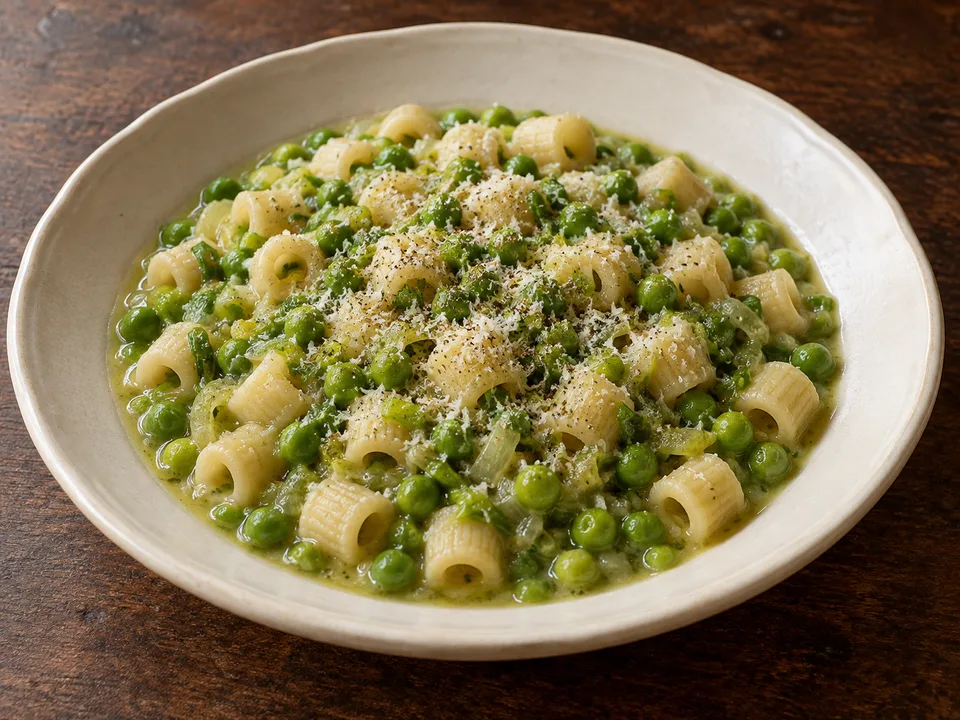
Scallions soften slowly before fresh peas and half-boiled ditaloni finish together, with Parmigiano binding the cooking liquid.
Log a cooked day
This log is stored only in this browser. Choosing a dish does not log it.
Meet the dish
An Italian dish that finishes short pasta in a pot of peas
No meat or tomato obscures the fresh sweetness of peas and slowly softened scallions. The pasta boils separately for only five minutes, then finishes with the peas so intact vegetables and starchy cooking liquid join naturally.
Pasta shapes to use
- Ditaloni rigati, small enough to fit on a spoon with peas
Key ingredients
- Fresh peas
- Ditaloni
- Scallions
- Parmigiano
- Olive oil
- Black pepper
Follow the cooking scenes
-
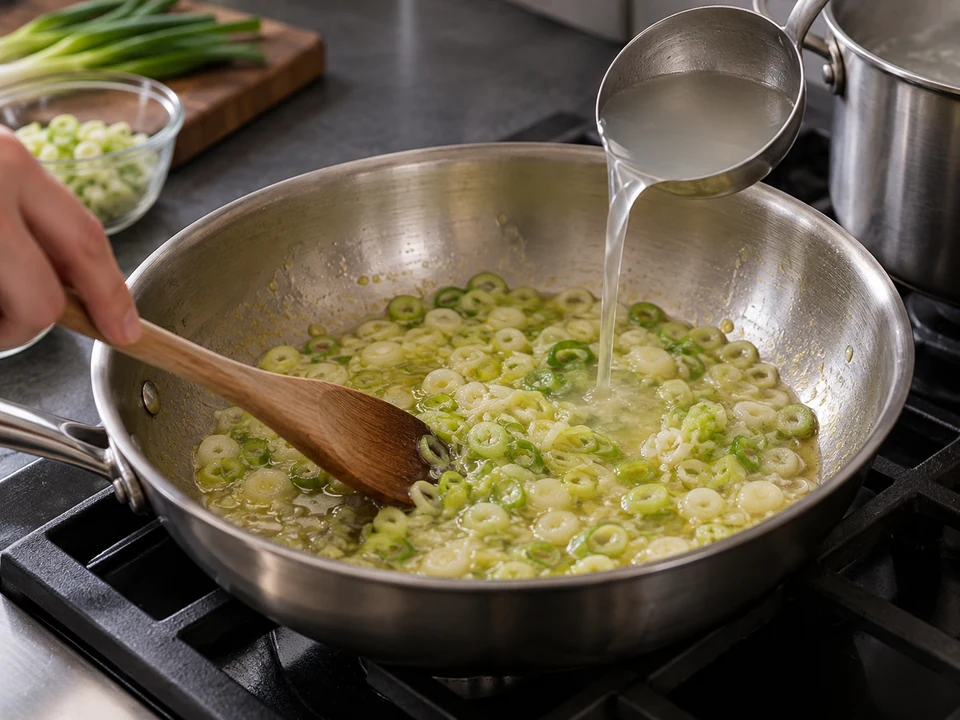
Step 1: Stew scallions for 10–15 minutes
Thinly slice scallions and cook them in olive oil with a little pasta water for 10–15 minutes, until soft but not browned. Add more water before the pan dries so they form a sweet base.
-
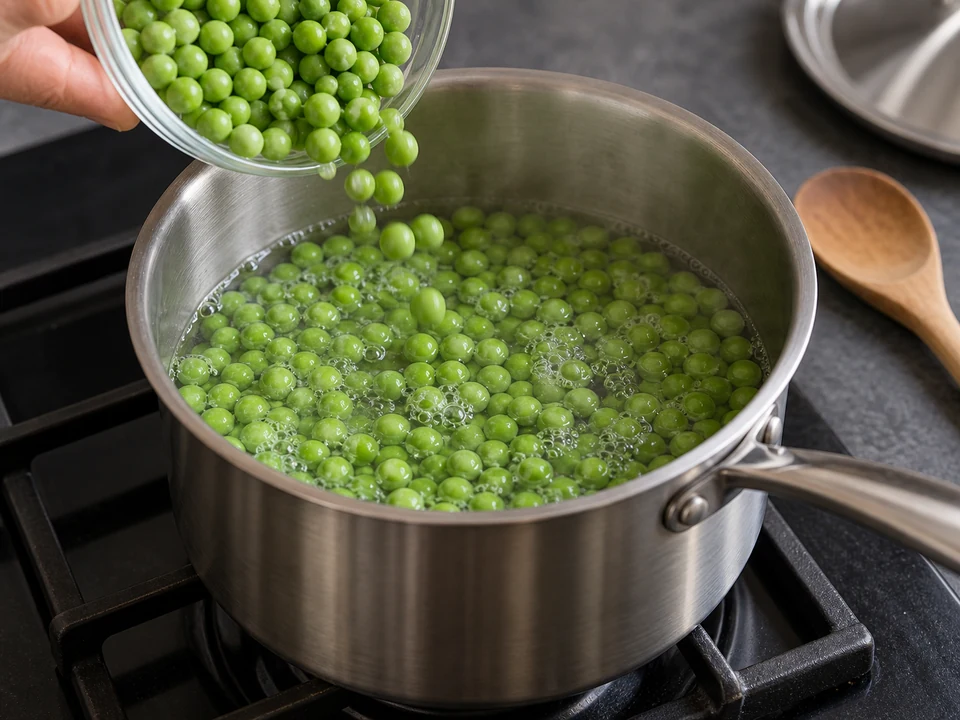
Step 2: Cook peas for about ten minutes
Add fresh peas and enough water to cover them halfway. Simmer for about ten minutes, softening the centers while preserving their bright color and round shape.
-
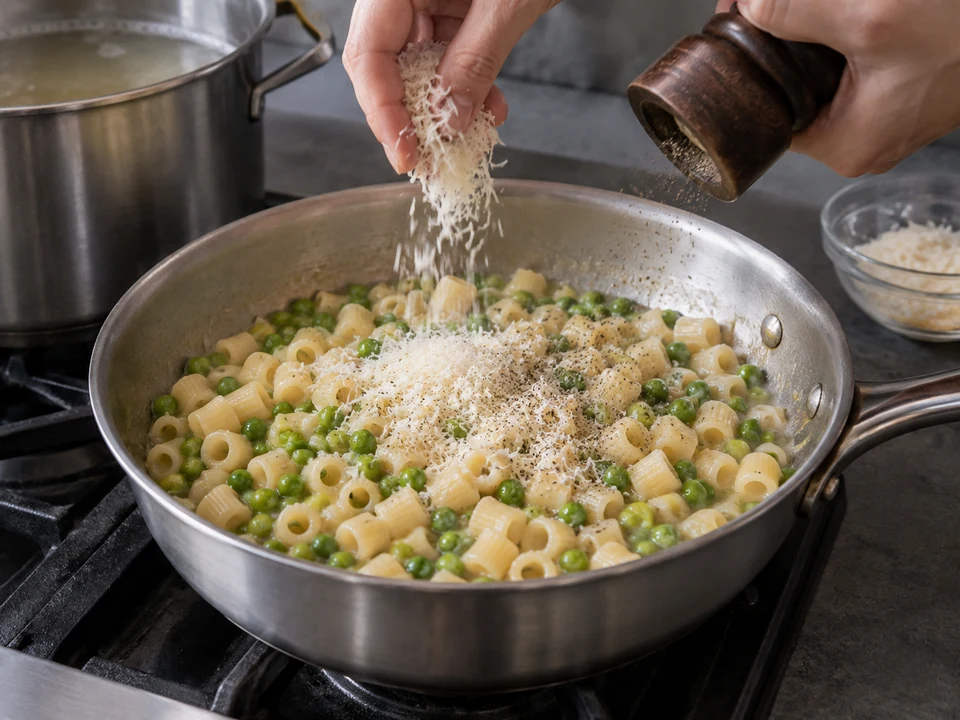
Step 3: Finish half-boiled pasta with the peas
Boil ditaloni separately for about five minutes, lift it into the pea pan, and cook for another five minutes with additions of pasta water. Off heat, stir in Parmigiano and black pepper.
What to watch for
- Do not brown the scallions. Slow, moist cooking gives sweetness without a toasted flavor that would dominate the delicate peas.
- Leave a little broth at the end. Ditaloni continues absorbing it while Parmigiano melts and the dish rests.
What sets it apart
Scallions, peas, and Parmigiano alone create the sweet, creamy broth, without pancetta or tomato.