Egg White Sets First, Yolk Second — That Order Splits the Schools
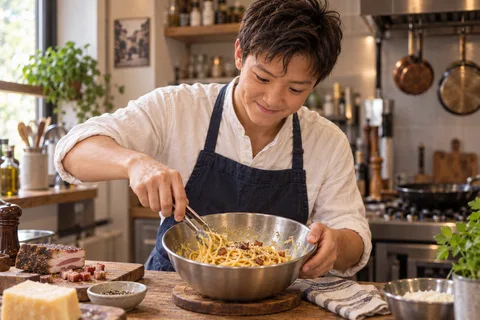
In a carbonara egg mixture, the white starts to set first and the yolk second. That order is why whole-egg and yolks-only recipes come off the heat at different moments.
Understand pasta emulsions, cooking water and heat control. Explore the reasons behind each step before changing your technique.
8 articlesIn a carbonara egg mixture, the white starts to set first and the yolk second. That order is why whole-egg and yolks-only recipes come off the heat at different moments.
The box time appears to assume pasta eaten straight from the pot, though we could not find a manufacturer stating that outright. Skip the subtraction before a pan toss, and it turns soft.
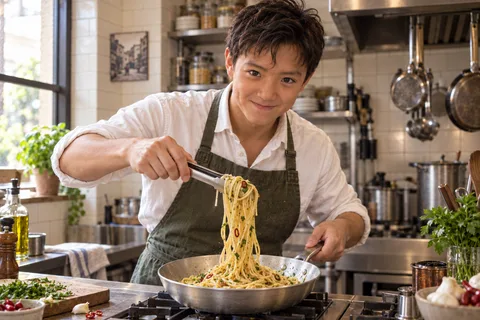
Emulsifying pasta sauce isn't about mixing harder. It happens only when starch, a safe temperature, and nonstop agitation all line up. Four schools split the work differently.
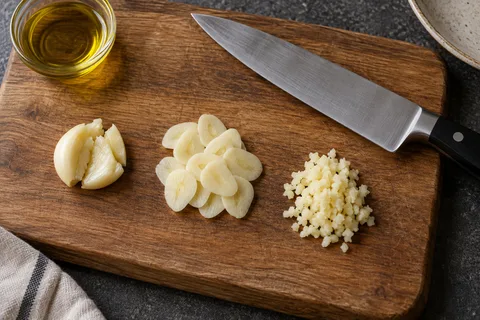
How you cut garlic trades off aroma against burn risk. Mincing should burn fastest, yet Ryuji starts it in cold oil — reading that as burn-proofing is the editors' inference, not his source's.
Ogura's fava bean carbonara, Fabio's rich carbonara and Gritzer's carbonara all pull the egg off direct heat.
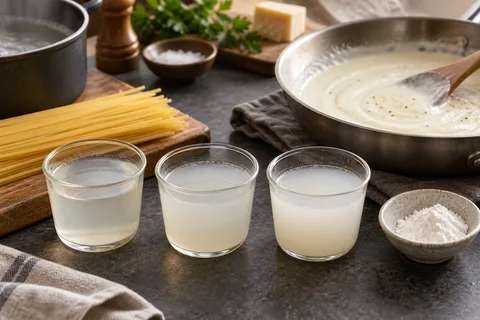
A 2025 physics study found sauce stability turns on starch as a share of cheese mass: under 1% splits, 2-3% is ideal, over 4% stiffens. Kenji cuts the water; the paper's own fix is powdered starch.
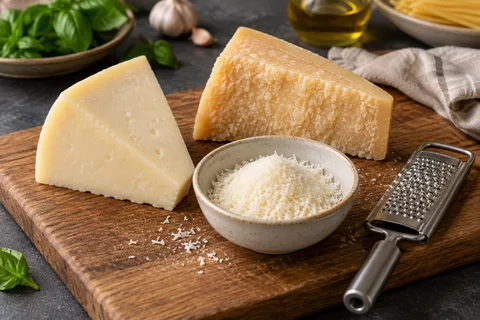
Pecorino is salty sheep's-milk cheese; Parmigiano is milder cow's-milk. Some recipes leave the water unsalted so Pecorino carries the salt; others salt it heavily instead. Pick the cheese first.
The standard line is 10g salt per liter (1%), but real carbonara recipes split into 1%, 1.5%, and 2%. Cacio e pepe has a school that uses none at all — the number moves with the job salt is doing.