Pasta Brands: De Cecco, Barilla, Garofalo, Rummo and La Molisana
Choose among five dried-pasta brands by shape, product line and buying needs. Find detailed guides, compare pack sizes and keep the right label for your next meal.
 Ingredients
Explore dried pasta, cheese, tomatoes and olive oil, with guides to their differences and how they are used in pasta dishes.
8 articlesChoose among five dried-pasta brands by shape, product line and buying needs. Find detailed guides, compare pack sizes and keep the right label for your next meal.
Cacio e pepe has just two elements asserting themselves — Pecorino's salt and pepper's bite — so grind coarseness alone changes the plate. Tellicherry is a size grade, not a variety.
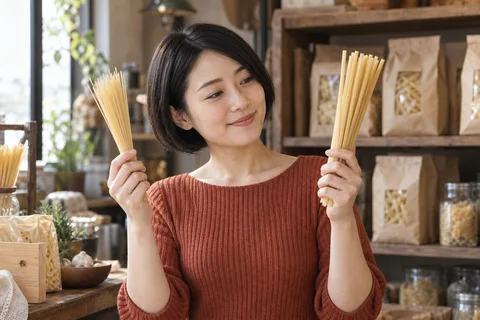
The way sauce clings differently to different noodles isn't in your head. Bronze dies create more friction, which makes them slower and pricier to run — a real cost paid for a rougher surface.
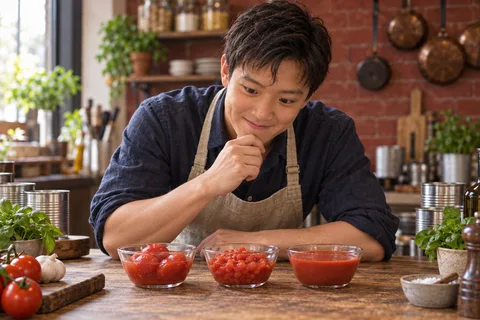
San Marzano DOP only proves where and how a tomato was grown — not that it tastes better. What actually separates canned tomatoes is processing stage (whole, diced, passata) and moisture.
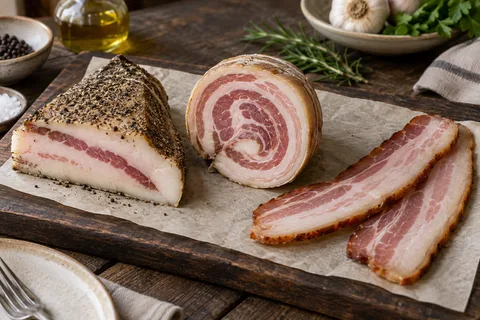
Vincenzo's Plate allows pancetta or salami as a substitute in amatriciana but names bacon specifically as the one to avoid. Here's how guanciale differs, how chefs treat it, and how to buy it online.
Guanciale, pancetta, and bacon are all cured pork, but fat ratio and smoking split them apart. Serious Eats ranks them bacon, pancetta, guanciale — and guanciale use ranges 19g to 67g per 100g pasta.
Ryuji's ultimate aglio e olio lists olive oil on two separate lines — one tablespoon each, the same oil. The split appears to come down to whether the oil hits heat.
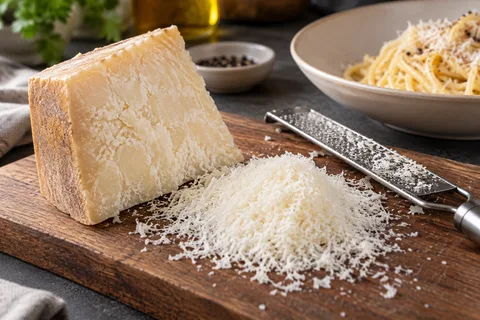
One Roman amatriciana uses 20g of Pecorino Romano DOP per 100g of pasta — the highest ratio we could confirm for the dish. Buying it as a wedge, in our view, keeps more of the aroma.