
Across Italy · No.54 / 103
Pasta e ceci
Pasta e ceci
Chickpeas simmer with pancetta, rosemary, and tomato; one portion is blended before separately boiled short pasta joins the sauce.
Log a cooked day
This log is stored only in this browser. Choosing a dish does not log it.
Meet the dish
An Italian combination of chickpeas and short pasta
Whole and puréed chickpeas share a concentrated sauce scented with smoked pancetta, white wine, and rosemary. Cooking the pasta separately preserves the chickpeas' shape and makes the pasta texture easier to control.
Pasta shapes to use
- Curved pipe rigate that catch chickpeas and sauce
Key ingredients
- Cooked chickpeas
- Pipe rigate
- Smoked pancetta
- Tomato purée
- White wine
- Rosemary
Follow the cooking scenes
-
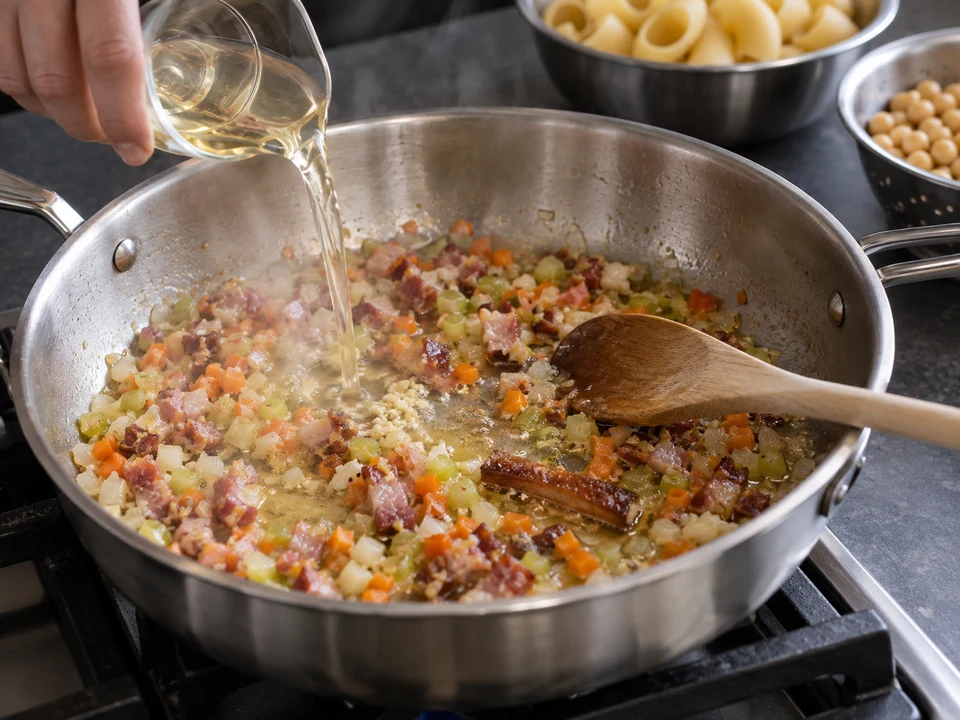
Step 1: Cook the pancetta and aromatics
Sauté onion, celery, carrot, and garlic in olive oil, then add smoked pancetta and its rind if available. Once the fat renders, pour in white wine and reduce until the raw alcohol aroma disappears.
-
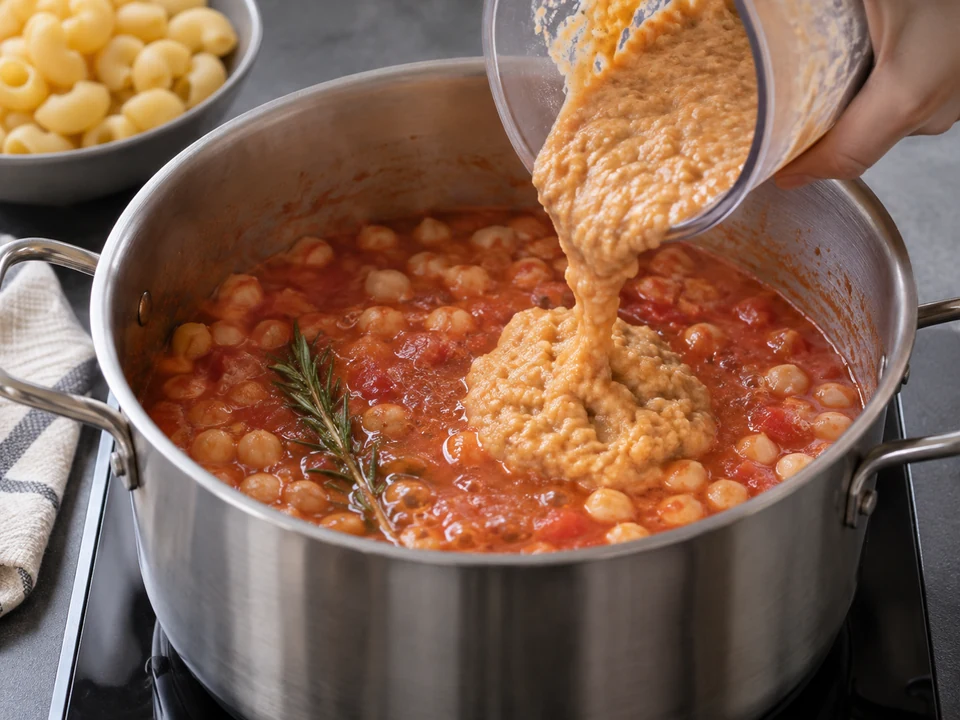
Step 2: Simmer and blend one third
Add chickpeas, tomato purée, tomato paste, and rosemary; simmer gently for about 15 minutes. Remove the garlic and rind, blend roughly one third of the chickpeas until smooth, and return the purée to the pot.
-
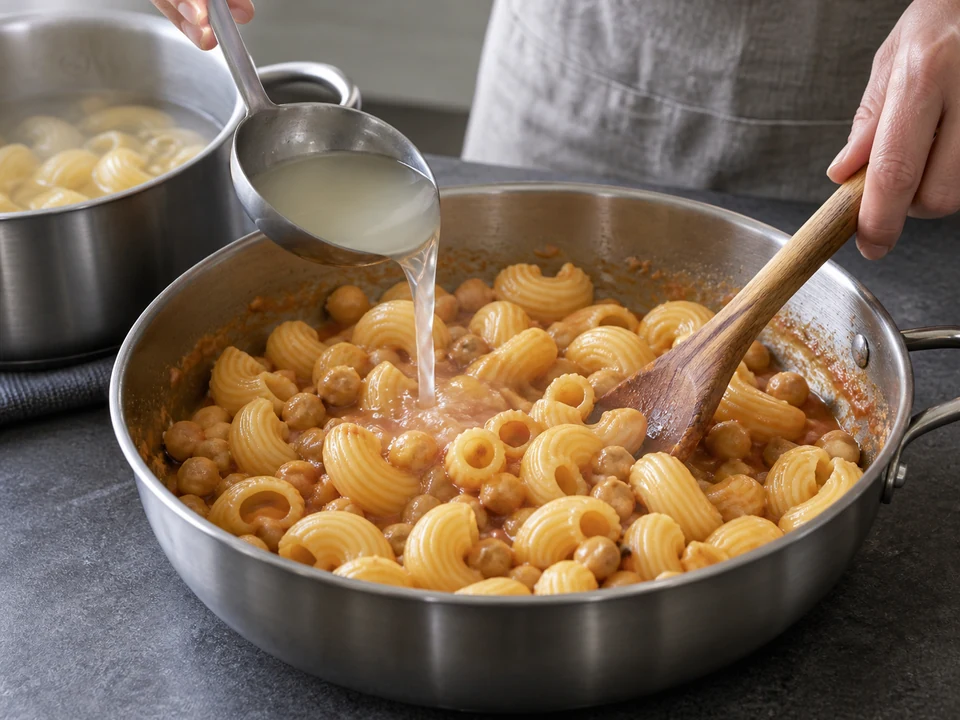
Step 3: Add separately boiled pasta
Boil pipe rigate in salted water until al dente, then add it to the chickpeas with a little cooking water. Stir for one or two minutes so the purée enters the pasta curves, and finish with pepper and olive oil.
What to watch for
- Reduce the wine fully before adding chickpeas. This removes raw alcohol while dissolving the browned pancetta residue into the sauce.
- Blend about one third of the chickpeas. Puréeing all of them would erase the useful contrast between intact beans and curved pasta.
What sets it apart
Unlike the bean-broth method of pasta e fagioli, this version adds separately boiled pasta to a sauce thickened with a portion of the chickpeas.