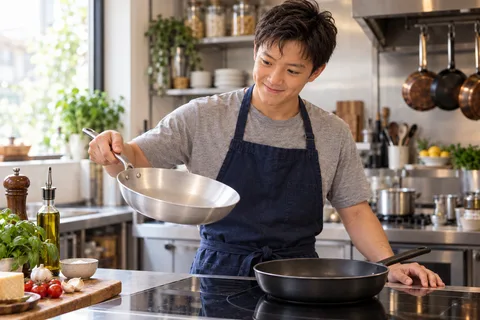
The Thinner the Pan, the Faster It Reacts — And Cools
What pro tool lists actually share isn't the material — it's how fast the heat rises and falls. A millimeter of thickness changes how easy carbonara's emulsion is to catch.
Choose pasta equipment by what it does: explore pan materials, cheese graters, thermometers and other cooking tools.
8 articlesWhat pro tool lists actually share isn't the material — it's how fast the heat rises and falls. A millimeter of thickness changes how easy carbonara's emulsion is to catch.
Ogura mixes Parmigiano into raw egg for carbonara, where shred size decides whether it melts evenly. In his cacio e pepe, cheese is just grated over the top — so fineness matters far less.
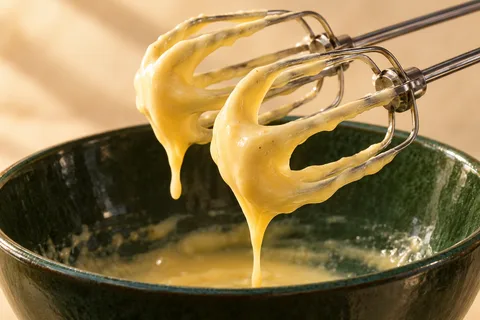
Fabio's carbonara aims at about 65°C, where egg yolk starts to set, yet no thermometer appears in the steps. The cue is a hand blender turning heavy over a bain-marie.
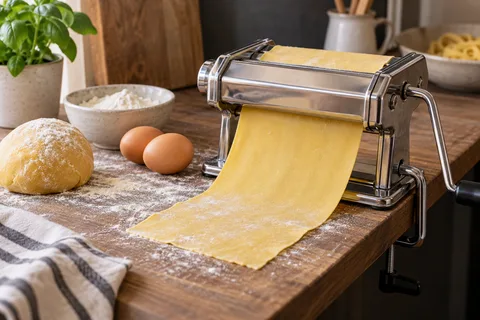
Tomomi Ogura names his flours on note but never gives the ratio. The only dough you can actually copy is Fabio's — 100g 00 flour, 2 egg yolks, a little egg white, 2g salt, 10cc olive oil.
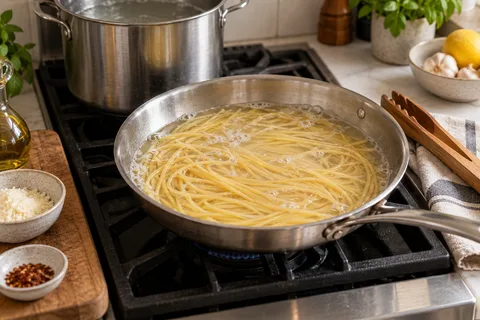
J. Kenji López-Alt makes cacio e pepe without a big pot: noodles boil in a 12-inch frying pan with barely enough water to cover them, then go straight to the sauce with tongs, no draining.
Ryuji scatters raw cracked peppercorns at the finish; Pasta Grammar roasts them 4 minutes, then pounds them in a mortar. Grind and heat alone split cacio e pepe pepper into at least four schools.
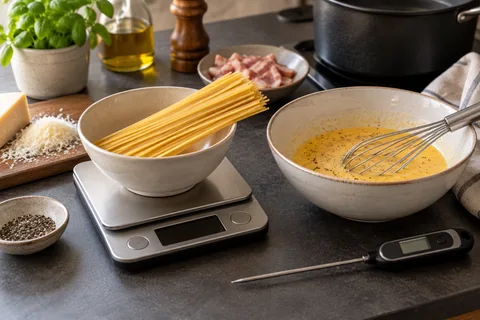
Eyeball a portion of pasta and it can swing by several grams to a dozen-plus per serving (the editors' rough figure).
Moving pasta from pot to pan comes down to two tools. That how much pasta water rides along changes the finish is the editors' read, not a relationship our sources tested.