Japan · No.25 / 103
Pepetama
Pepetama
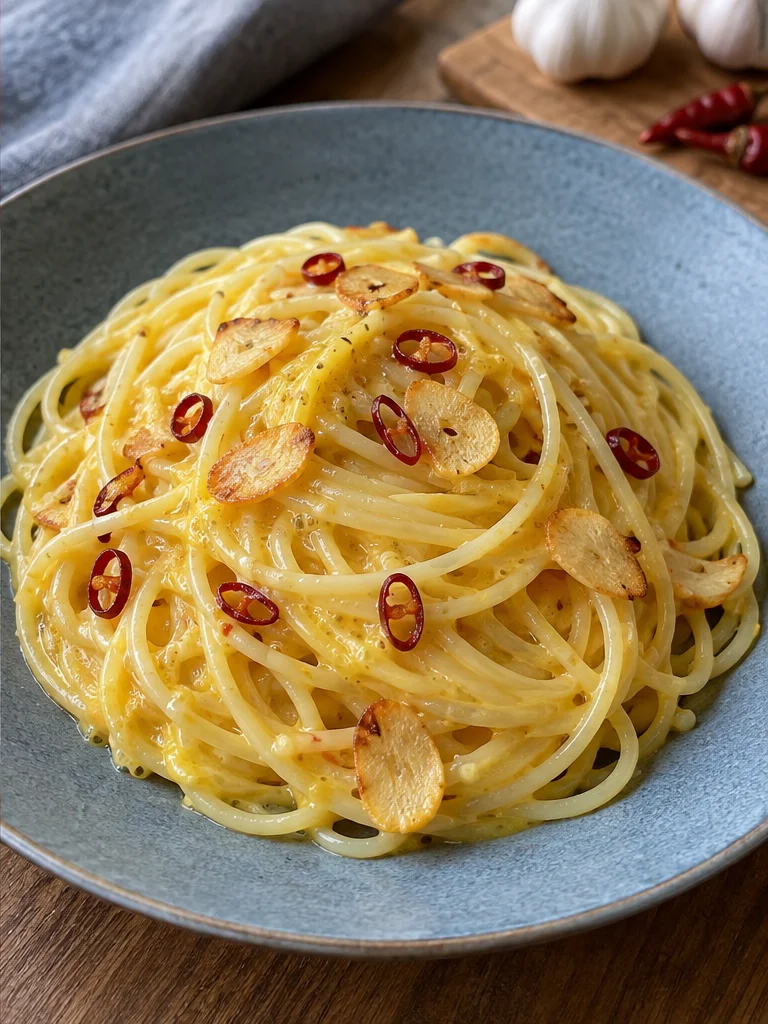
A Japanese pasta that brings egg to garlic-and-chilli peperoncino. Egg is essential: it turns the spicy oil emulsion into a rounded, silky sauce.
Log a cooked day
This log is stored only in this browser. Choosing a dish does not log it.
Cook this pasta on video
Watch the creators’ original videos for the method and finish.
RyujiPepetama: garlic, chili and egg pastaWatch on YouTube ↗
Meet the dish
Japanese creative pasta
Build a pasta-water emulsion into garlic-and-chilli oil, then round it with egg. Because egg is essential, this is a separate dish rather than a variation of egg-free peperoncino.
Pasta shapes to use
- Spaghetti
Key ingredients
- Egg
- Garlic
- Chilli
- Olive oil
- Butter
How it comes together
-
Beat the egg
Beat the egg well and keep it ready to add. It is not a final garnish: it is the key ingredient that rounds the sauce after the heat is off.
-
Bloom garlic and chilli gently
Warm garlic and chilli in olive oil over low heat, giving the aroma and heat time to move into the oil. Burnt garlic overwhelms the egg's sweetness.
-
Emulsify with pasta water and noodles
Add pasta water and work the oil into a glossy sauce, then toss in the cooked pasta. Add butter if desired to make a smooth base that can receive the egg.
-
Turn off the heat and add egg
Let the pan cool slightly, turn off the heat, then add the beaten egg and stir continuously. Plate once a soft, barely set sauce coats the noodles, then add black pepper.
What to watch for
- Egg is essential. Emulsify the oil and pasta water before it goes in; adding it too early makes the egg set separately instead of coating the noodles.
- Turn off the heat or lower the pan temperature just before adding egg. Residual heat is enough to make it softly set while keeping the sauce smooth.
What sets it apart
Peperoncino centers on the emulsion of garlic, oil, chilli and pasta water. Pepetama makes egg indispensable, wrapping that spicy oil in soft-set egg richness.