Japan
Natto Pasta
Natto Pasta
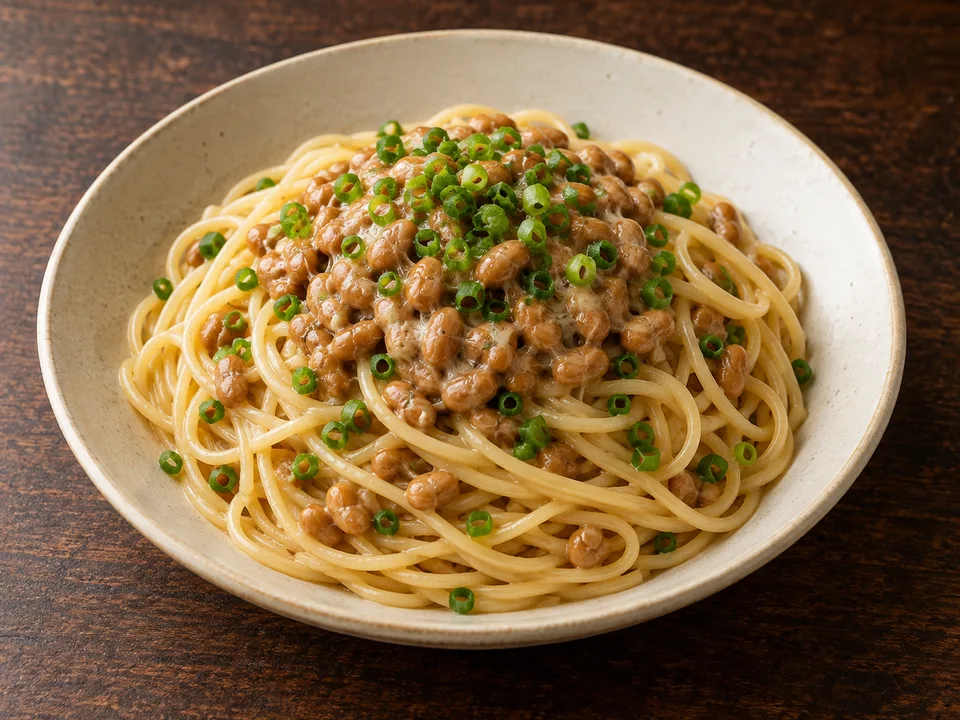
A concise Japanese-style pasta that tops chicken-stock-seasoned spaghetti with natto mixed with its seasoning and scallions, preserving its sticky texture.
Dishes in this family
Each dish keeps its own guide; compare the ingredient and preparation differences here.
 Wafu Kinoko Pasta (Japanese-style Mushroom Pasta)A dish from Japan's own "wafu spaghetti" genre, pairing mushrooms with Japanese seasonings such as soy sauce, mentsuyu, or dashi. No single original recipe can be confirmed; schools diverge on the type and prep of mushroom, the choice of Japanese seasoning (soy sauce, mentsuyu, shiro-dashi, or dashi-soy plus salted kelp, among others), and whether bacon is used.Read this dish →
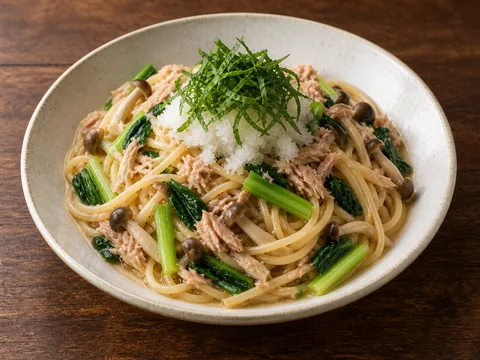 Japanese-style Tuna PastaA soy-and-dashi tuna spaghetti with mushrooms and komatsuna, finished lightly with grated daikon and shiso.Read this dish →
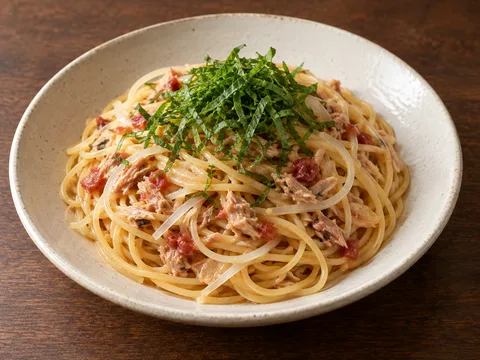 Ume Shiso PastaA tossed pasta balancing pounded umeboshi and fresh shiso with tuna, bonito-based noodle soup concentrate, olive oil and garlic.Read this dish →
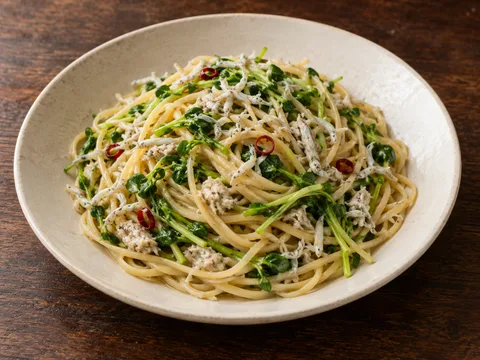 Shirasu PastaA Japanese-style oil pasta that crushes half the shirasu into the sauce and keeps the rest intact, with toasted soy sauce and pea shoots.Read this dish →
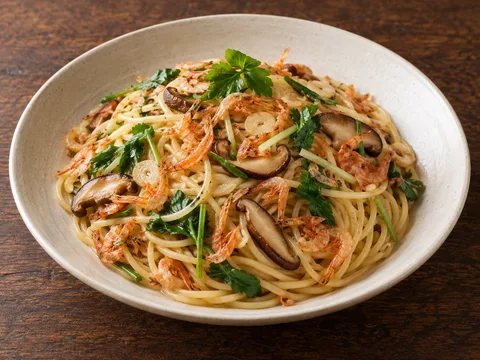 Sakura Shrimp PastaA fragrant Japanese-style spaghetti coating dried sakura shrimp and shiitake with pasta water, soy sauce, garlic and mitsuba.Read this dish →
Cook this pasta on video
Watch the creators’ original videos for the method and finish.
Fabioシェフが本気で作った【納豆パスタ】一度食べたらリピ決定の無限パスタです!Watch on YouTube ↗
Meet the dish
Japanese home cooking
Join hot noodles and room-temperature natto at plating so its stickiness, bean texture and condiments remain intact.
Pasta shapes to use
- Spaghetti
Key ingredients
- Natto
- Natto seasoning
- Scallions
- Chicken stock
Follow the cooking scenes
-
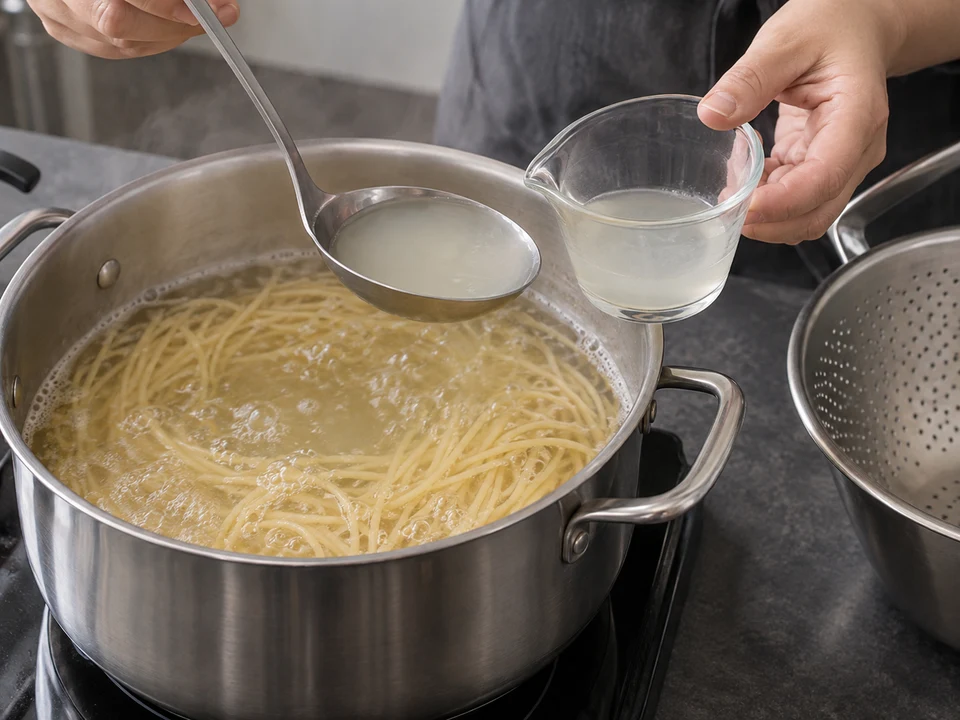
Step 1: Reserve pasta water
Cook spaghetti to the package time and reserve a small amount of water before draining. Keep the noodles hot.
-
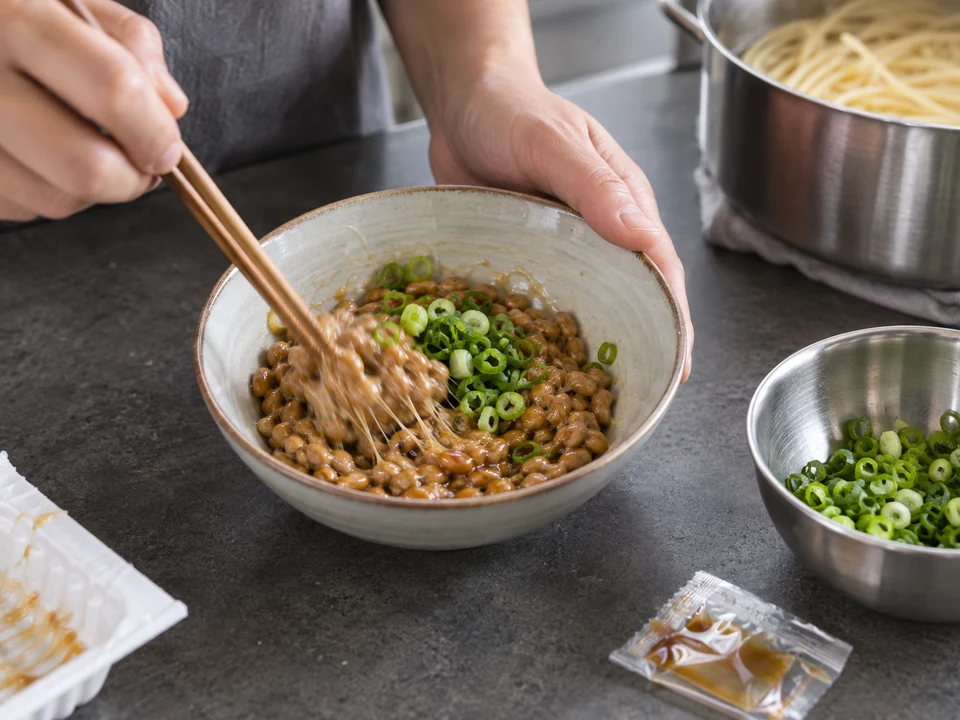
Step 2: Mix the natto
Stir natto thoroughly first, then mix in its seasoning and scallions.
-
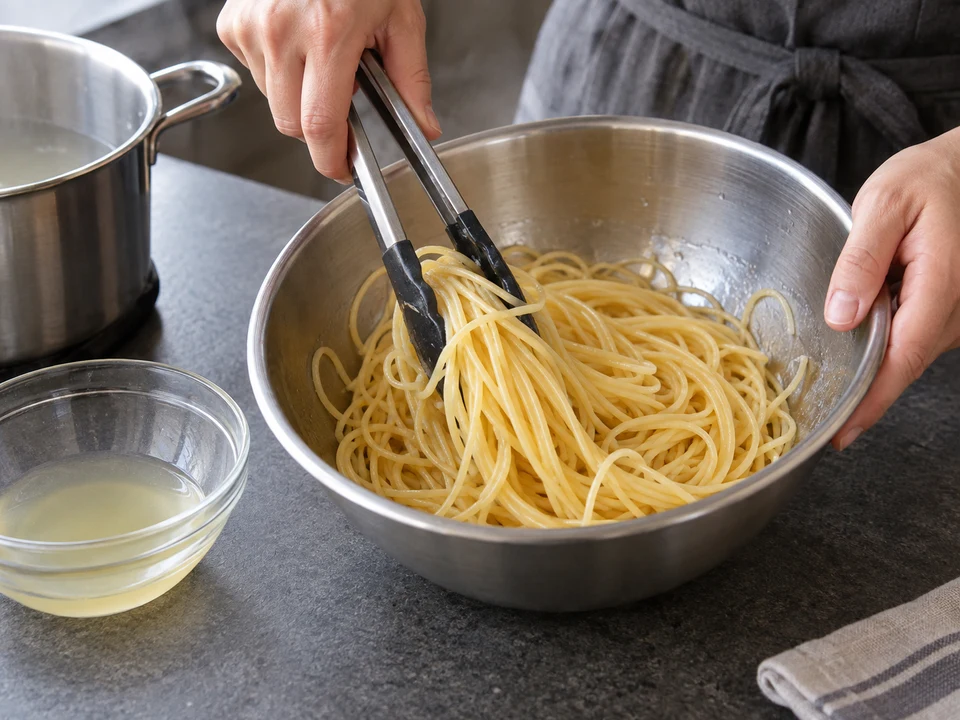
Step 3: Season the noodles
Combine pasta water and chicken stock seasoning in a bowl and toss with the hot spaghetti, using only enough liquid to coat it.
-
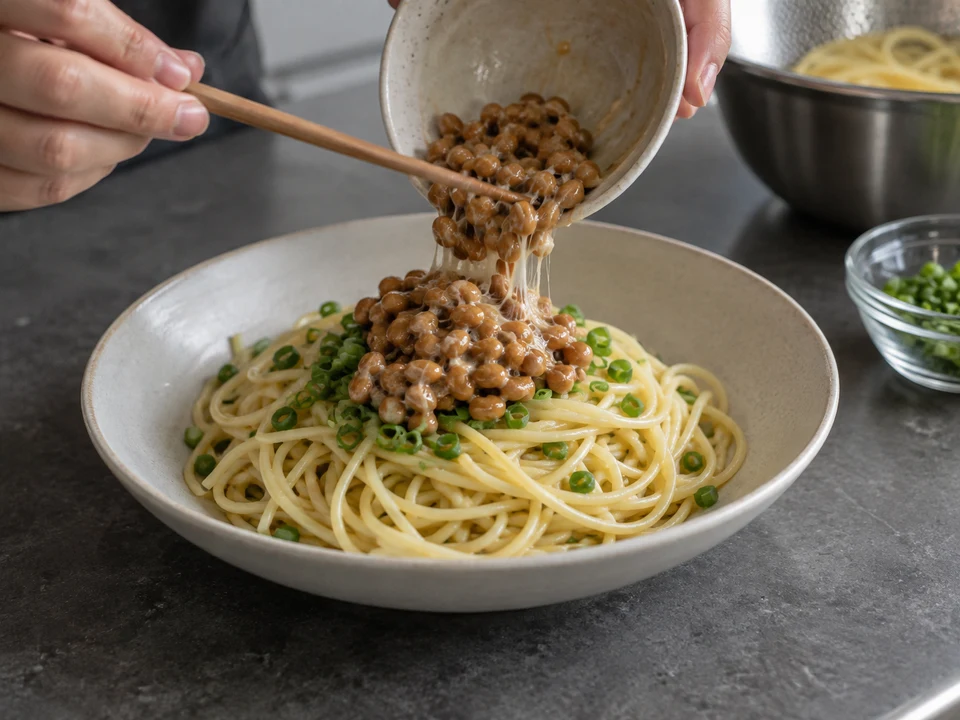
Step 4: Top with natto
Plate the seasoned noodles and place natto in the center to be mixed through while eating.
What to watch for
- Stir natto before adding its seasoning for an even sticky coating, then add the seasoning gradually while tasting for salt.
- Season only the noodles with chicken stock and keep the natto out of the pan so its aroma and sticky texture remain intact.
What sets it apart
Unlike sautéed Japanese-style pasta, this dish depends on uncooked natto added at the end.