
United States · No.52 / 103
Pasta primavera
Pasta primavera
Penne is paired with zucchini, yellow squash, asparagus, tomatoes, and peas, then lightly bound with pecorino, lemon, and basil.
Log a cooked day
This log is stored only in this browser. Choosing a dish does not log it.
Meet the dish
An American vegetable-pasta idea built around briefly sautéed seasonal produce
Several spring and summer vegetables are sautéed briefly rather than stewed, preserving their color, texture, and tomato juices around penne. Cream is unnecessary; melted pecorino, lemon juice, and basil provide a light bond.
Pasta shapes to use
- Penne, whose size matches the chopped vegetables
Key ingredients
- Zucchini
- Yellow squash
- Asparagus
- Cherry tomatoes
- Peas
- Pecorino
Follow the cooking scenes
-
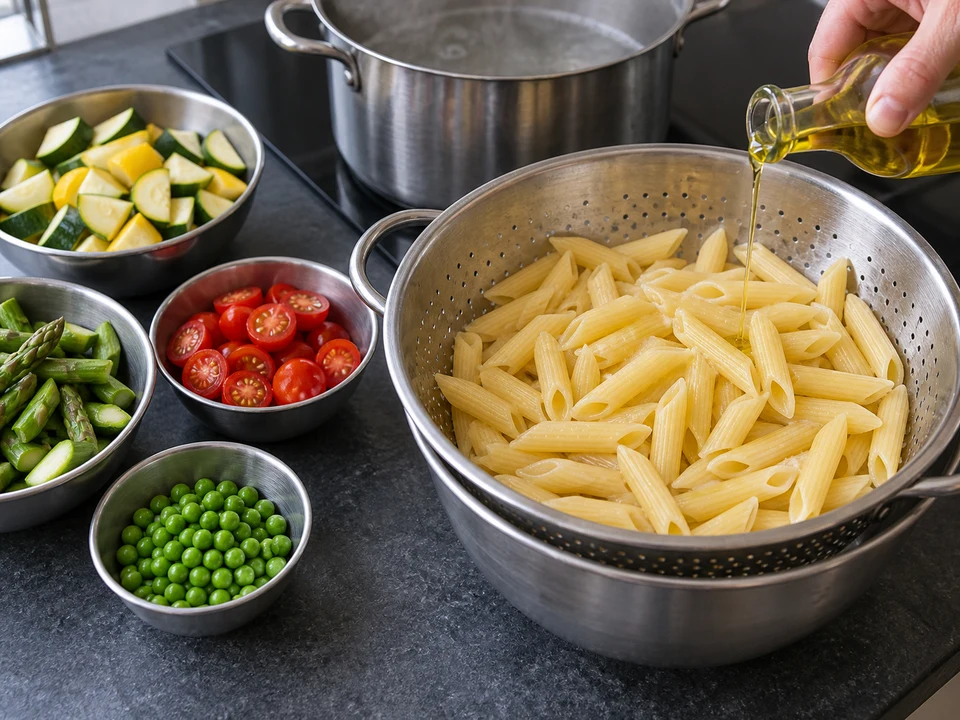
Step 1: Cook the pasta al dente
Boil penne in salted water according to the package until al dente. Drain and apply only a thin film of olive oil to prevent sticking. Cut the vegetables into pieces that can be lifted with the pasta.
-
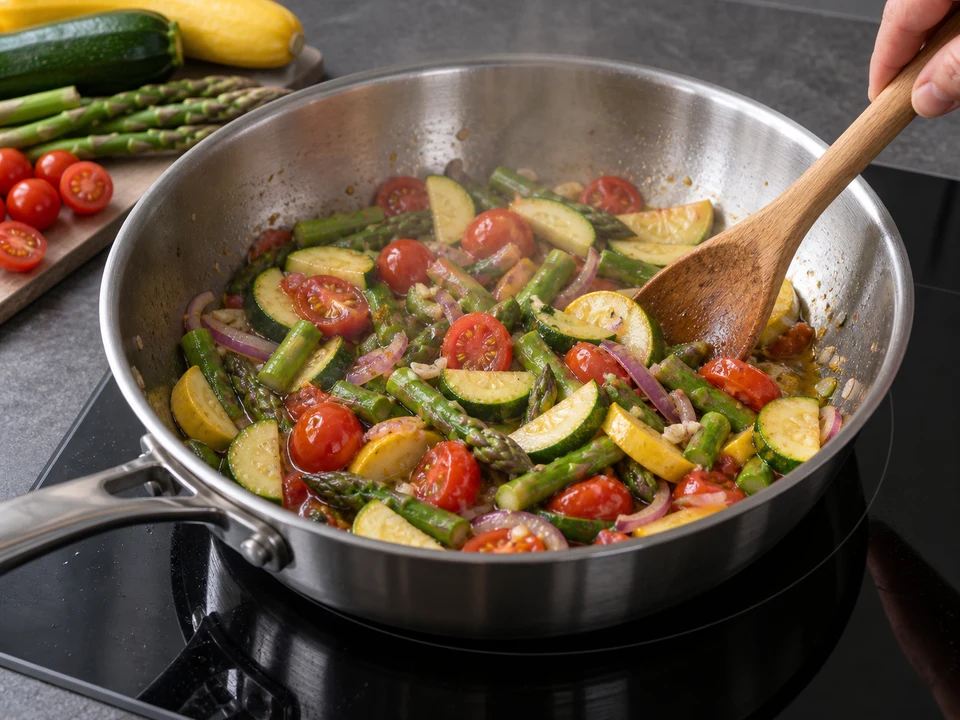
Step 2: Sauté vegetables for 3–4 minutes
Heat oil in a deep skillet and sauté garlic, red onion, zucchini, yellow squash, asparagus, and halved tomatoes over medium heat for 3–4 minutes. Stop while they retain shape and the tomatoes just begin to release juice.
-
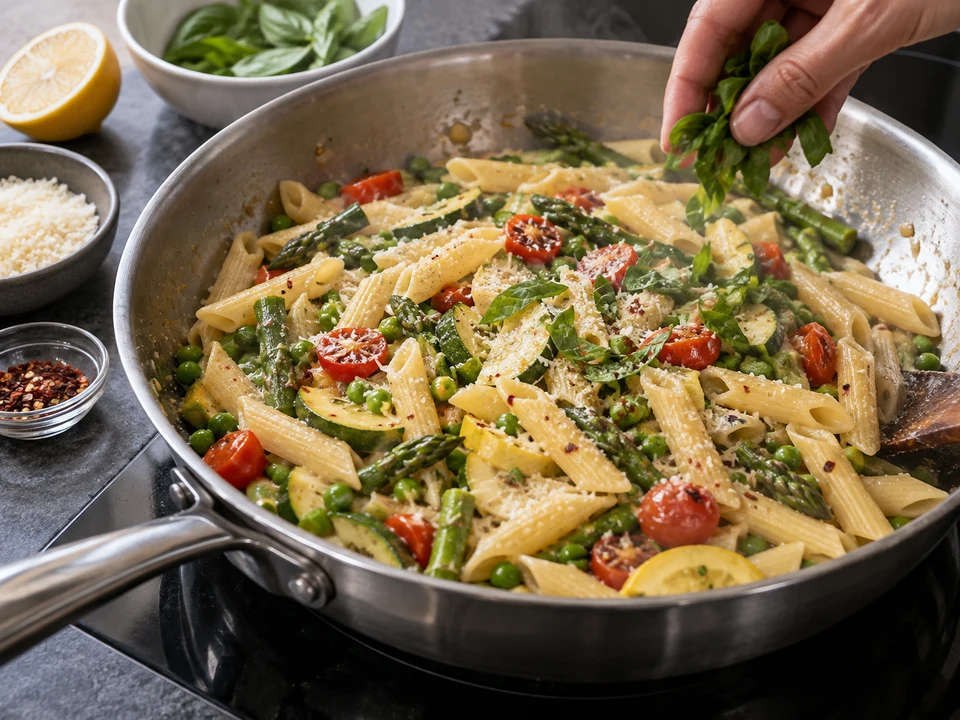
Step 3: Bind with cheese and acidity
Add penne, thawed peas, pecorino, lemon juice, and chili flakes. Toss until the cheese lightly coats the pasta, then remove from heat and stir in basil and optional tarragon.
What to watch for
- Cut the vegetables evenly and cook them quickly over assertive heat. Letting them release all their water flattens both texture and flavor.
- Add lemon and herbs only after the cheese has melted. If the vegetables have released enough juice, avoid diluting the dish with excess oil or pasta water.
What sets it apart
Rather than reducing one vegetable into a sauce, primavera keeps several seasonal vegetables distinct after only a 3–4 minute sauté.
Gear and ingredients for this dish
Purchase suggestions for preparing this dish, including tools and ingredients.