The Thinner the Pan, the Faster It Reacts — And Cools
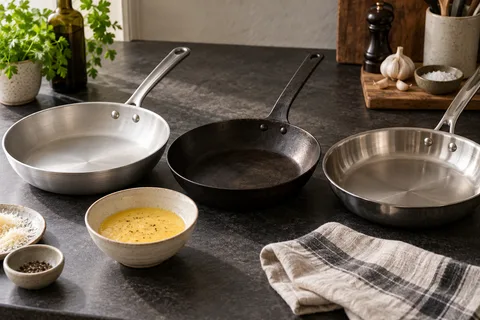
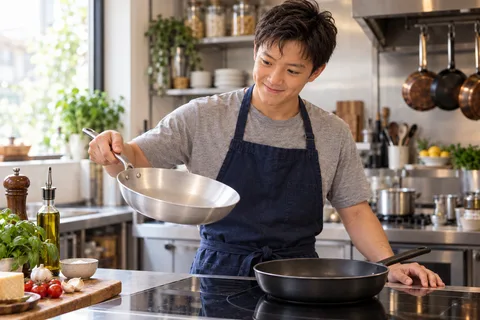
What pro tool lists actually share isn't the material — it's how fast the heat rises and falls. A millimeter of thickness changes how easy carbonara's emulsion is to catch.
Japanese chef
Tomomi Ogura
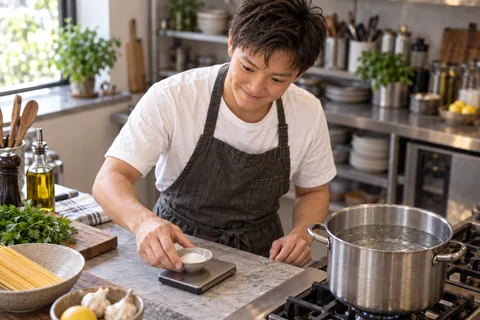
Logical, professional-standard A teaching style built on explaining the "why" behind every step. His restaurant held a Michelin star for six straight years from 2017, and he delivers that logic systematically in a numbered video series.
小倉知巳のイタリアンプロ養成講座 · ~250K subscribers (as of 2026-09-05)
Plays through the official embed
Ragù alla bolognese一つ星イタリアン店の白いボロネーゼ「ラグー・ビアンコ」【イタリアンプロ養成講座 vol.92】
Cacio e pepeミシュラン1つ星イタリアン店の「カーチョエぺぺ」【#イタリアンプロ養成講座 vol.13】
Carbonaraミシュラン1つ星イタリアン店の「そら豆のカルボナーラ」【イタリアンプロ養成講座 vol.26】
Mentaiko Spaghettiミシュラン1つ星イタリアン店の「明太子のスパゲティ」【イタリアンプロ養成講座 vol.24】
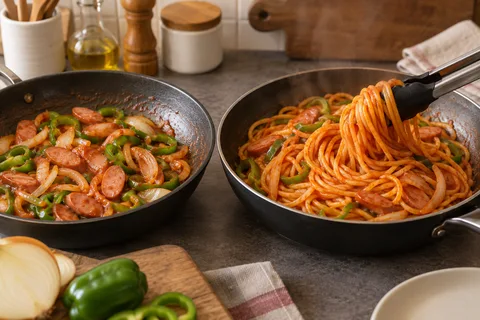
Napolitanイタリアンシェフが教える子どもも一緒に楽しめる「フジッリで作るナポリタン」【イタリアンプロ養成講座 vol.114】
Spaghetti al Nero di Seppiaイタリアンシェフが教える「イカスミとうるいのスパゲッティー」【イタリアンプロ養成講座 vol.115】
8 dishes


Add them all to your shopping list
Each link is based on the source note on the card and on the chef’s own videos and posts. Items marked “unverified” include editorial guesses. None of this is an endorsement or partnership.
What pro tool lists actually share isn't the material — it's how fast the heat rises and falls. A millimeter of thickness changes how easy carbonara's emulsion is to catch.
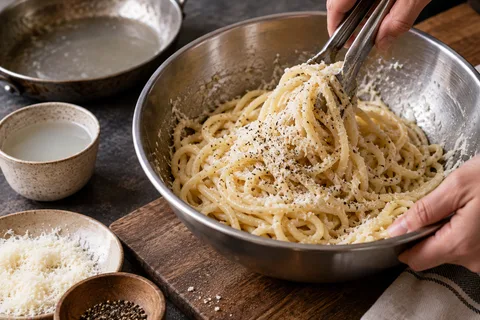
Cacio e pepe has just two elements asserting themselves — Pecorino's salt and pepper's bite — so grind coarseness alone changes the plate. Tellicherry is a size grade, not a variety.
Seared or pale, red wine or white, milk or none — eight chefs disagree on nearly everything, and simmer time alone splits by a full order of magnitude, 30-60 minutes against 3-5 hours.
Cacio e pepe comes down to cheese and black pepper, yet almost every failure has one cause — a pan that's too hot when the cheese goes in. Eight chefs split into three schools for that moment.
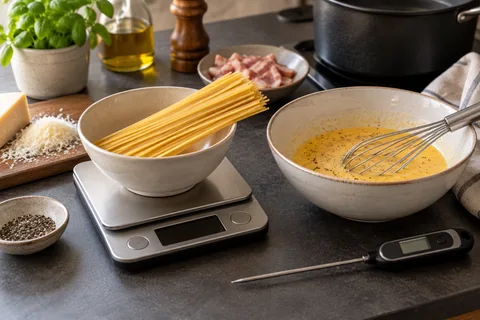
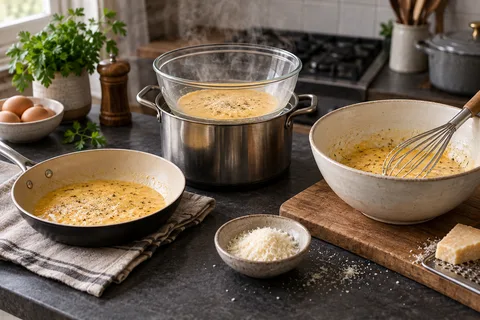
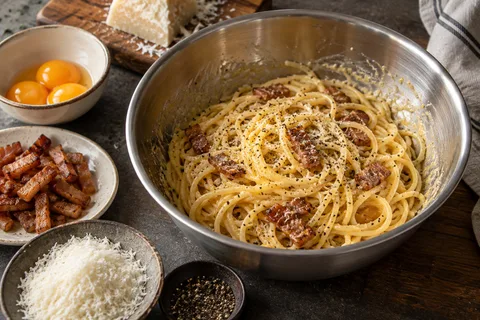
Carbonara splits over one question — where the egg comes up to temperature. Direct heat, bain-marie, or residual heat: five chefs, plus the tip line in Fabio's transcript about hot water and eggs.
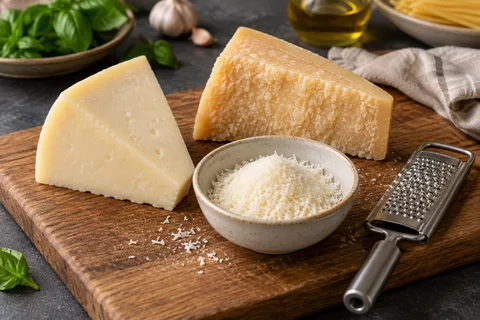
Ogura mixes Parmigiano into raw egg for carbonara, where shred size decides whether it melts evenly. In his cacio e pepe, cheese is just grated over the top — so fineness matters far less.
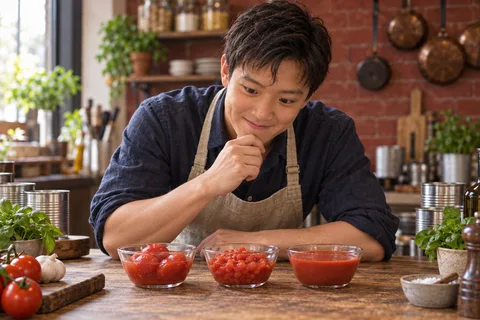
San Marzano DOP only proves where and how a tomato was grown — not that it tastes better. What actually separates canned tomatoes is processing stage (whole, diced, passata) and moisture.
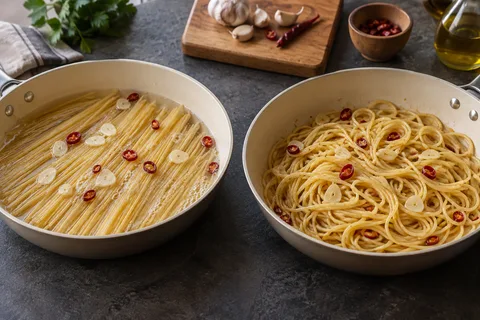
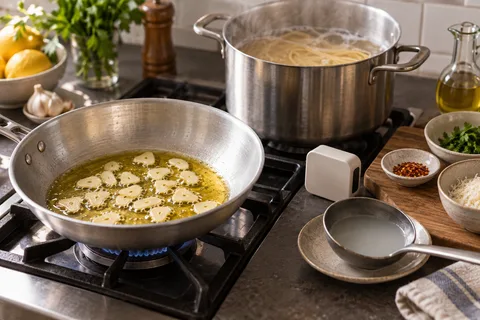
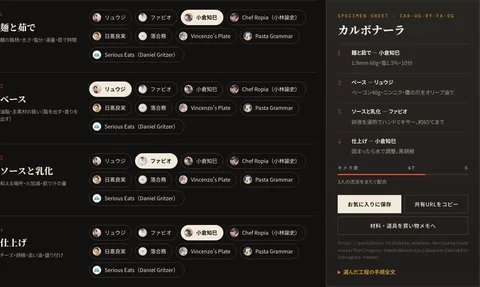
Tomomi Ogura gives the garlic about 7 minutes over medium-low heat, then starts his emulsion 10 seconds before the pasta is done. His carbonara matches egg yolk to Parmigiano by weight, off the heat.
In a carbonara egg mixture, the white starts to set first and the yolk second. That order is why whole-egg and yolks-only recipes come off the heat at different moments.
Emulsifying pasta sauce isn't about mixing harder. It happens only when starch, a safe temperature, and nonstop agitation all line up. Four schools split the work differently.
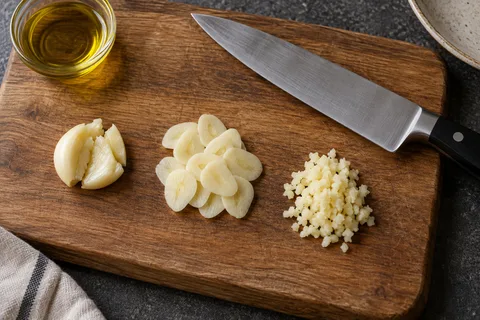
How you cut garlic trades off aroma against burn risk. Mincing should burn fastest, yet Ryuji starts it in cold oil — reading that as burn-proofing is the editors' inference, not his source's.
Ryuji's carbonara skips heavy cream, and so does Vincenzo's Plate — so "no cream" can't be the line between home cooks and tradition. The real split is ingredients, heat, and emulsion.
In the Recipe Builder, a chimera score of 100 doesn't predict failure — it just means no reference video exists for that mix. What each step changes and how sharing and saving work.
Fabio fries the noodles themselves in the pan and Ryuji fries them too, but Ochiai takes the pan off the heat and only tosses. Five schools compared on noodle, ketchup, and frying.
Ryuji's ultimate aglio e olio lists olive oil on two separate lines — one tablespoon each, the same oil. The split appears to come down to whether the oil hits heat.
Ogura's fava bean carbonara, Fabio's rich carbonara and Gritzer's carbonara all pull the egg off direct heat.
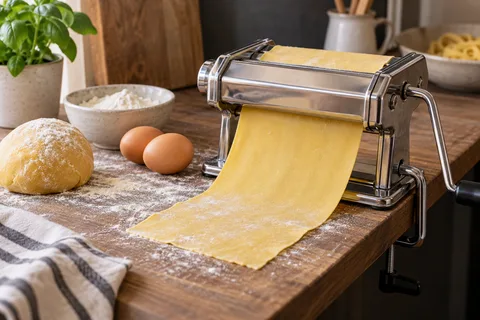
Tomomi Ogura names his flours on note but never gives the ratio. The only dough you can actually copy is Fabio's — 100g 00 flour, 2 egg yolks, a little egg white, 2g salt, 10cc olive oil.
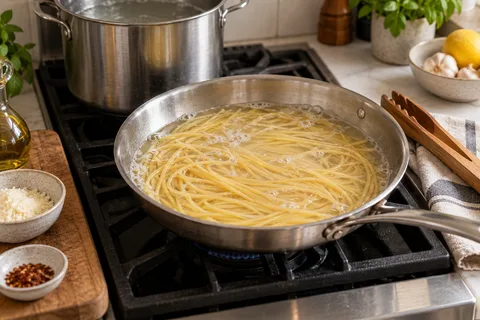
J. Kenji López-Alt makes cacio e pepe without a big pot: noodles boil in a 12-inch frying pan with barely enough water to cover them, then go straight to the sauce with tongs, no draining.
Pecorino is salty sheep's-milk cheese; Parmigiano is milder cow's-milk. Some recipes leave the water unsalted so Pecorino carries the salt; others salt it heavily instead. Pick the cheese first.
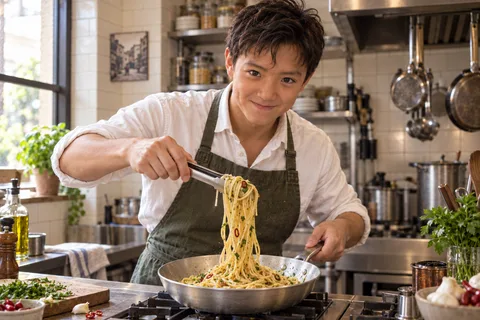
Ryuji's peperoncino skips emulsification: he simmers dried pasta directly in water and bouillon. Tomomi Ogura adds pasta water with ten seconds left on the boil. Six chefs compared.
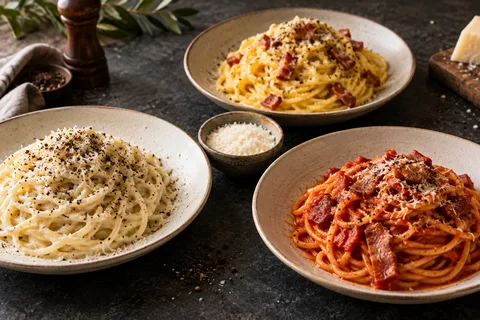
Cacio e pepe's grated cheese runs 17g to 50g per 100g of pasta, and Fabio adds 50g of cream cheese on top. Rome's three classics split along the same three axes: cheese, pork fat, emulsion.
Eyeball a portion of pasta and it can swing by several grams to a dozen-plus per serving (the editors' rough figure).
The standard line is 10g salt per liter (1%), but real carbonara recipes split into 1%, 1.5%, and 2%. Cacio e pepe has a school that uses none at all — the number moves with the job salt is doing.
Moving pasta from pot to pan comes down to two tools. That how much pasta water rides along changes the finish is the editors' read, not a relationship our sources tested.
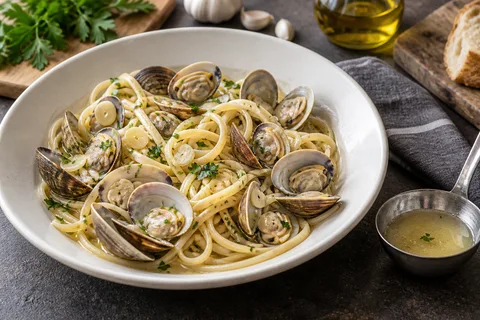
Ryuji's vongole bianco includes a half-teaspoon of kombu tea. Seven takes split on one real question — does the pasta drink clam liquor straight, or get tossed with a pasta-water emulsion?
Fabio's carbonara takes the egg mixture to around 65°C, and the transcript gives two cues: the temperature and the hand blender getting harder to turn. Ogura, Ryuji, and Fabio diverge on one dish.
Sources: [1] [2] [3] [4] [5] [6] [7] [8] [9] [10] [11] [12] [13]

 Ingredients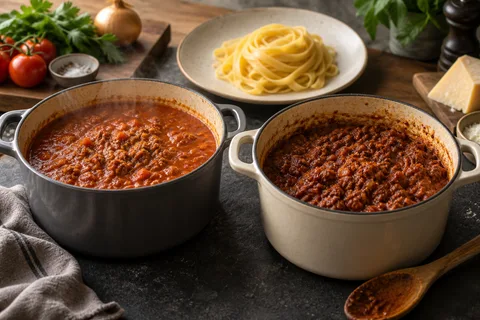

 Chef profiles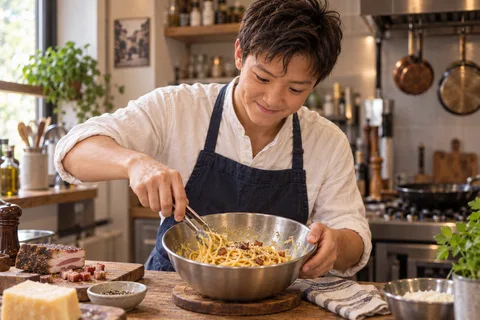
 Reads
Reads