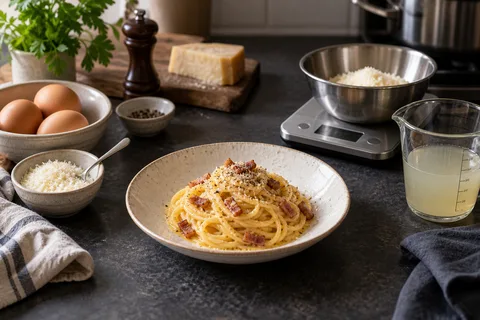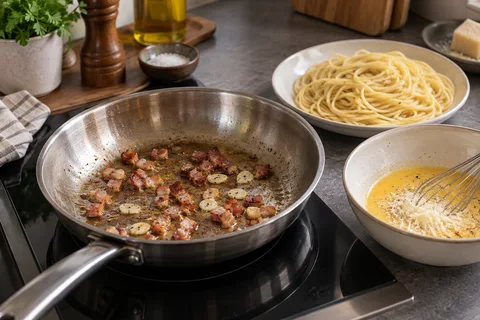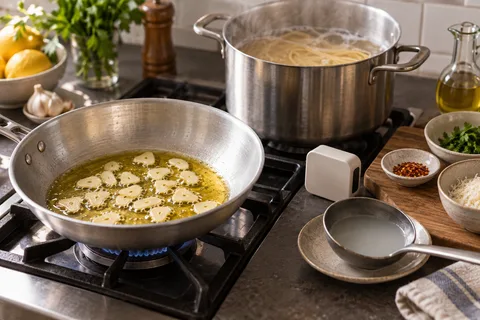
Tomomi Ogura gives the garlic about 7 minutes over medium-low heat, then starts his emulsion 10 seconds before the pasta is done. His carbonara matches egg yolk to Parmigiano by weight, off the heat.
Chef profiles
Explore cooks and their pasta recipes through sources and cooking steps. Compare their approaches without assuming there is only one correct method.
8 articlesItalia Squisita's original cacio e pepe gives no water volume or salt amount — just "enough salt" and water used "sparingly." Its amatriciana browns guanciale in a dry, blazing-hot pan instead.
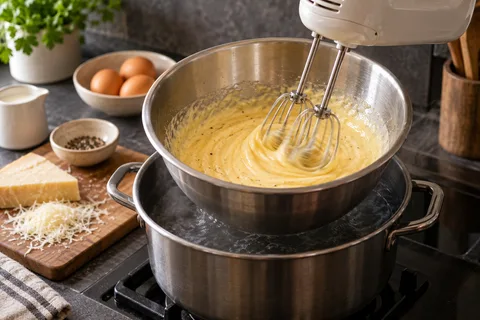
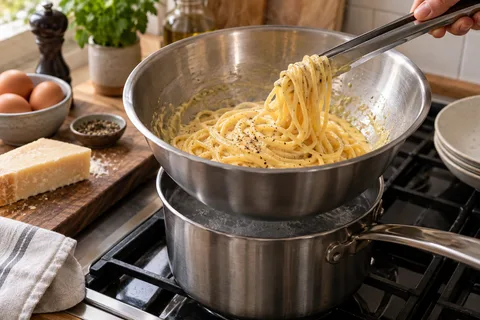
Fabio eases eggs to about 65°C over a bain-marie with a hand mixer — the transcript's tip box says boiling water still won't scramble them. His aglio e olio chars the chili black instead.
On camera, Kenji López-Alt says measurements don't need to be precise. In print, Serious Eats gives grams and milliliters, and a bowl set clear of the water — same school, two levels of precision.
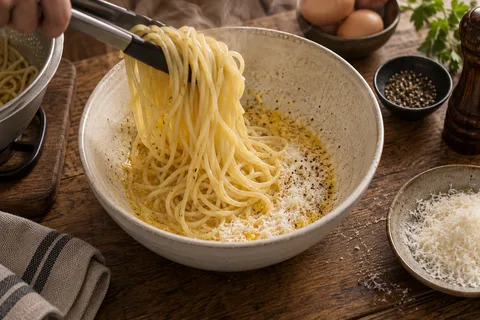
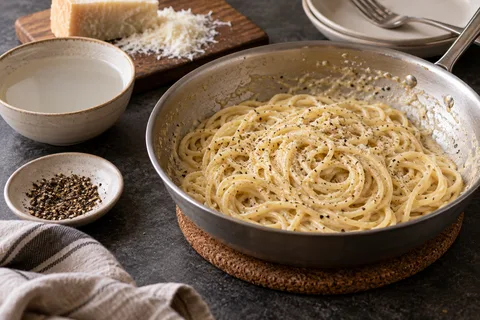
Pasta Grammar's carbonara cuts pasta-water salt in half and emulsifies on residual pasta heat alone, no pan over the flame. Cacio e pepe rests off the heat three minutes before the cheese goes in.
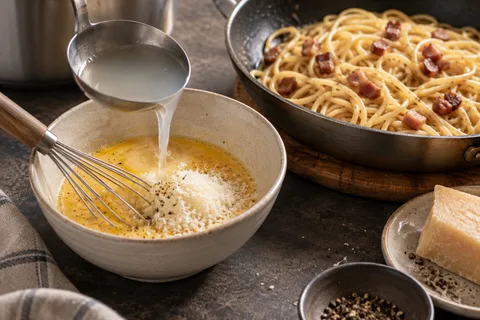
Chef Ropia's carbonara never touches cream — egg and cheese alone create the emulsion. In his book, he thins the egg mixture with cooled pasta water first, which he says keeps it from going lumpy.
Ryuji sautés the bacon and garlic, then turns off the heat and lets the pan cool before adding the egg — a step he arrived at after testing the recipe more than 1,000 times.
Vincenzo's Plate emulsifies both carbonara and cacio e pepe off direct heat, with the pan suspended over the pasta pot's steam. His 2026 cacio e pepe drops salt entirely.