 Chef profiles
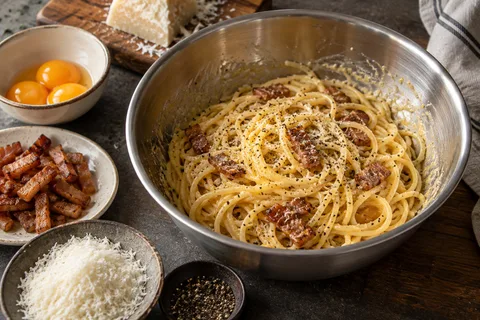
Chef Ropia’s carbonara never has cream in it. Akifumi Kobayashi — Ristorante Floria in Nagano (2013 to May 2023), then Ponte Carbo in Aoyama, Tokyo (August 2023 to 2 March 2025), then Italy as the resident chef at the Japanese Consulate-General in Milan, and now back in Nagano preparing to reopen Floria in autumn 2026 — has spent his YouTube channel, “Chef Ropia’s World of Cooking,” consistently teaching a method that emulsifies with nothing but egg and cheese. In the book version, there’s one more step on top of that: thinning the egg mixture with cooled pasta water first.
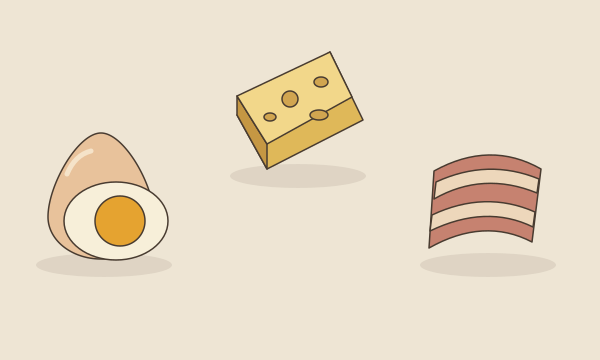
- Egg yolksYolks provide the sauce body without dairy cream.
- ParmigianoCheese thickens and seasons the emulsion.
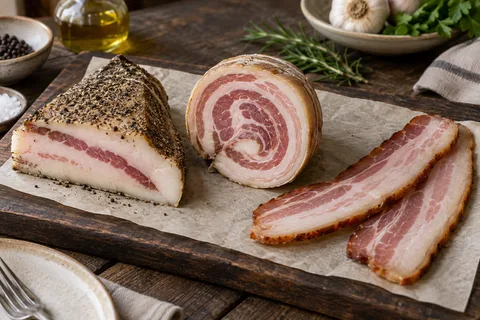
- Rendered pancettaPork fat supplies richness and carries flavor.
Thickness comes from egg, cheese, and rendered fat.
No cream, full stop
Chef Ropia’s video title itself carries the disclaimer “without cream” (Japanese: 生クリームを使わない, namagurīmu wo tsukawanai). Many Japanese home recipes lean on cream to add body, but he deliberately drops it, making the point that thickness comes entirely from the emulsion of egg yolk and cheese. For 100 g of pasta (one serving), the base setup is to mix about 30 g of Parmigiano Reggiano (he explicitly says grated cheese works as a substitute), 2 to 3 egg yolks, and black pepper in a bowl.
Pressing play loads YouTube’s embedded player.Open on YouTube
For the pork, about 30 g of pancetta and 20 g of olive oil go into a cold pan over medium heat; once the oil starts to bubble, the heat drops to low for a slow render — a two-stage heat approach that draws out the fat. He states explicitly that bacon can substitute for pancetta, which shows he isn’t just transplanting restaurant technique wholesale — he’s allowing swaps based on what’s easy to find at home.

- Book versionCooled pasta water loosens the egg mixture before tossing.
- Hitosara versionPlain water thins egg and cheese before the pan finish.
Both versions dilute first to reduce clumping risk.
Thinning the egg first: pasta water in the book, plain water at Hitosara
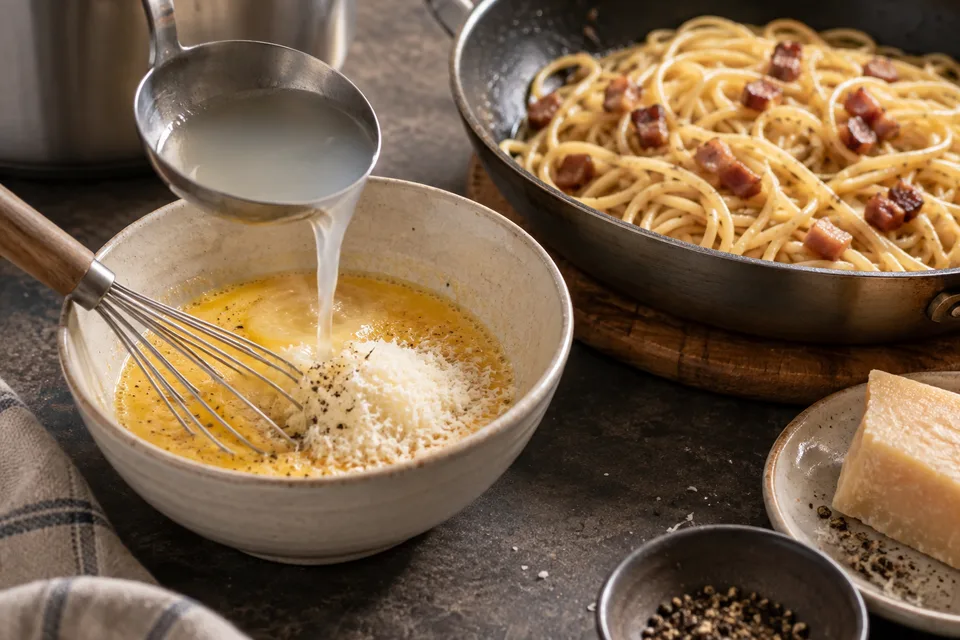
The step the editors find most distinctive about this school is one described in his book: mixing cooled pasta water into the egg mixture to thin it out before combining. In the Cookpad News feature (which names the book: “Chef Ropia: Gokujo no Ouchi Italian,” Wani Books), he’s quoted directly:
Read the full explanation
In the recipe from my book, I mix cooled pasta water into the egg mixture beforehand. A lot of people fail at carbonara because the egg gets overcooked and goes grainy, so if you thin the egg out ahead of time to avoid failure, you can make an authentic carbonara without a hitch.
The Hitosara Magazine recipe feature also notes that thinning the grated cheese and egg with water beforehand, before making the sauce, helps prevent clumping. In the video itself, the pasta — pulled 30 seconds earlier than the package time — is first tossed with the pancetta pan while adjusting the salt, then quickly transferred to the bowl of egg mixture and tossed together. In the video version, he finishes the noodles in a bowl completely off the heat (the restaurant version published on Hitosara is a different procedure: after tossing, he turns the burner back on under the pan to adjust the consistency).

- Charcoal nameThe restaurant name points to carbo and charcoal cooking.
- Home substitutionsPancetta or bacon keep the method accessible.
- Changing techniquesHis channel adapts equipment and heat to each dish.
The chef links restaurant roots with home-scale adaptation.
“Ponte Carbo” is named for charcoal
The name “Ponte Carbo” is introduced as coming from carbo (charcoal in Italian), for charcoal-fire cooking. The restaurant closed on 2 March 2025; its own site announced that he had decided to go to Italy and would be working in Milan (closing notice). The Milan post was resident chef at the Japanese Consulate-General, and he has since returned to Japan: in an April 2026 video titled “Former consulate chef: on reopening a restaurant in Nagano, and cooking on location — since coming home,” he says he is reopening Ristorante Floria in Nagano (video), and the restaurant’s own site now announces a reopening in autumn 2026 (official site). What follows describes the methods he published while the restaurant was open. On his channel, he is known for collaboration videos with Italian masters such as Yoshimi Hidaka and Tsutomu Ochiai. That focus on “how to make the authentic approach work at home” carries through beyond carbonara. For Napolitan, in an episode titled “Assassin’s Napolitan,” there’s a transcript confirming a one-pot method where dry pasta is simmered directly in 400 ml of tomato juice with no pre-boiling — the pasta all’assassina technique applied to Napolitan (the episode · transcript). The theme in that transcript is the savory depth from reducing the tomato juice until it starts to catch, and he also shows how to go either richer or lighter (thinned with water). The channel has a separate Napolitan video that leans into chewy texture and richness instead, showing he varies his angle by dish.
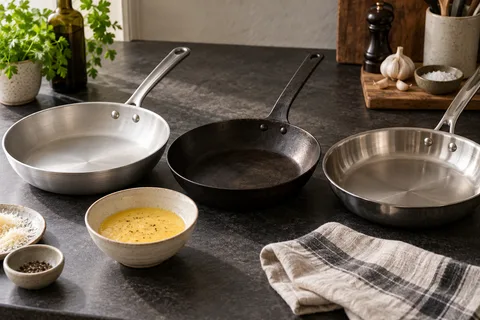
On equipment, the cacio e pepe transcript confirms he uses an iron pan, but the same transcript notes Teflon or aluminum also work (tuberecipe.com/recipe/10174/detail). Which pan he uses in the carbonara episode is unconfirmed. Tongs use in the video is also unconfirmed. For pork, he uses pancetta.
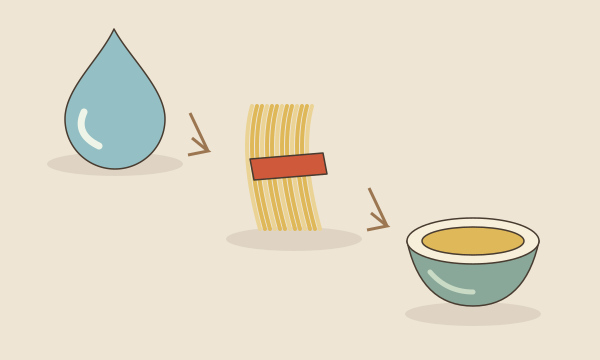
- Thin the mixtureLoosen egg and cheese before hot pasta arrives.
- Add hot pastaResidual heat starts cooking the sauce.
- Toss off heatFinish without placing the egg over a flame.
Pre-dilution makes an off-heat carbonara more forgiving.
Summary: egg and cheese, nothing else
Chef Ropia’s carbonara centers on two things: a clear no-cream stance that emulsifies with only egg and cheese, and a book-version trick of thinning the egg mixture with pasta water first to avoid clumping. He also states pancetta/bacon and Parmigiano/grated cheese are interchangeable, making it easy to reproduce restaurant technique with whatever’s in your kitchen. For how other schools differ in building heat, see the carbonara comparison page; for the science behind why the egg sets, see Egg Coagulation and Carbonara; for the difference between pancetta and guanciale, see Guanciale vs. Pancetta vs. Bacon. To build this school in the recipe builder, see How to Use the Recipe Builder.

 Ingredients