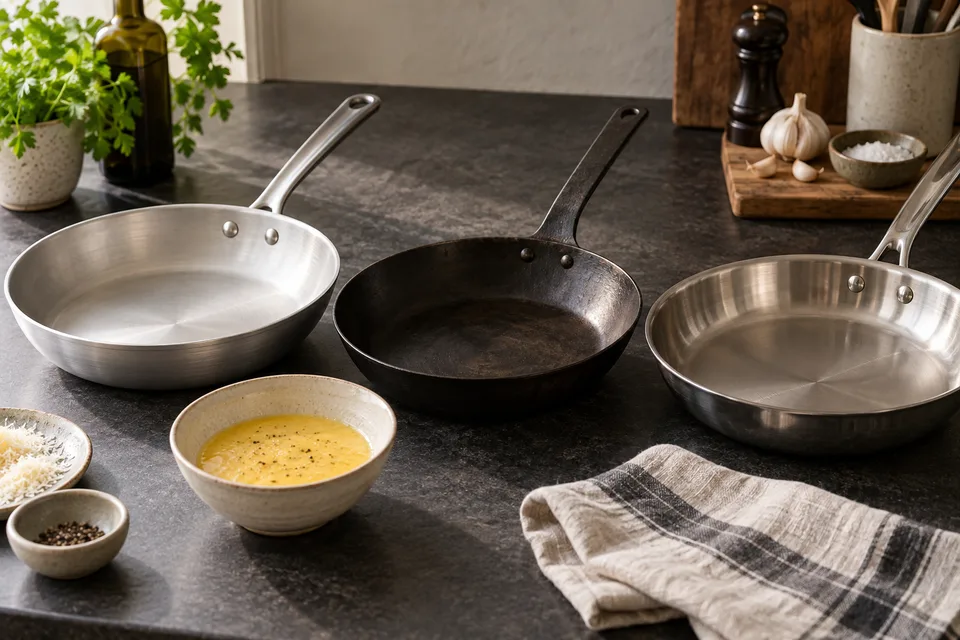
Pressing play loads YouTube’s embedded player.Open on YouTube
Ogura’s fava bean carbonara, Fabio’s rich carbonara, and Daniel Gritzer’s carbonara never let the egg mixture touch direct heat (Fabio also has a separate one-pan version). What the chefs who nail emulsification actually rely on isn’t the pan’s material — it’s how fast the surface temperature drops the moment the flame goes off. That’s likely why aluminum keeps showing up in these chefs’ tool rundowns — though none of the three examples is a case of emulsifying in an aluminum pan, and pairing the material with the residual-heat step is the editors’ own inference. For a step like searing where you want to hold high heat instead, a material with more heat retention such as iron suits better (rendering the fat out of guanciale does not belong here: Serious Eats’ Gritzer renders it over medium heat for about 7 minutes, and neither Fabio’s nor Ogura’s transcripts call for high heat) (within the scope of this piece, we have not confirmed an example of guanciale rendered in an iron pan).
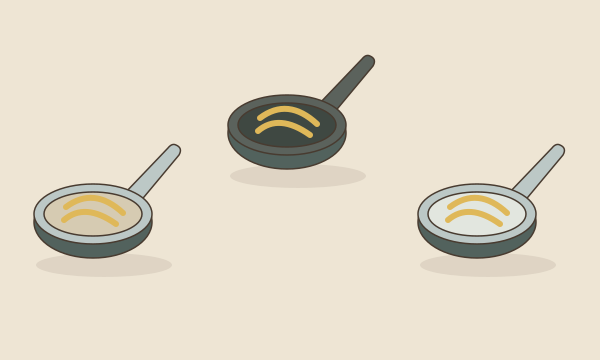
- Aluminum responseHigh conductivity makes flame changes register quickly.
- Iron retentionDense metal keeps releasing stored heat after flame changes.
- Layered stainlessAn aluminum core offsets steel’s uneven conductivity.
Pan character is the speed of change after the flame moves.
Fast to cool, or slow to cool: that’s what sets a pan’s personality
In general cooking science, a pan’s behavior is usually explained by two numbers: thermal conductivity (how fast heat moves through the metal) and heat retention (how long it holds its temperature, determined by the material’s density and specific heat together with its thickness — by specific heat alone aluminium, at about 0.90 J/(g·K), beats iron’s 0.45, but at equal volume iron stores more heat because it is denser). Aluminum has high thermal conductivity, so the pan surface cools quickly as soon as you turn the flame down. Iron holds a lot of heat — once it’s hot, it stays hot, so lowering the flame doesn’t bring the surface temperature down right away. Stainless steel has low thermal conductivity on its own and tends to heat unevenly, which is why most stainless cookware is a multi-layer construction with an aluminum core to compensate. Nonstick coating isn’t really a base material at all — it’s a surface treatment that dampens the pan surface’s reactivity to prevent sticking.
Read the full explanation
For a step like emulsification, where you want to stop just short of a coagulation threshold — roughly 65°C for egg yolk, or about 58°C where egg white in a whole-egg mixture starts to set — a material whose surface temperature drops the moment you kill the heat is easier to control. (The Chemical Society of Japan’s Kagaku Daisuki Club gives 65-70°C as the range in which egg yolk sets fully; treating around 65°C as the point where it begins to set is this site’s own framing. The roughly 58°C figure for egg white is a widely circulated rule of thumb for which we have not confirmed a primary source. Both shift with the individual egg, how fast you’re heating it, and dilution.) The opposite is true for steps where you want to hold high heat, like getting a sear on other ingredients — there, a material with more heat retention has the advantage. Rendering fat out of guanciale is not one of them; Serious Eats’ Gritzer renders it over medium heat, and neither Fabio’s nor Ogura’s transcripts call for high heat.
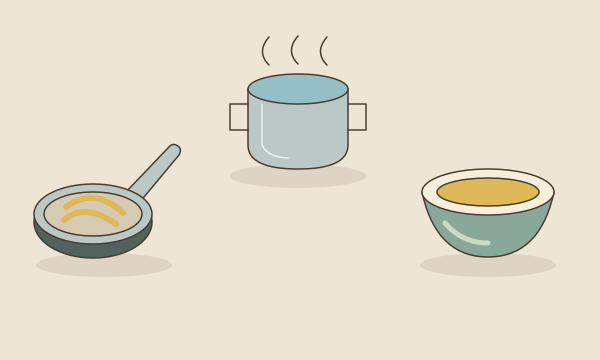
- Ogura off heatResidual warmth cooks the egg as the pan cools.
- Fabio bain-marieA water bath replaces the pan with buffered heat.
- Gritzer double boilerA bowl over water creates the same indirect condition.
Each method prevents an unexpected temperature spike.
The chefs who nail emulsification pull the pan off heat first
For his fava bean carbonara, Tomomi Ogura describes adding pasta water to the pan he sautéed guanciale and fava beans in, then tossing in the pasta and egg mixture only after taking the pan off the heat. (Ogura’s tool guide on note lists an aluminum pan, but the pan material used in this particular video is unverified.) It’s a method that never lets the egg mixture touch direct heat — the pan’s residual warmth alone cooks the egg, and the faster a material’s surface temperature drops, the easier that residual-heat method is to control. (Pairing the material with the residual-heat step is the editors’ own inference; the pan material in this video is unverified.) Fabio, working with a similarly yolk-based sauce, is described in the transcript as skipping the pan entirely: he sets a bowl over a bain-marie and slowly brings it to about 65°C with a hand mixer (this hasn’t yet been cross-checked against the full video). That looks like a call to route through a steady-temperature heat source — the hot water bath — rather than trying to manage the temperature with the pan alone, and Daniel Gritzer of Serious Eats takes the same approach, building the sauce in a double boiler (a metal bowl set over a pot) under the heading “Lower Risk: The Double-Boiler Hack,” and writes: “This is now my preferred method, and the one I’m giving in this recipe.”
What all three examples share is sequencing: they get the cooking surface into a state where the temperature can’t spike unexpectedly, and only then add the egg mixture. Ogura kills the flame under the pan; Fabio and Gritzer swap in indirect heat via a bowl and hot water. Both routes land on the same condition. That’s likely why aluminum pans keep showing up in tool rundowns from Italian-cuisine chefs — that fast response matches well with managing emulsification’s temperature window. (Ogura lists an aluminum pan in his note tool guide, and Fabio does too, but both mentions come from kit rundowns rather than confirmed on-camera use.) None of the three examples above, though, is actually a case of emulsifying in an aluminum pan. We cover thickness and sizing in more detail in our companion piece, choosing an aluminum pan for pasta.
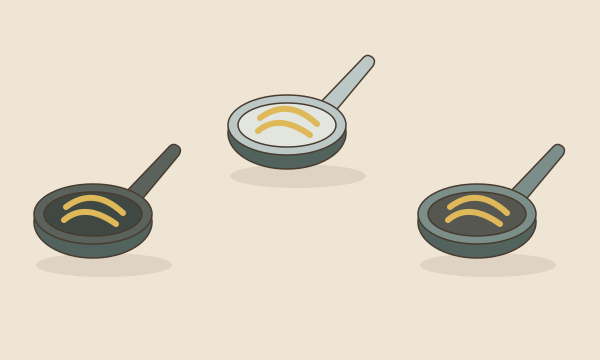
- IronHeat retention favors browning and dry pepper toasting.
- StainlessDurability and induction use support broad kitchen work.
- NonstickLow adhesion suits one-pan reduction and easy cleanup.
These pans earn their place through tasks beyond fine cooling.
Iron, stainless, and nonstick earn their keep at the sear, not the emulsion
Iron pans hold high heat well, so their strength shows up less in emulsification and more in searing. For cacio e pepe, Chef Ropia dry-toasts whole black peppercorns without any fat, then takes the pan off the heat before working in the cheese mixture. The video shows an iron pan, but the transcript notes that nonstick or aluminum would also work — this particular step isn’t determined by the material. Stainless pans work on induction and hold up well over time, but on their own they conduct heat unevenly, which makes them better suited to indirect-heat setups — like a double boiler sitting on top of another pot — than to emulsifying directly in the pan. Nonstick pans pair well with one-pan builds like Ryuji’s cacio e pepe, where butter and grated cheese get worked together over low heat in the same pan, start to finish, with no second vessel needed (the recipe is Ryuji’s “Cacio e Pepe”; the one-pan framing comes from Honki no One-Pan Pasta, Fusosha, March 2024). Nothing sticks and cleanup is easy, which is the appeal for home cooks.
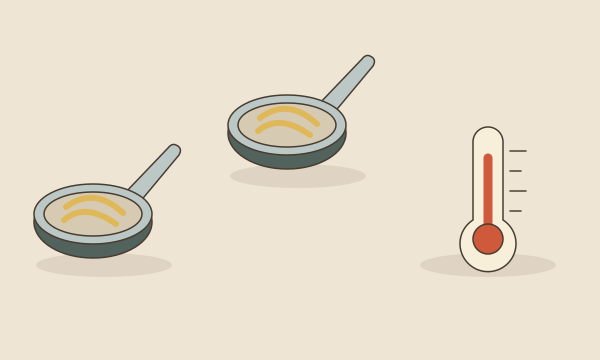
- 24cmA compact surface suits a small home portion.
- 27cmMore room supports two portions and energetic tossing.
- Aluminum bodyQuick response makes heat corrections easy to observe.
A moderate diameter and quick response simplify practice.
Why the practice pan is 24–27cm of aluminum
If you want a single pan to practice emulsification with, a 24–27cm aluminum pan is an approachable starting point. The thinner it is, the faster the temperature swings; a thicker one behaves more like iron, leaning toward heat retention. For a second pan, reach for iron if you want a hard sear or you’re leaning into Napolitan or amatriciana-style dishes, or nonstick if easy cleanup matters more. Salt math doesn’t shift with the pan material, so settle your approach first with there is no single right salt concentration, and you can focus purely on comparing materials.
- Need quick correctionChoose aluminum for off-heat and low-heat emulsions.
- Need held heatChoose iron when browning must survive ingredient cooling.
Material determines how fast temperature moves, not one temperature.
A pan is chosen for its response speed, not its temperature
A pan’s material sets its heat response speed. Aluminum suits steps like emulsification, where you’re building temperature with a low flame and residual heat; iron suits steps like searing, where you want to hold high heat. Stainless and nonstick trade some of that emulsification precision for durability and convenience. Start by comparing the emulsification methods side by side on the carbonara comparison page, then check the temperature science behind them in what emulsification actually is — together they make the reasoning behind a pan choice click into place.



 Ingredients