Pressing play loads YouTube’s embedded player.Open on YouTube
A 2025 physics study of cacio e pepe found that what governs sauce stability is starch measured against cheese mass: below 1% the sauce splits, 2-3% is the ideal band, and above 4% it turns stiff. The same study states that pasta water alone does not carry enough starch and recommends dissolving powdered starch separately, so it is not a direct endorsement of cutting the water. Even so, J. Kenji López-Alt was already skipping the big pot and boiling pasta in a single skillet of water before the study was published. “Use plenty of water” has long been treated as the basic rule — but he’d judged from experience that cutting it back made more sense.

- Large water volumeReleased starch disperses through more liquid.
- Small water volumeThe same pasta makes a more concentrated cooking liquid.
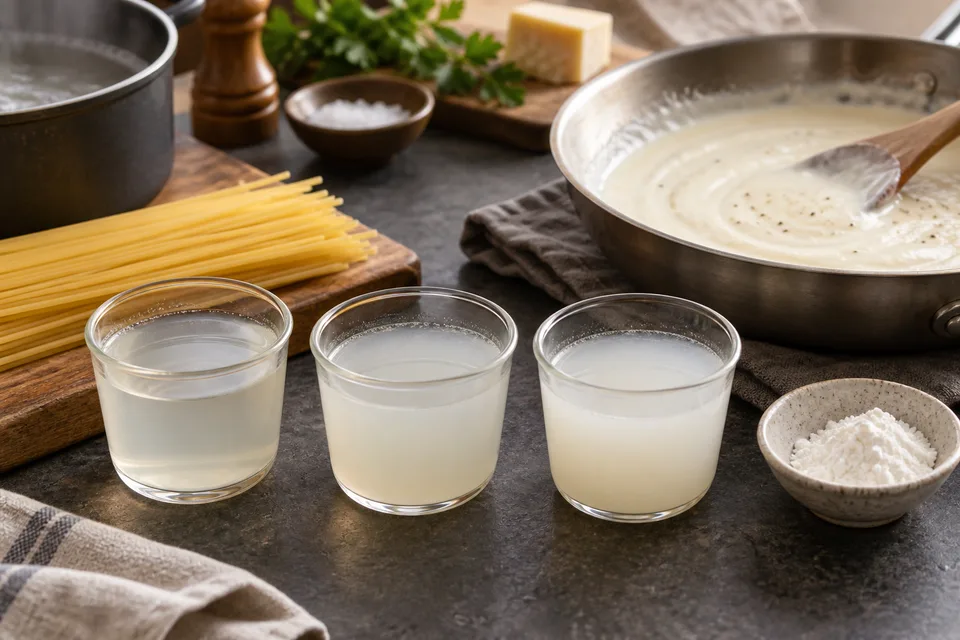
A spoonful of pasta water has no fixed starch strength.
Not all “pasta water” is equally strong
Pasta water shows up in nearly every recipe as the key to emulsification, but what it actually is is water carrying starch released from the noodles as they cook. Boil the pasta in a big pot with plenty of water, and each strand touches a large volume of water, so the starch stays dilute. Boil the same pasta in just enough water to barely submerge it, and the same amount of starch dissolves into far less water, giving the pasta water itself a noticeably thicker body. In other words, “2 tablespoons of pasta water” means something different in strength depending on which method produced it.

- Too little starchFat droplets rejoin and the sauce separates.
- Useful concentrationViscosity slows separation while the sauce stays fluid.
- Too much starchThe sauce becomes heavy, pasty, and hard to toss.
Starch has a working band rather than a maximum-is-best rule.
Starch is glue: too little or too much and the sauce falls apart
Emulsification is the work of dispersing fat and cheese proteins finely and evenly through water. The starch in that water acts like a glue, binding droplets of fat and cheese together and keeping them from separating. Too little starch and the glue doesn’t hold, so the sauce splits more easily. A somewhat higher concentration stabilizes things, but this isn’t a case of more being unconditionally better — go too far and the texture turns heavy and pasty. The starch concentration of pasta water is set by how much starch the noodles release and how much water that starch dissolves into. The variable easiest to control at home is the amount of water.
- Kenji by experienceA shallow skillet concentrated starch before the study.
- Vincenzo citing scienceThe 2026 recipe reduces water and points to later research.
- Paper prescriptionThe study itself recommends separately added starch.
The same variable leads to three distinct prescriptions.
Kenji was already cutting the water before the paper appeared
In its 2026 revision, Vincenzo’s Plate (Vincenzo Prosperi) switched from the 1 tablespoon of rock salt that the 2026 page still lists as “Original Method Only” to no salt at all, and the 2026 version also specifies a smaller water volume (the older recipe calls for 3 L of water for four servings, while the 2026 version says only “less water,” so the two can’t be compared in absolute terms). The same page cites a 2025 study on the physics of cacio e pepe that found higher starch concentration in the pasta water stabilizes the sauce: the page explains its reason for cutting the water and then adds “This is even backed by science!”, citing that 2025 research as the backing for it (the page names no link, author, or journal — identifying it as Bartolucci et al. is this article’s own inference).
Read the full explanation
J. Kenji López-Alt (Serious Eats) had already moved toward less water and more concentrated starch before that study was published. Rather than a large pot, he boils the pasta in a 12-inch skillet with just enough water to cover it, explaining that boiling the pasta in a skillet concentrates the starch in the water and makes for a smoother sauce (no corresponding official video has been confirmed, so this is treated here as a claim from the written article).
Among Japanese cooks, Ryuji uses a comparatively small water volume — 340 cc of water for 100 g of 1.4mm pasta — when making cacio e pepe as a one-pan dish. His own official recipe page makes no mention of starch concentration; the emphasis instead falls on convenience, framed as “so easy because it’s one pan” and “almost nothing but seasonings besides the pasta.” Because there’s no separate boil and the cooking liquid is reduced down before butter and grated cheese go in, the starch released from the noodles stays in the pan rather than being discarded (there’s no step where pasta water is set aside).
Traditional Roman framing, by contrast, is far more intuitive. In Claudio Gargioli’s recipe from the storied trattoria Armando al Pantheon (featured on Italia Squisita), the water volume is never given as a number — it’s described only as “avara” (stingy, sparing). At least in this recipe, the water volume is communicated through a feel word rather than a figure; whether other Roman cooks use similar language has not been confirmed.
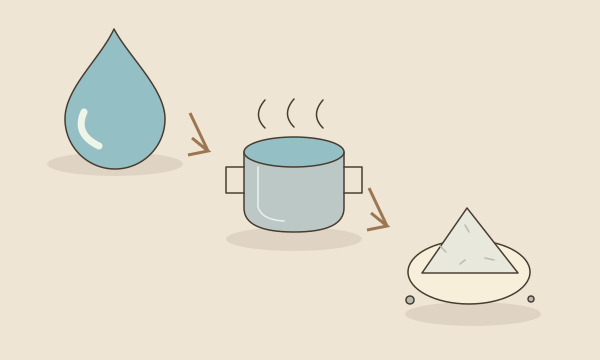
- Reduce the volumeUse less than your usual pot method as a first test.
- Keep pasta submergedChoose the minimum that still covers and circulates noodles.
- Recalculate saltMatch salt weight to the new water amount.
A modest water cut is a controlled home experiment.
Start by cutting the water 20-30%
If you’re boiling in a large pot, the easy first move is cutting the water volume called for in the recipe by 20-30%. Aim for the minimum amount that keeps all the pasta fully submerged, and stir gently with chopsticks or tongs during the first minute of boiling to prevent sticking. When you set aside pasta water before emulsifying, taste as you go and check the saltiness too, since you are working with less water than usual. Because cutting the water volume makes the same amount of salt taste stronger, recalculating your salt against the new water volume cuts down on mistakes.
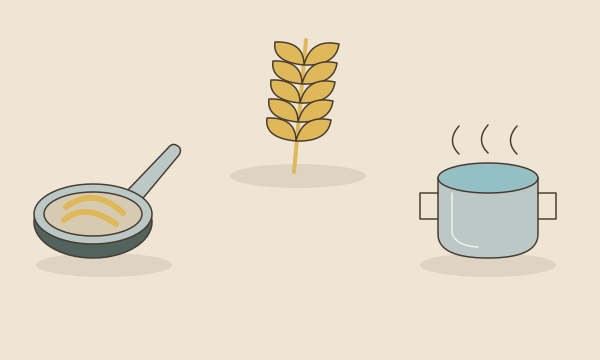
- Less cooking waterConcentrate the starch pasta naturally releases.
- Added powdered starchSet starch against cheese mass more directly.
- Plenty of waterFavor free circulation where emulsion needs less starch.
Choose the starch strategy for the sauce, not as dogma.
Same variable, different prescription
“Use plenty of water” still holds up for its other purpose — keeping the pasta circulating evenly and cooking without hot spots. But for a dish like cacio e pepe, where the finishing sauce depends on starch in the pasta water, deliberately cutting the water volume to concentrate that starch makes just as much sense. Kenji moved toward less water from experience, before the research; Vincenzo’s Plate moved the same direction citing the research as its basis. They point at the same variable — how concentrated the starch is — but the paper itself says pasta water alone doesn’t carry enough starch and prescribes dissolving powdered starch separately, so it doesn’t straightforwardly back up simply using less water. Start by comparing recipes with different water volumes on the cacio e pepe comparison page. Reading the emulsification science article and why there’s no single correct salt concentration alongside this one will help the logic behind how you boil click into place.

 Reads
Reads