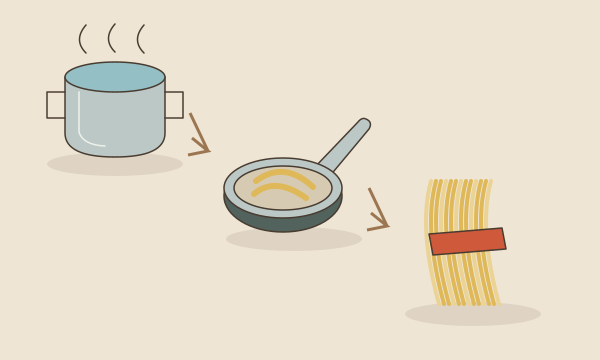
- Package boilThe printed time covers the hot-water stage.
- Sauce finishHeat and moisture keep cooking the noodle afterward.
- Final textureDrain firmer when the pan stage will be longer.
The pan finish belongs inside the total cook time.
The number on the box never accounts for the pan
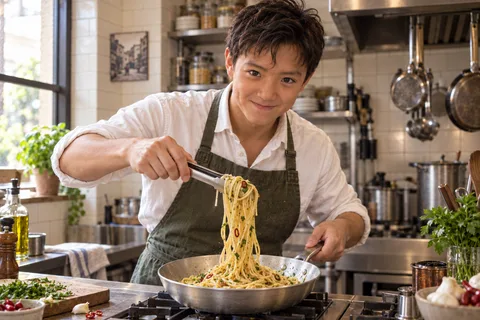
The boil time printed on a box of dry pasta appears to be calibrated for the texture you get pulling the noodles straight out of the pot and eating them as is — the editors’ read; we have not found primary sourcing from manufacturers stating what the printed time is based on. It does not include the time you spend tossing the pasta with sauce in a pan, or letting it finish with residual heat. That is why many chefs pull their pasta out of the water earlier than the package says.
Read the full explanation
The onset temperature at which the starch in spaghetti begins to gelatinize has been measured by differential thermal analysis at 59–60°C (138–140°F) (Takahashi et al., “The Gelatinization Temperature of Starch in Foods of Relatively Low Moisture Content,” Journal of the Japanese Society of Starch Science 29(1), 1982), and pasta keeps absorbing water the entire time it sits in the pot. During the 1–2 minutes it spends being tossed with sauce in the pan afterward, heat and moisture are still working their way into the noodle’s core — so unless you leave it a notch firmer at the moment you drain it, it will end up softer than intended by the time it hits the plate. Pulling pasta early is not the same as undercooking it; it is a subtraction that accounts for the heat and water absorption still to come in the finishing step.
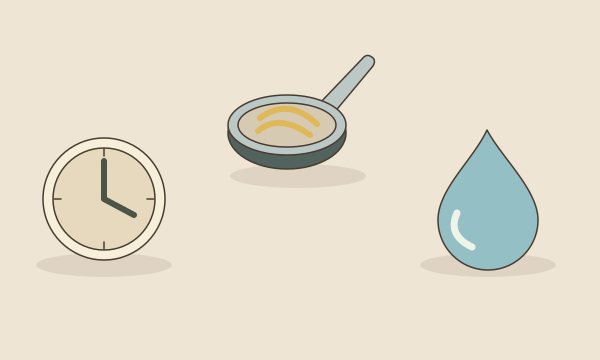
- Brief off-heat tossA short finish needs only a small early pickup.
- Long sauce finishMinutes in sauce justify leaving the pot much earlier.
- Half-time transferSome vongole methods move most cooking into clam liquid.
The subtraction reflects where the remaining cooking happens.
Some pull it 30 seconds early. Others pull it at half.
The size of that early pull varies a lot by chef.
Read the full explanation
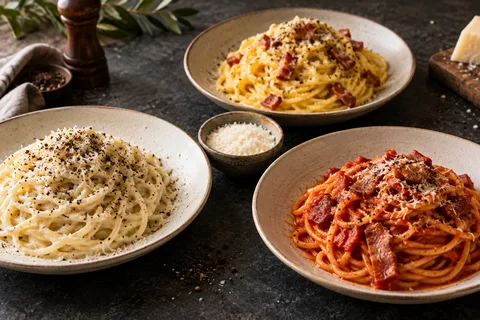
- Ryuji says to boil carbonara “1 minute under the package time” (salted at 1% of the water’s weight).
- Chef Ropia, also for carbonara, pulls the pasta “30 seconds before the package time,” and widens that to “2 minutes under the package time” for cacio e pepe.
- Tsutomu Ochiai (in the NHK “Kyo no Ryori” version) is described as boiling 140 g of 1.4 mm spaghetti (for two servings) in 3 L of water salted with 2.5 tbsp (about 1.5%) “1 minute under the package time.”
- Italia Squisita (chef Gabriele Perilli) drains amatriciana pasta “1 minute before the specified time” and drops it straight into the sauce pan to finish cooking there.
- Pasta Grammar sets the timer 2–3 minutes under the al dente time the package lists for aglio e olio, and finishes the rest of the cooking in the sauce.
- Yoshimi Hidaka boils vongole bianco only “up to half the time listed on the package before draining” — the earliest exit from the pot in this comparison. The rest of the cooking happens in the pan, “1 minute short of the remaining boil time,” so his total cooking time comes to the package time minus 1 minute — a figure that happens to match Ryuji’s and Ochiai’s, though for those two it describes time in the pot alone: Ochiai puts the pan back over medium heat at step 3, and Ryuji sets his cooled pan over low heat to bring in the egg mixture. Hidaka’s quotes here are the wording of the Kurashiru recipe, reproduced from what he taught them.
- Not Another Cooking Show, also for vongole bianco, moves the pasta to the pan “1–2 minutes before the package time, just short of al dente.”
Chef Ropia’s carbonara video shows the flow from draining to tossing with the egg mixture.
Pressing play loads YouTube’s embedded player.Open on YouTube
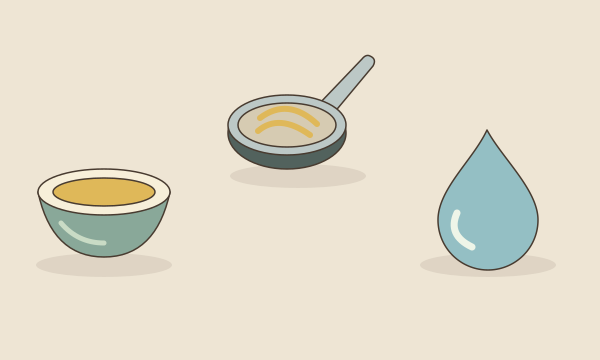
- Residual-heat finishLittle active cooking remains after the drain.
- Pan simmerLonger heat in sauce requires a larger subtraction.
- Liquid finishBroth can complete cooking outside the pasta pot.
Post-pot heat and liquid set the early-pickup size.
What decides the size of the cut: time spent after the pot
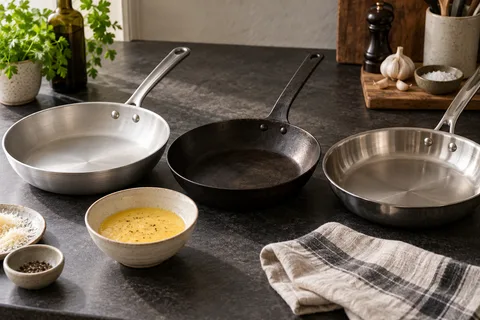
The editors’ read is that this spread exists because the length of the finishing step differs from school to school. Pasta Grammar states outright that the 2–3 minutes it shaves off the pot time gets spent finishing in the sauce, so its early pull runs large. Chef Ropia’s carbonara, by contrast, only tosses the pasta briefly in the pan before moving it into a bowl of egg mixture that is off the heat, finishing with residual warmth rather than active cooking — so the time spent cooking after draining is short, and the early pull is only about 30 seconds.
Read the full explanation
A second variable is which liquid the pasta finishes in once it leaves the pot. Hidaka’s vongole bianco pulls the noodles at half the package time, drains them, and finishes the rest in the clams’ steaming liquid plus added hot water — none of the pasta water comes along. In that case, “early” is not a reduction in doneness but a decision about where the cooking happens: the recipe spells out both halves — half the package time in the pot, then “1 minute short of the remaining boil time” in the pan — which adds up to the package time minus 1 minute. Whether the liquid doing that finishing work is the sauce itself or a splash of added hot water also changes how much time you should subtract.
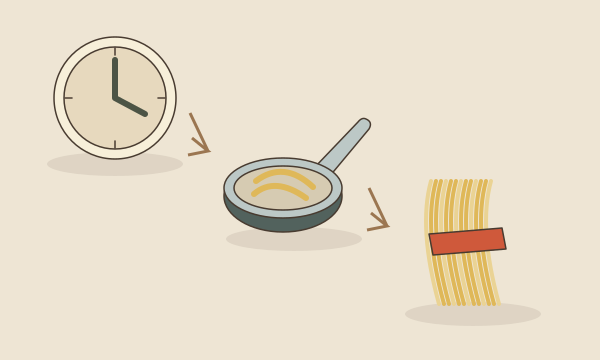
- Read package timeUse the printed time as the total starting reference.
- Estimate pan timeCount active sauce cooking and residual heat.
- Subtract and testDrain that much earlier, then adjust next time.
Work backward from the finish your sauce requires.
Working out your own subtraction
- Start with the time printed on the package.
- Estimate how long the finishing step will run. A quick toss through the sauce before plating calls for 30 seconds to 1 minute; sautéing it in the pan calls for 1–2 minutes.
- If you’re finishing in a liquid-heavy sauce like a clam broth, keep in mind that some schools pull the pasta out nearly halfway through the package time, and adjust by tasting as you go.
- Work backward from your target finish time to set the timer for when to drain.
For where carbonara schools diverge on timing, see the carbonara comparison page and the article breaking down carbonara by chef; for vongole bianco, see the vongole comparison page and the article comparing vongole bianco by chef.

- Short finishSubtract less when noodles only pass through sauce.
- Long finishSubtract more when noodles keep simmering in the pan.
Early pickup is a transfer of cooking time, not guesswork.
Summary
The time printed on the package is only a guide for pasta eaten straight out of the pot. Any time you finish the dish in a pan or in its own cooking liquid, you need to pull the pasta out that much earlier. How early the pasta leaves the pot ranges from about 30 seconds to half the package time depending on the chef, and total cooking time cannot be compared across them: Hidaka is the only one whose recipe states the time after the pot as well (half the package time in the pot, then “1 minute short of the remaining boil time” in the pan, landing at the package time minus 1 minute). Every other figure here — “1 minute short,” “30 seconds early” — describes time in the pot alone. What actually differs is where the remaining cooking happens. Check how you plan to finish the dish first, then work backward from there to decide how much time to subtract.