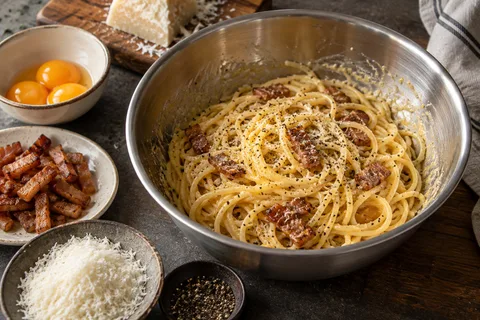
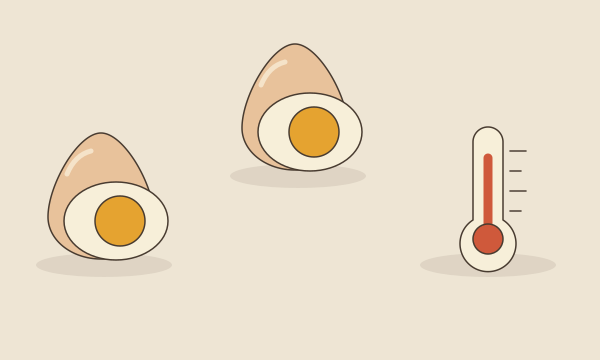
- Egg whiteIts proteins can begin changing before yolk fully sets.
- Egg yolkYolk thickens later and supplies the creamy target.
- Sauce windowThe useful range sits between thickening and curdling.
Whole egg narrows the margin for a silky sauce.
Two proteins, two setting points, one narrow window
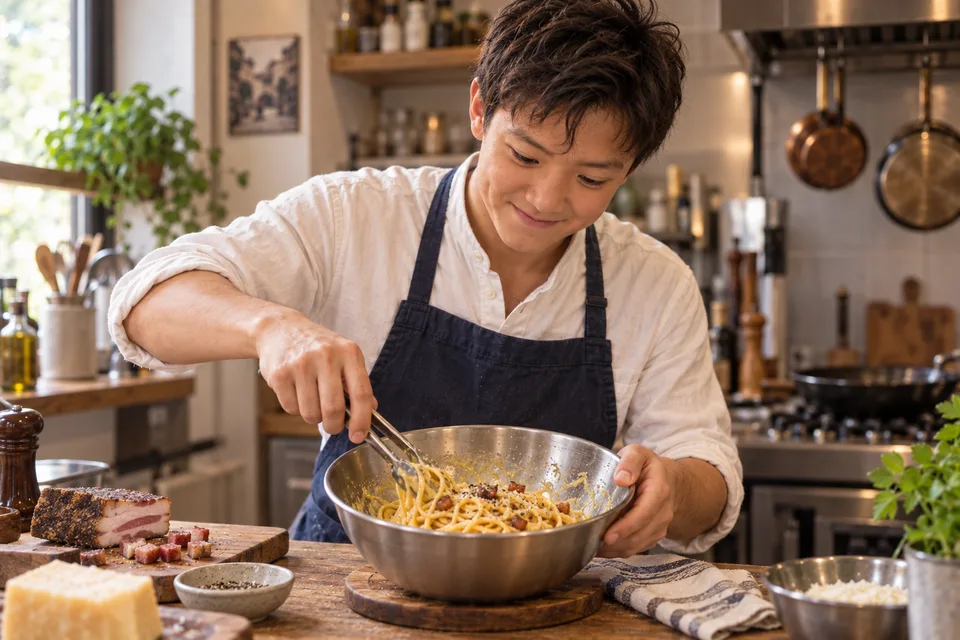
Most carbonara failures come down to the egg turning into scrambled eggs. The real cause isn’t heat level — it’s not knowing the temperature bands involved. The Chemical Society of Japan’s Kagaku Daisuki Club states that egg yolk is fully set at 65–70°C and egg white near 80°C. This article treats the entrance to that band for the yolk — around 65°C — as the point where the sauce starts to thicken, but the phrasing “yolk begins to set at 65°C” doesn’t appear in that explanation; it’s this site’s own framing. The temperature at which egg white begins to set is generally given as somewhere around 58–60°C, but this site has not confirmed a primary source for it and the figure varies between references. All of these shift somewhat with the individual egg, how fast it’s heated, and how diluted the mixture is. That means a yolks-only recipe can push to a higher temperature than a whole-egg recipe. With whole eggs, the white is said to begin setting around 58–60°C, so even over direct heat you need to keep the flame low and stir constantly to avoid creating a hot spot. This isn’t about holding the whole pan at 58°C — it’s about preventing any one part of the pan from reaching 70°C before the rest. The instinct to “take it off the heat once it thickens” is really a visual read on this 58–65°C band (the editors’ interpretation).
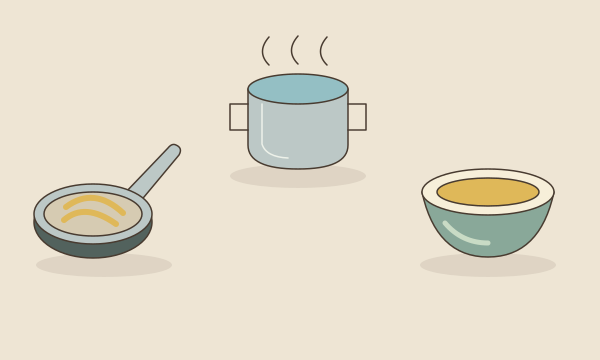
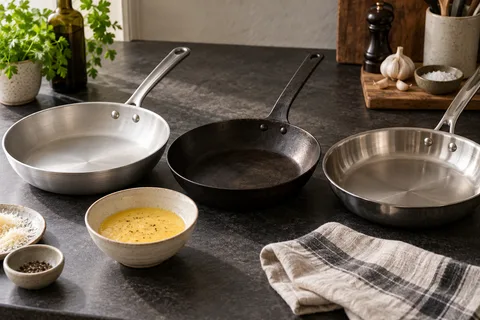
- Direct heatStir continuously and stop before that mixture curdles.
- Bain-marieWater buffers heating, but the egg mixture still sets if overheated.
- Residual heatHot pasta supplies heat; whole egg and yolk-only need different care.
Three heat paths control different mixtures; they do not share one universal setting temperature.
Four chefs, three ways to control egg heat
Lined up side by side, these schools all aim at “setting the egg,” but they build the temperature in completely different ways.
Read the full explanation
Ryuji cooks one whole egg over low direct heat, letting the pan he sautéed the aromatics in cool down before pouring in the egg mixture, and stirs constantly with a rubber spatula to emulsify it (transcript). The extra step of cooling the pan first appears to be what keeps the temperature from spiking the moment the egg goes in.
Fabio combines 3 egg yolks with cheese, sets the bowl over a bain-marie, and brings it up to around 65°C slowly while mixing with a hand mixer, according to the howtocook.jp write-up (a third-party recipe article built from the video rather than a word-for-word transcript, and not cross-checked against the full video). 65°C is exactly the boundary where egg yolk begins to set, and the indirect heat of a bain-marie looks like a way to approach that boundary slowly without overshooting it.
In his “Fava Bean Carbonara” episode, Tomomi Ogura combines egg yolk with cream and cheese in a bowl ahead of time, then takes the pan off the heat before tossing in the pasta and egg mixture (transcript; this is a fava-bean variation, and the main video has not been confirmed). The egg mixture never touches direct heat or a bain-marie at all — it’s cooked entirely by the residual heat of the pasta and other ingredients — though it isn’t confirmed whether a plain carbonara from the same channel follows the same steps.
Daniel Gritzer at Serious Eats builds an egg mixture from 2 whole eggs and 6 egg yolks for 4 servings (450 g dried pasta), combines it with the boiled pasta and pasta water, and thickens it in a double boiler — a metal bowl set over the pot of boiling water (recipe; the quantities are based on the 4-serving listing). The recipe specifically notes that the bottom of the bowl shouldn’t touch the water, which puts a buffer between the heat source and the egg mixture so the water’s heat doesn’t transfer straight through.
How the same process of “emulsification” actually differs from school to school is covered in our article on how emulsification works.
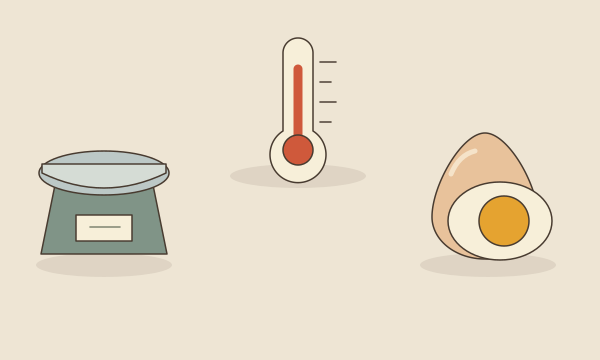
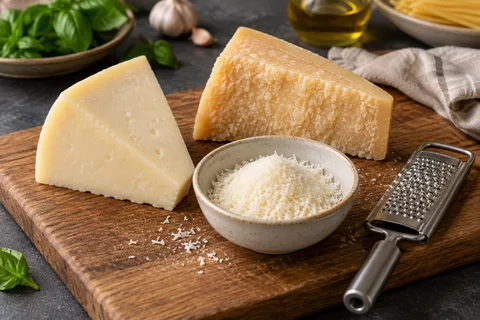
- Measure ingredientsFix egg, cheese, and pasta ratios before heating.
- Lower heat earlyCreate margin before the mixture begins to thicken.
- Stop at thickeningRemove heat before the sauce turns into curds.
Control the variables before appearance becomes misleading.
Five steps for home: aim for the number, not the look
Once you center everything on temperature, the steps for reproducing this at home become simple.
- Target 65–70°C for the egg mixture. Whole eggs are said to react starting around 58–60°C, so stop at a lower temperature than a yolks-only recipe and keep stirring so no single spot overheats
- If you’re using direct heat, keep it on low and let the pan you sautéed the aromatics in cool down before adding the egg mixture
- If you’re using a bain-marie or double boiler, keep the bottom of the bowl off the water and raise the temperature gradually while stirring constantly
- When in doubt, measure the egg mixture’s temperature directly with a cooking thermometer — it reads faster than eyeballing the thickening
- Whichever method you use, pull the pan off the heat a beat before it fully thickens. Residual heat keeps cooking it a little on the way to the plate
Pressing play loads YouTube’s embedded player.Open on YouTube
If you want to compare each school’s temperature strategy step by step, see our carbonara chef comparison and the carbonara overview page.
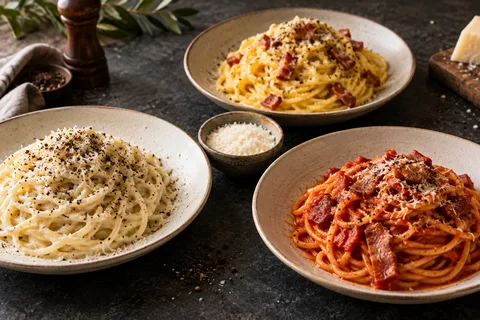
- Visual cueGloss can lag behind the actual pan temperature.
- Temperature cueA reading reveals how close the egg is to setting.
Numbers make the narrow sauce window easier to repeat.
Summary: trust the thermometer, not the feel
Egg white is generally said to start setting around 58–60°C and egg yolk around 65°C, with some variation between references. Whichever of direct heat, bain-marie, or residual heat you choose, a yolk-based recipe should come off the heat right at the entrance to the 65–70°C band, while a whole-egg recipe needs constant stirring at a lower temperature since the white starts reacting around 58–60°C. The shared rule across every method is keeping the heat low and stirring constantly so no one part of the pan heats faster than the rest. Some schools, like Ryuji’s, manage direct heat with cooling and a low flame; others, like Fabio’s and Serious Eats’, lean on the indirect heat of a bain-marie or double boiler; and others, like Tomomi Ogura’s, keep only the egg mixture off direct heat. The easiest method to reproduce reliably in your own kitchen is a bain-marie or double boiler, since a thermometer lets you confirm the number directly. Start by using a thermometer once to actually watch where your egg mixture’s temperature changes.