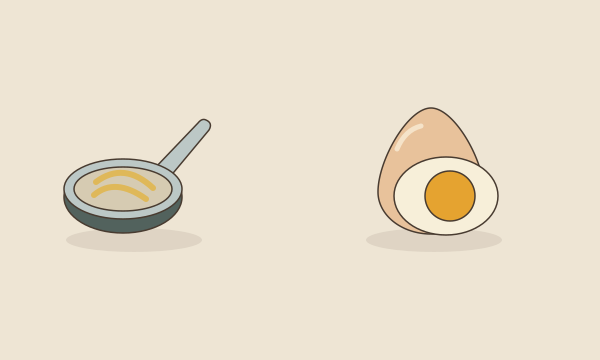
- Fast heat responseAluminum rises and falls in temperature without much lag.
- Egg-safe finishQuick cooling helps stop before the egg mixture sets.
The recurring advantage is controllable heat response.
What these tool lists actually have in common
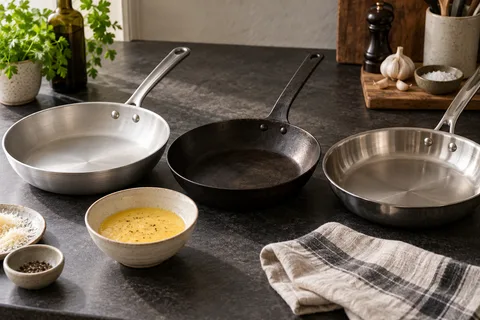
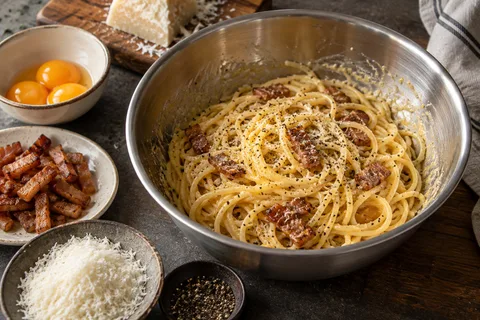
Published tool lists from Italian-cuisine pros keep featuring the same item: an aluminum frying pan. Tomomi Ogura of Regalo in Sangubashi lists aluminum pans in his note tool guide (an Endo Shoji TKG 24cm cast pan with a 3.0mm gauge and thick base, plus an Akao hard-anodized aluminum 27cm), though the fava bean carbonara transcript never names the pan’s material, so whether that particular video uses aluminum is unverified. Fabio also lists an aluminum pan in his own kit rundown (a Nakao Aluminum “King” aluminum frying pan, 24cm; unverified whether he uses it on camera). In the editors’ view, what these pans share isn’t the material itself so much as one property: heat comes up fast and drops off fast. Emulsifying carbonara means stopping just short of the temperature where egg starts to set, so a pan that doesn’t overshoot — and that cools down quickly when you need it to — cuts down on failures.
Pressing play loads YouTube’s embedded player.Open on YouTube
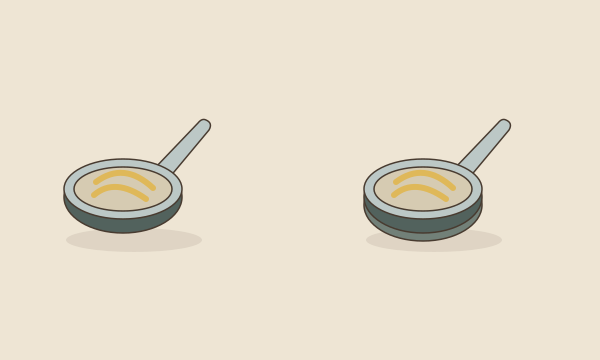
- Thin aluminumFine heat changes register fast, but so does overheating.
- Thick aluminumMore stored heat makes temperature changes slower and steadier.
Thickness trades quick correction for thermal momentum.
Thin reacts fast. Thick behaves like iron
Aluminum conducts heat faster than iron or stainless steel, which keeps hot spots down across the pan. It also holds less heat than iron at the same gauge, so it drops in temperature faster right after you turn the heat down or off (both are textbook properties of the metals, not pasta-specific measurements). We cover each material’s heat behavior — and why emulsification assumes it — in more detail in how pan material changes emulsification; here we’ll just hit the highlights. Tomomi Ogura’s step of mixing in the egg mixture off the direct heat, rather than over it, appears to assume this “heats fast, cools fast” property. Ryuji’s transcript describes turning off the heat under the pan with the sautéed bacon and letting it cool, then adding pasta water and the pasta before returning it to low heat and pouring in the egg mixture. The pans Ryuji is recorded using are a nonstick frying pan and a ceramic skillet he designed himself. That said, the “turn off the heat and let it cool” step shows up the same way in the transcript from Tomomi Ogura, whose tool list includes aluminum pans (the material of the pan in that video is unconfirmed, as noted above). None of the sources give a reason for cooling the pan, so we can’t tie the step to the material — and the body of a household nonstick pan is usually aluminum too, so “aluminum vs. nonstick” isn’t a contrast of materials in the first place. The thinner an aluminum pan is, the faster it reacts — which also means it’s easier to overheat if you look away. Thicker pans hold more heat and start to behave more like iron or stainless.
Read the full explanation
- Thin (roughly 1–1.5mm): reacts fast and passes fine adjustments in low heat straight through. Works for either the off-the-heat method or cooking over direct heat
- Medium (around 2mm): described as a common thickness for restaurant use. Temperature changes are somewhat gentler (this thickness breakdown is the editors’ own organization, not a sourced figure)
- Thick (3mm or more): holds more heat, handling more like an iron pan. Resists warping even when you shake it hard
That said, the aluminum pans on the pro tool lists we were able to check run to the thick side — the one that states its gauge is 3.0mm, a cast pan with a heavy base — so these lists are not an endorsement of thin aluminum.
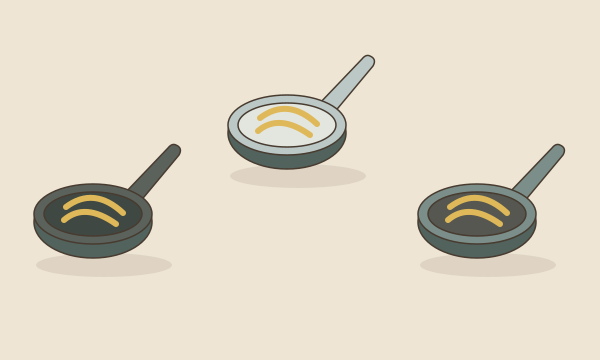
- Iron for searingStored heat supports hard browning when that is the goal.
- Stainless for utilityDurability and induction use can outweigh quick cooling.
- Nonstick everyday panA coated aluminum body handles broad daily cooking jobs.
Professionals change pan material with the job.
Even pros switch pans mid-lineup
Even within the same style of Italian cooking, the pros don’t standardize on one material. Tomomi Ogura’s note tool guide also lists an iron pan. Pairing it with high-heat searing steps is the editors’ inference. The same note also names a 24cm nonstick pan (Endo Shoji ADLM002, 2.4mm gauge, aluminum body) as “the Teflon pan I use for pretty much everything,” so the tool list is not aluminum-only. Fabio’s kit list also includes a stainless pan, likely chosen for induction compatibility and durability. For more on choosing by material, see how pan material changes emulsification.
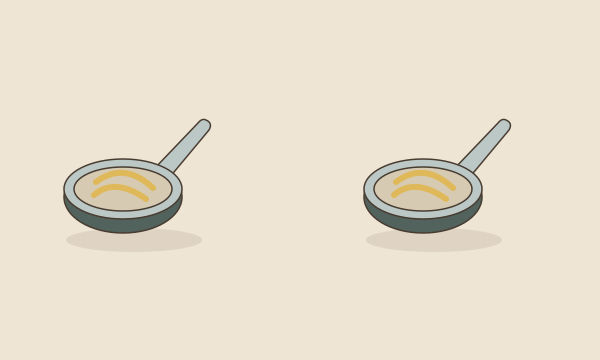
- 24–26cmA manageable surface for one or two home portions.
- Around 27cmMore room for two portions or ingredients cooked together.
Choose diameter from batch size and tossing room.
24cm or 27cm
For one to two servings at home, 24–26cm is manageable; if you want to plate two servings at once or sauté ingredients in the same pan, something around 27cm is easier to work with. Whether the handle is long enough to shake the whole pan and toss the noodles also makes a practical difference during emulsification. Aluminum pans without a magnetic base plate won’t work on induction, so choose one labeled induction-compatible. Salt math doesn’t change with the pan, so fix your boiling water’s salt as a percentage of the water first and put your attention on choosing the pan itself.
- Response firstUse aluminum when quick heating and cooling aid control.
- Then match the taskMove to iron for browning or stainless for induction needs.
Start from heat response, then size and material.
Summary
The reason aluminum keeps turning up on pro tool lists appears to be that it heats up and cools down fast, making it easy to hold the emulsification temperature by hand. The thinner it is, the faster it reacts, and the more practice it takes to handle well. If you want strong browning, reach for iron; if durability and induction compatibility matter more, stainless fits the pattern visible on these tool lists. Start with one pan in the 24–27cm range and try the off-the-heat method from the carbonara comparison page — it’s the more forgiving place to start. When a product lists its gauge, thinner means faster temperature swings and thicker means behavior closer to iron.