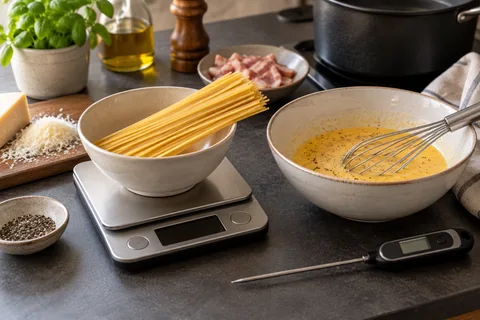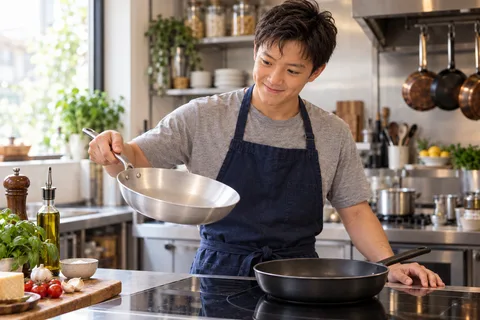
The Thinner the Pan, the Faster It Reacts — And Cools
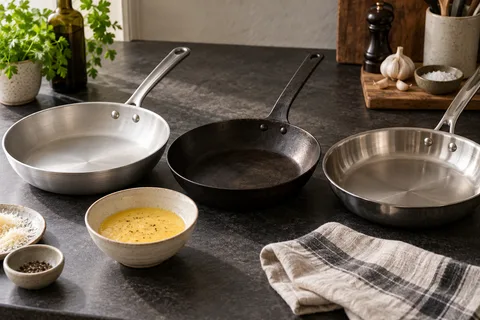
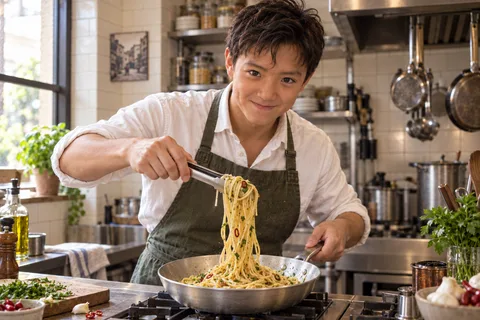
What pro tool lists actually share isn't the material — it's how fast the heat rises and falls. A millimeter of thickness changes how easy carbonara's emulsion is to catch.
Explore 25 articles tagged “carbonara”.
25 articlesWhat pro tool lists actually share isn't the material — it's how fast the heat rises and falls. A millimeter of thickness changes how easy carbonara's emulsion is to catch.
Cacio e pepe has just two elements asserting themselves — Pecorino's salt and pepper's bite — so grind coarseness alone changes the plate. Tellicherry is a size grade, not a variety.
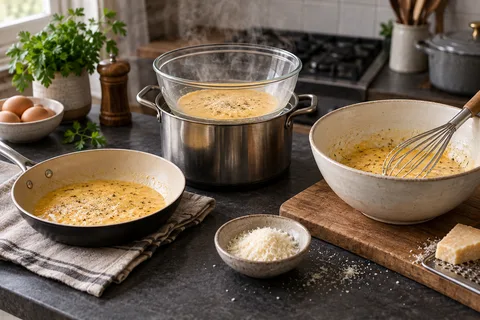
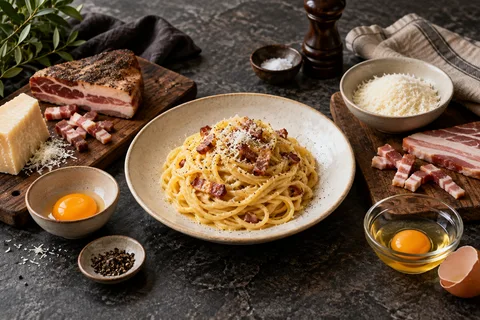
Carbonara splits over one question — where the egg comes up to temperature. Direct heat, bain-marie, or residual heat: five chefs, plus the tip line in Fabio's transcript about hot water and eggs.
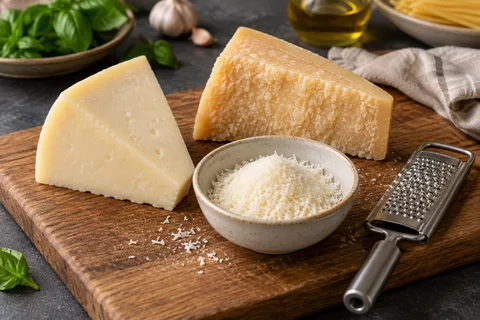
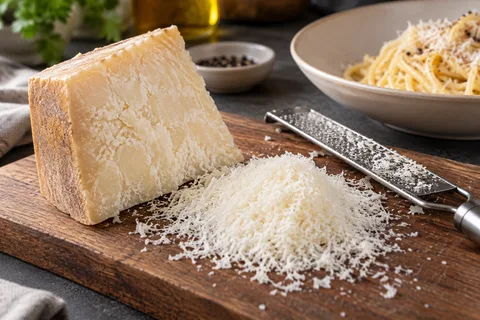
Ogura mixes Parmigiano into raw egg for carbonara, where shred size decides whether it melts evenly. In his cacio e pepe, cheese is just grated over the top — so fineness matters far less.
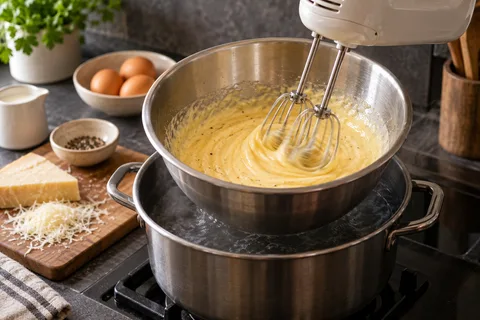
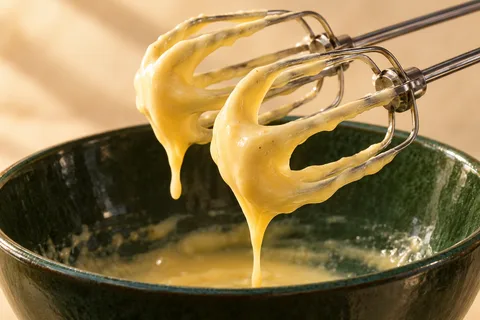
Fabio eases eggs to about 65°C over a bain-marie with a hand mixer — the transcript's tip box says boiling water still won't scramble them. His aglio e olio chars the chili black instead.
On camera, Kenji López-Alt says measurements don't need to be precise. In print, Serious Eats gives grams and milliliters, and a bowl set clear of the water — same school, two levels of precision.
Tomomi Ogura gives the garlic about 7 minutes over medium-low heat, then starts his emulsion 10 seconds before the pasta is done. His carbonara matches egg yolk to Parmigiano by weight, off the heat.
Pasta Grammar's carbonara cuts pasta-water salt in half and emulsifies on residual pasta heat alone, no pan over the flame. Cacio e pepe rests off the heat three minutes before the cheese goes in.
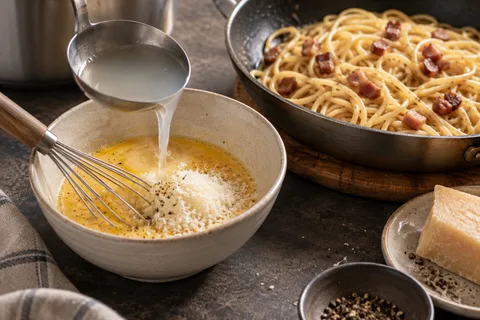
Chef Ropia's carbonara never touches cream — egg and cheese alone create the emulsion. In his book, he thins the egg mixture with cooled pasta water first, which he says keeps it from going lumpy.
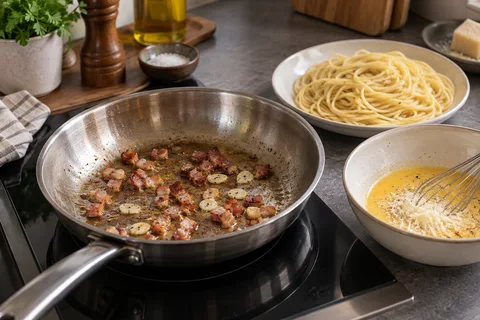
Ryuji sautés the bacon and garlic, then turns off the heat and lets the pan cool before adding the egg — a step he arrived at after testing the recipe more than 1,000 times.
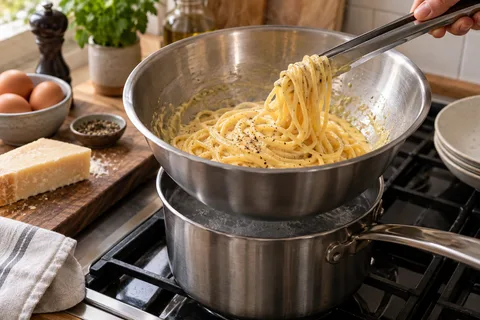
Vincenzo's Plate emulsifies both carbonara and cacio e pepe off direct heat, with the pan suspended over the pasta pot's steam. His 2026 cacio e pepe drops salt entirely.
In a carbonara egg mixture, the white starts to set first and the yolk second. That order is why whole-egg and yolks-only recipes come off the heat at different moments.
Emulsifying pasta sauce isn't about mixing harder. It happens only when starch, a safe temperature, and nonstop agitation all line up. Four schools split the work differently.
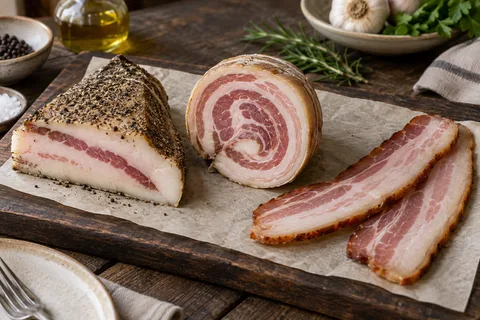
Vincenzo's Plate allows pancetta or salami as a substitute in amatriciana but names bacon specifically as the one to avoid. Here's how guanciale differs, how chefs treat it, and how to buy it online.
Guanciale, pancetta, and bacon are all cured pork, but fat ratio and smoking split them apart. Serious Eats ranks them bacon, pancetta, guanciale — and guanciale use ranges 19g to 67g per 100g pasta.
Fabio's carbonara aims at about 65°C, where egg yolk starts to set, yet no thermometer appears in the steps. The cue is a hand blender turning heavy over a bain-marie.
Ryuji's carbonara skips heavy cream, and so does Vincenzo's Plate — so "no cream" can't be the line between home cooks and tradition. The real split is ingredients, heat, and emulsion.
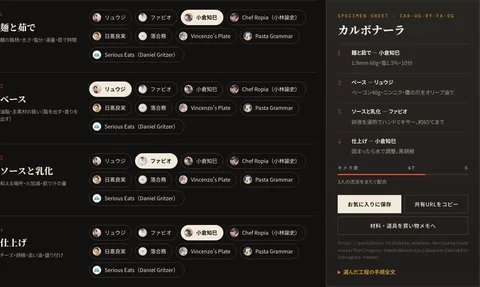
In the Recipe Builder, a chimera score of 100 doesn't predict failure — it just means no reference video exists for that mix. What each step changes and how sharing and saving work.
Ogura's fava bean carbonara, Fabio's rich carbonara and Gritzer's carbonara all pull the egg off direct heat.
Pecorino is salty sheep's-milk cheese; Parmigiano is milder cow's-milk. Some recipes leave the water unsalted so Pecorino carries the salt; others salt it heavily instead. Pick the cheese first.
One Roman amatriciana uses 20g of Pecorino Romano DOP per 100g of pasta — the highest ratio we could confirm for the dish. Buying it as a wedge, in our view, keeps more of the aroma.
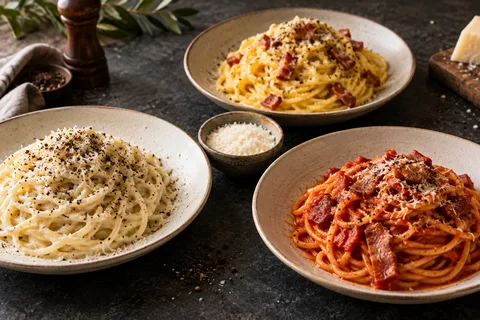
Cacio e pepe's grated cheese runs 17g to 50g per 100g of pasta, and Fabio adds 50g of cream cheese on top. Rome's three classics split along the same three axes: cheese, pork fat, emulsion.
Eyeball a portion of pasta and it can swing by several grams to a dozen-plus per serving (the editors' rough figure).
Moving pasta from pot to pan comes down to two tools. That how much pasta water rides along changes the finish is the editors' read, not a relationship our sources tested.
Fabio's carbonara takes the egg mixture to around 65°C, and the transcript gives two cues: the temperature and the hand blender getting harder to turn. Ogura, Ryuji, and Fabio diverge on one dish.

 Ingredients

 Chef profiles

 Reads
Reads