Pressing play loads YouTube’s embedded player.Open on YouTube
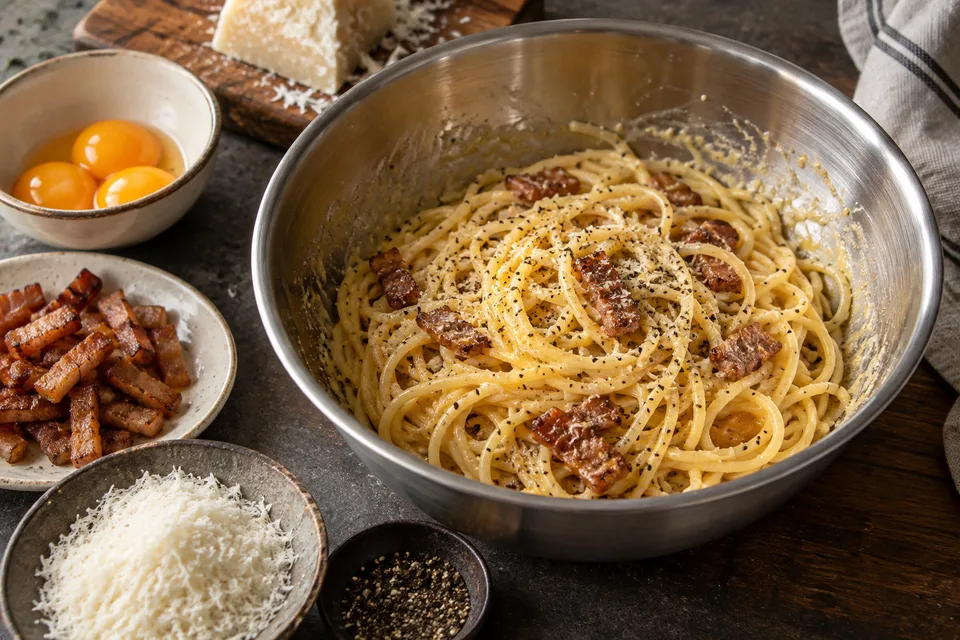
Carbonara really comes down to one question: where does the egg come up to temperature? Some cooks whisk it over direct heat, some warm it indirectly with a bain-marie or steam, and some mix it in only after the pan is off the heat. Rome’s traditional preparation is said to use nothing but egg, Pecorino Romano, guanciale, and black pepper (Vincenzo’s Plate official recipe), though some Japanese chefs add aromatics or a small amount of heavy cream. This article lines up five schools — Tomomi Ogura, Ryuji, Fabio, Chef Ropia, and Vincenzo’s Plate — by egg composition, cheese, and emulsification method.
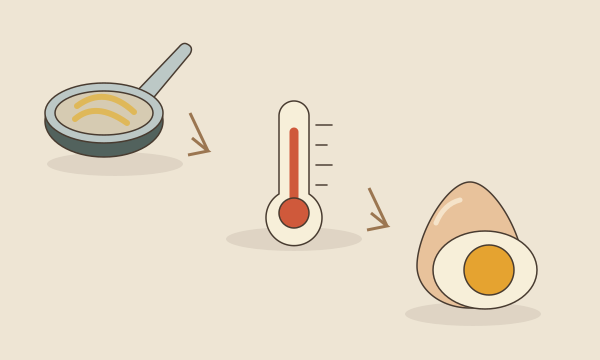
- Cool the bacon panDrop the stored heat before egg enters.
- Return to low heatWarm gently after pasta and water are added.
- Stir constantlyKeep the egg moving so no spot sets first.
Ryuji controls direct heat through cooling and motion.
Stir and never stop: Ryuji
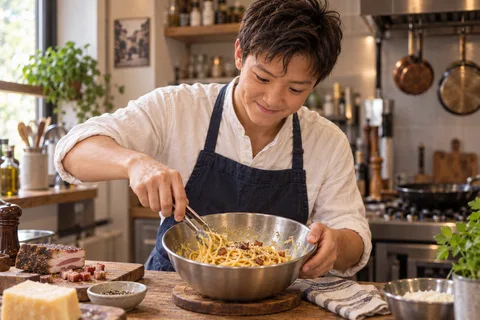
Ryuji’s “Ultimate Carbonara” builds the egg mixture from one whole egg (specified as large) and 30 g of grated cheese, then emulsifies it over low direct heat while stirring constantly. He sautés 40 g of bacon, one clove of garlic, and one dried chili in olive oil, then takes the pan off the heat to let it cool before adding the pasta water and pasta, returning it to low heat, and pouring in the egg mixture. That step of “cooling the pan after sautéing the aromatics” is his way of managing temperature within the direct-heat method. He uses 100 g of 1.7–2 mm spaghetti, boiled 1 minute under the package time (transcript).
The same cook also has a “Masterpiece Carbonara” (cheddar cheese and MSG) and a “Void-bonara” (pizza cheese and bouillon granules). This article covers the more traditional “Ultimate” version.
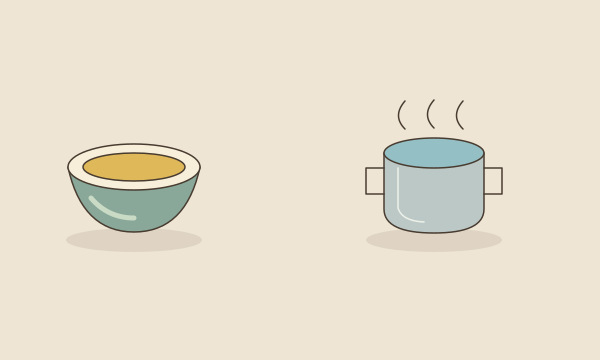
- Fabio bain-marieSteam warms the egg mixture before it meets pasta.
- Vincenzo steam panThe pasta pan sits above boiling water for gentle heat.
Both replace flame contact with heat carried by water.
Keeping the egg mixture off direct heat: Fabio and Vincenzo’s Plate
Fabio builds his egg mixture from 3 egg yolks, 10 g of Grana Padano, and 5 g of Pecorino Romano, adds guanciale fat and 30–40 cc of diluted pasta water, then sets the bowl over a bain-marie and whisks continuously with a hand mixer to bring it up to roughly 65°C, according to the transcript (cross-checking against the full video has not been completed). The line “even pouring in hot water won’t set the egg” appears in the transcript’s tip box, and the stance behind it is that with careful temperature control the method is hard to get wrong (the transcript makes no comparison with direct heat). He uses 70 g of 2.2 mm thick spaghetti, salted at 1.5% of the water’s weight.
Read the full explanation
Vincenzo’s Plate mixes 3 egg yolks and 1 whole egg with 90 g of Pecorino Romano, stirred in gradually to build a thick cream, then tosses the pasta in guanciale fat and finishes it by setting the pan directly over the pot of pasta water, tossing it in the steam’s heat (official recipe). He also states a firm ratio rule: “at least 30 g of Pecorino Romano per 100 g of pasta — don’t go below that.” His recipe uses 300 g of thick spaghetti (a multi-serving batch), so convert to a per-100g basis when comparing quantities against the other schools.
If you want a number to check against instead of guessing, take the egg mixture’s temperature directly — it tends to expose exactly where things go wrong.
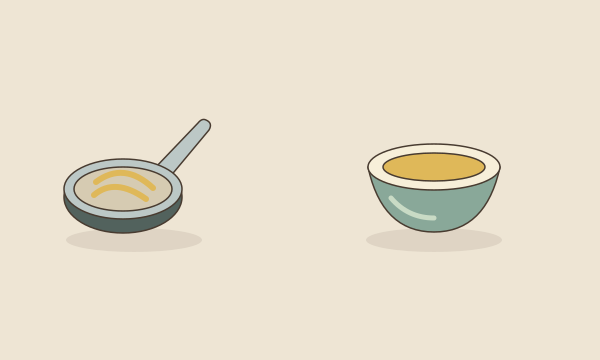
- Ogura off-pan finishThe pan leaves the heat before egg and pasta combine.
- Ropia bowl finishHot pasta cooks the thinned egg mixture in a bowl.
Residual heat becomes the only cooking source for the egg.
Keep the egg away from direct heat entirely: Tomomi Ogura and Chef Ropia
In a seasonal fava-bean variation, Tomomi Ogura first whisks together 1 egg yolk, Parmigiano Reggiano (matched to the egg yolk by weight), a little heavy cream, and a little water in a bowl. He then adds 30–45 cc of pasta water to the pan he cooked the guanciale in, takes it off the heat, and folds in the pasta and the egg mixture. Never bringing the egg mixture near direct heat is the defining move of this school (transcript). A plain version is published as vol. 8 (https://www.youtube.com/watch?v=5CwRffHVe7Q), and a young corn version transcript also exists, but it lists the cheese and cream only as “to taste”, so the fava bean version is the only one whose quantities can be followed. In the fava bean version, his ratio rule — Parmigiano matched to the egg yolk by weight — and his use of a small amount of heavy cream set him apart from cream-free schools abroad.
Read the full explanation
Chef Ropia prepares a bowl with 2–3 egg yolks and 30 g of Parmigiano Reggiano (grated cheese works too), lifts the pasta 30 seconds before the package time, tosses it briefly in the pancetta pan while adjusting salt, then transfers it into the bowl of egg mixture and tosses quickly (transcript). In his book version, the procedure given is to thin the egg mixture first by stirring in cooled pasta water (source). Cookpad News quotes him explaining this guards against the egg overcooking and turning to scrambled curds (source), and Hitosara likewise describes thinning the grated cheese and egg with water beforehand to keep the mixture from clumping (source).
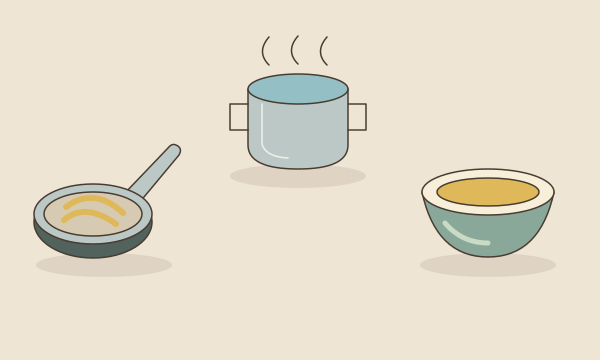
- Direct low heatRyuji reheats gently while stirring without pause.
- Steam heatFabio and Vincenzo buffer the flame through water.
- Residual heatOgura and Ropia finish away from active heat.
Five schools reduce to three routes for warming egg.
Five schools, one table
| Chef | Pasta amount | Egg composition | Cheese | Emulsification method |
|---|---|---|---|---|
| Ryuji | 100 g | 1 whole egg | 30 g grated cheese | Over low direct heat, stirred continuously |
| Fabio | 70 g | 3 egg yolks | 10 g Grana Padano + 5 g Pecorino Romano | Bain-marie + hand mixer (about 65°C) |
| Vincenzo’s Plate | 300 g | 3 yolks + 1 whole egg | 90 g Pecorino Romano (30 g per 100 g pasta) | Held over a pot of simmering water |
| Tomomi Ogura | 60 g | 1 egg yolk + a little heavy cream | Parmigiano Reggiano (matched to yolk by weight) | Off the heat, tossed in the pan |
| Chef Ropia | 100 g | 2–3 egg yolks | 30 g Parmigiano Reggiano | Pasta transferred into the bowl of egg mixture |
Because the pasta amounts differ, convert the egg and cheese figures to a per-100g basis before comparing. A cross-school comparison table covering all nine schools is on the carbonara comparison page.
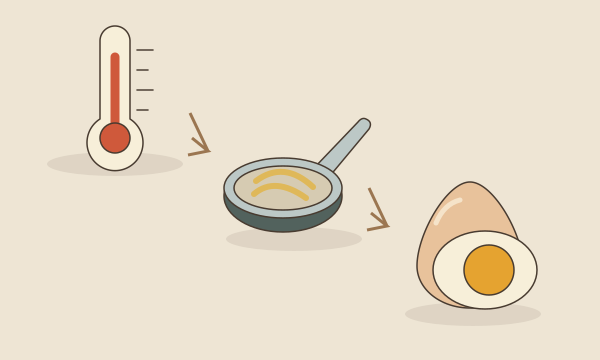
- Pan too hotThe egg crosses its setting range too quickly.
- Heat stays localThe bottom cooks before stirring can spread it.
- Curds formSilky sauce turns into visible scrambled pieces.
Remove, buffer, or spread heat before curds form.
It scrambles for one reason only: too much heat
Egg mixture that curdles into scrambled-egg curds means the temperature ran too high. Ryuji keeps the heat low and stirs the whole time; Fabio caps the bain-marie at roughly 65°C; Ogura and Chef Ropia keep the egg mixture off direct heat entirely.
As the editors read it, a sauce that turns watery or splits usually means too much pasta water went in, or not enough cheese. Fabio loosens a too-thick sauce with more pasta water, while Ogura adjusts a mixture that has seized up by adding water. The fix runs in one of two directions: add more cheese, or cut back on pasta water to raise the starch concentration.
Oversalting happens when the boiling salt, the Pecorino Romano, and the guanciale’s own salt all stack up. Setting the boiling salt as a percentage of your pot’s water (10 g per liter is 1%) makes the result easier to repeat.
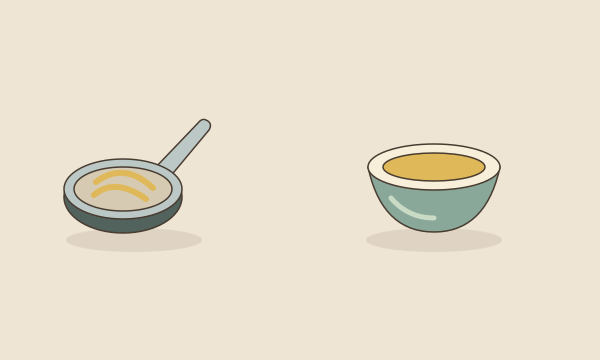
- Want direct controlUse low heat and constant stirring after a cooldown.
- Want a wider marginChoose steam or residual heat to slow egg setting.
Choose the heat path before choosing the recipe school.
Summary
Whole egg or egg yolks, Pecorino Romano or Parmigiano Reggiano, direct heat, bain-marie, or residual heat — nearly all the differences among these five schools come down to those three choices. Start by following one school exactly as shown in its video, then swap out just the emulsification step for another school’s method. The recipe builder lets you pick a chef for each step and flags what to watch for in that particular combination.