
Pressing play loads YouTube’s embedded player.Open on YouTube
It looks like a minor choice, and it decides how the finished sauce turns out. The main options for moving pasta from the pot to the pan are two: tongs or a pasta server. How much pasta water rides along with the noodles likely changes how thick the sauce gets (the editors’ read — not a relationship any of our sources tested). Reach for tongs if you want to carry pasta water along with the noodles, and a pasta server if you want to drain the noodles fully and move only the pasta. The choice isn’t really about which emulsification method you’re using — it’s about whether you want to bring pasta water with you.
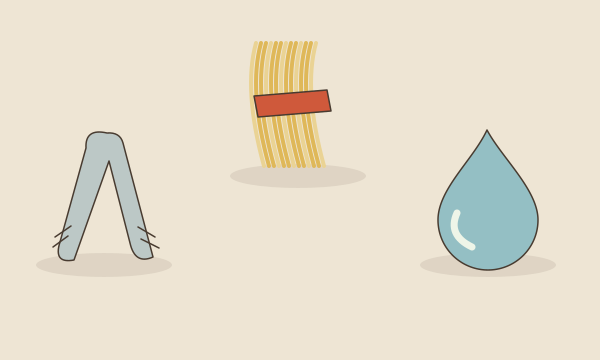
- TongsGrip smaller bundles and carry some water between strands.
- Pasta serverLift a larger portion while draining more deliberately.
- Measured waterA separate dose can make transfer tool less important.
The tool changes grip and incidental water carryover.
What actually changes between tongs and a pasta server
Tongs grip the pasta and lift it out. A pair with silicone or nylon tips won’t crush the strands, and when you move pasta from the pot to the pan, a moderate amount of pasta water trapped between the noodles comes along for the ride. In Ryuji’s method — mixing in the whole egg over low, direct heat — he adds about 2 tablespoons of pasta water and the pasta into a pan that’s been taken off the heat to cool, then pours in the egg mixture over low heat (source: tuberecipe.com/recipe/4951/detail). Because the pasta water is measured out and added separately, the tool used to move the pasta isn’t what determines how much pasta water ends up in the dish. Whether a recipe wants pasta water riding along with the noodles or not is something you can read off whether it calls for pasta water as a separately measured ingredient. Whether Ryuji himself uses tongs is unverified at this point.
Read the full explanation
A pasta server scoops the pasta up while draining it as you lift. It handles a larger batch of noodles at once more easily than tongs do, and it suits situations where you want to shake off the pasta water deliberately before moving the pasta. In a method like Fabio’s — where the egg mixture is made separately in a bowl before being combined with the pasta — the pasta water is reportedly measured out separately from the noodles, as 30–40cc of “pasta water diluted with water” (this comes from a third-party transcript that hasn’t been cross-checked against the video itself), which lowers how much the outcome depends on which tool moves the pasta.
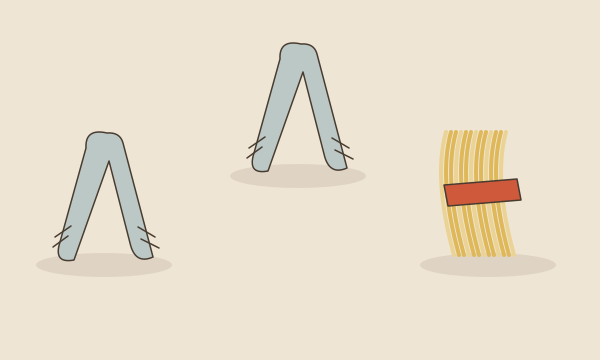
- Ogura tongs listedHis public gear list names tongs, without a specific use.
- Ropia reported tongsA third-party roundup suggests use but does not confirm it.
- Pasta server evidenceNo chef-specific use is confirmed in the current sources.
The sourcing is stronger for tool lists than on-camera use.
Who uses which
Tomomi Ogura of Regalo in Sangubashi lists tongs in his tool rundown (source: note.com/regalo_ogura). The write-up doesn’t specify what he uses them for. Separately, the method Ogura demonstrates for fava bean carbonara has him add 30–45cc of pasta water to the pan, take the pan off the heat, and then combine the pasta with an egg mixture prepared beforehand — meaning the egg mixture is apparently never put over direct heat (source: tuberecipe.com/recipe/7920/detail; his plain version is published as vol. 8, but the fava bean episode is the only one whose transcript lets us confirm the figures). Tongs, in this reading, function as the tool that carries the pasta from pot to pan, separate from whichever emulsification method is being used.
Read the full explanation
Chef Ropia (Akifumi Kobayashi) is also mentioned as using tongs in a roundup article on pasta cookware. That source is a third-party roundup rather than a statement in his own video, though, so we’re treating it as “appears to use tongs” rather than confirmed (source: delici.jp/pasta-kitchenware).
For the pasta server, we haven’t yet been able to confirm chef-specific usage data. As a general kitchen tool, it’s widely used for lifting and plating long-format pasta while draining it.
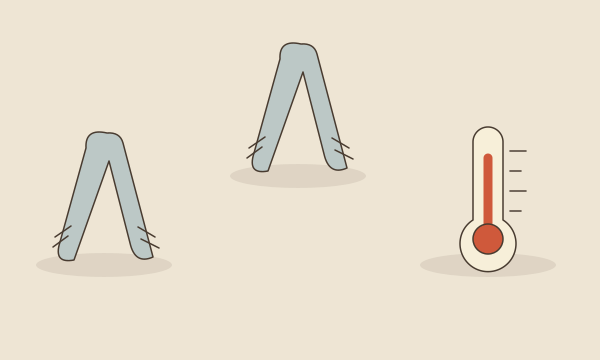
- Silicone or nylonGentler contact protects noodles and coated pans.
- Bare metalFirm grip tolerates heat but can mark nonstick surfaces.
- Heat ratingManufacturer limits matter because polymers vary.
Choose tip material for both noodle contact and cookware.
Tip material decides how the noodles feel it
- Tip material: Silicone or nylon tips are gentle on the noodles and won’t scratch a nonstick pan. Metal tips hold up to heat but aren’t a good match for coated cookware
- Locking mechanism: A tongs design that closes and locks for storage takes up less room in a drawer
- Heat rating: Check the manufacturer’s stated heat resistance before you buy — silicone and nylon products vary in their rated temperatures, so read the label
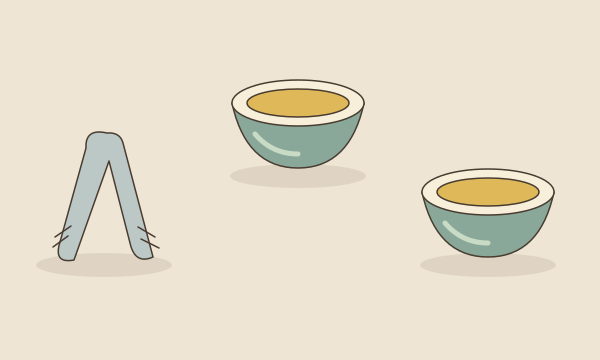
- Cooking chopsticksGrip strands well but struggle with a full heavy portion.
- Slotted spoonDrains like a server but can lift noodles in a clump.
- ColanderRemoves nearly all pasta water before the sauce stage.
Each substitute changes either grip or retained water.
Alternatives
If you don’t have tongs or a pasta server on hand, other kitchen tools can stand in. Long cooking chopsticks can grip and lift pasta much like tongs, carrying pasta water along in the same way, but they’re weaker at grabbing a full portion at once, so noodles are more likely to slip free when you’re moving a larger batch. A slotted spoon is a reasonable stand-in for a pasta server, since it drains while it scoops, but pasta tends to come up in a clumped mass, which takes some skill to separate as you plate. Tipping the whole pot into a colander drains the pasta completely, leaving no pasta water at all — a poor fit for any method that relies on pasta water’s starchy thickening power over direct or residual heat. If your method measures pasta water separately before adding it to the egg mixture (as in Fabio’s method, where “pasta water diluted with water” is added to the egg mixture at 30–40cc), the outcome depends less on how much water the pasta itself carries over. That said, the transcript doesn’t make clear whether Fabio drains the pasta fully, and he’s also said to fine-tune consistency with pasta water again at the end.

- Choose tongsFavor precise transfer, tossing, and broad daily use.
- Add a serverFavor quick lifting and deliberate draining of larger batches.
Start with the tool that matches how your sauce uses water.
Summary
The tool you use to move pasta looks like a supporting player, but it governs how much pasta water comes along for the ride. If you’re only going to own one, tongs are the more versatile starting point. Compare how the emulsification methods differ on the carbonara comparison page, and decide whether to add a pasta server based on your own method. For how technique varies by school of thought, see our carbonara chef comparison; for the mechanics of emulsification itself, see the science of emulsification. Tomomi Ogura’s technique is covered on his chef page, and Chef Ropia’s on his chef page.


 Ingredients