A good plate. A little further.Recipes, people & good things.
Carbonara

Rome & Lazio · No.01 / 103

Carbonara

Carbonara, 9 ways

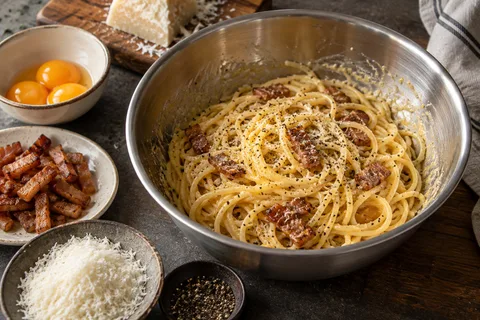
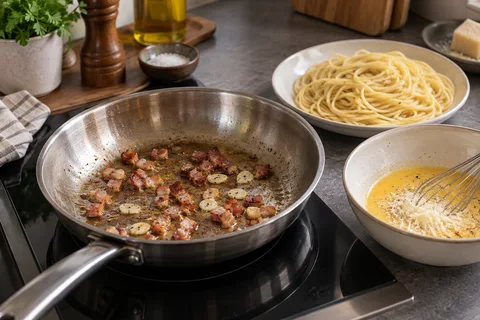
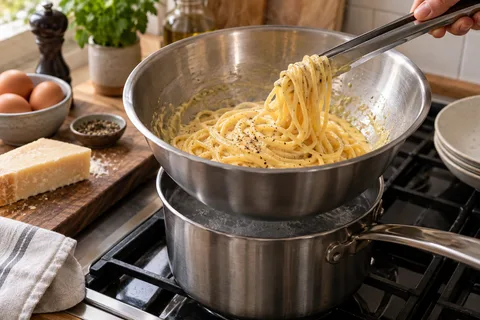
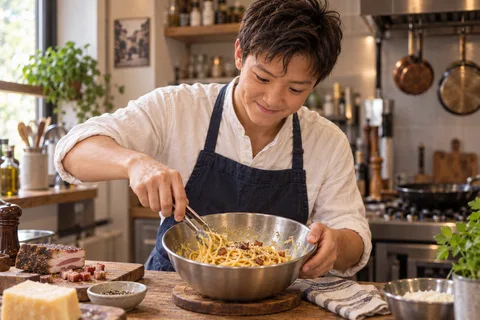
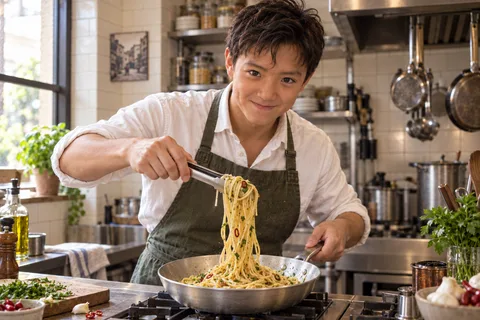
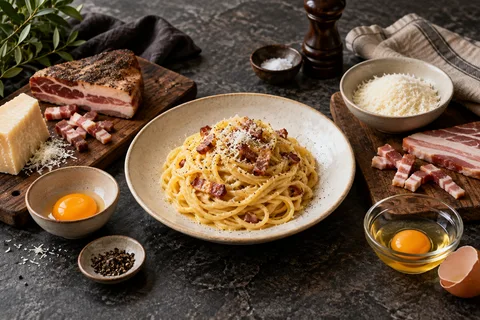
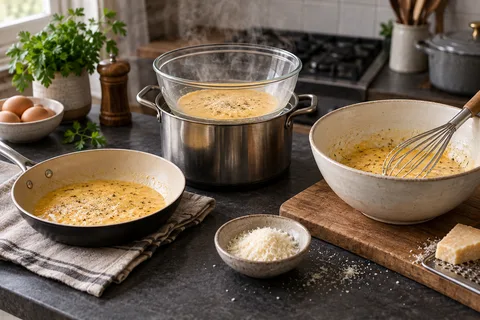
A cream made from just egg, cheese, pork fat, and black pepper. The dividing line is where you bring the egg up to temperature, and it splits cooks into three schools: over direct heat, in a bain-marie, or off the heat with residual heat.

Cook this pasta on video

Watch the creators’ original videos for the method and finish.

Ryuji40 Years Into My Carbonara Journey, This Is Undoubtedly the Best One YetWatch on YouTube ↗

RyujiForget Every Carbonara You've Had [Masterpiece Bacon-Free Carbonara]Watch on YouTube ↗

FabioA Chef Explores the World of Carbonara: 3-Way Comparison, for Every Pasta LoverWatch on YouTube ↗

FabioA Chef's Improvised Staff-Meal Carbonara: Rich and Silky PerfectionWatch on YouTube ↗

FabioThe One-Pan Pasta I Love Most [Carbonara]: One Skillet Was All I NeededWatch on YouTube ↗

Fabio[Tested] Same Ingredients — Why Carbonara Still Fails. A Chef's Technique to Avoid ItWatch on YouTube ↗

Tomomi OguraSpaghetti Carbonara from a Michelin-Starred Italian Restaurant [Italian Pro Training Course vol.8]Watch on YouTube ↗

George YoshidaItaly May Be Angry, but This Is How I Make Carbonara for a Japanese SummerWatch on YouTube ↗

Choose from the cooks’ recipes

Each card leads to its source video or recipe page. You can also load a style straight into the builder

RyujiRecipe developer Source verified

1 whole egg + 30g grated cheese, stirred on low direct heat

  • Specifies L-size eggs precisely — fine-grained quantities aimed at home reproducibility
  • A two-step approach: cool the pan after sautéing the base before adding the egg mixture
  • Same creator has three lineages: this traditional-leaning 'ultimate' (shiko) version, a 'masterpiece' version (40g cheddar + MSG), and a 'kyomu-bonara' (nihilist carbonara) version (pizza cheese + bouillon granules)
View the original recipe Load this style
In the chef’s words
  • Always use L-size eggs source
  • Using whole black peppercorns gives a better aroma. It's even better if cracked right before eating source

References: [1] [2]

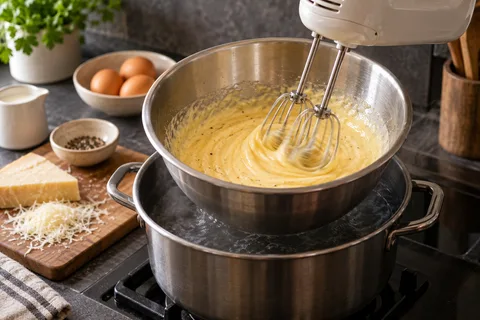
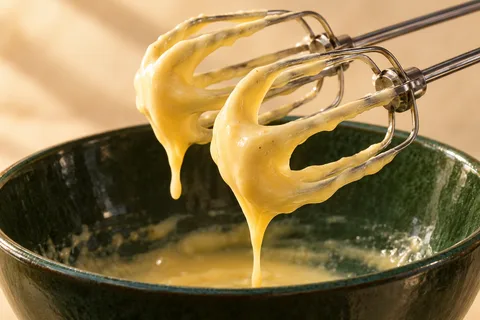
3 egg yolks, bowl bain-marie + hand mixer up to 65°C

  • Takes the position that 'adding hot water won't set the egg' — temperature is managed with a bain-marie and a hand mixer (the source says only that it is hard to get wrong)
  • A tool-based way to reproduce the technique of a famous Roman chef (Luciano Monosilio)
  • Source is a third-party transcript site (howtocook.jp), so it hasn't yet been cross-checked against the original video
View the original recipe Load this style
In the chef’s words
  • Making it in a bain-marie in a bowl makes it hard to fail and lets you enjoy an authentic taste source
  • Adding hot water won't set the egg source

References: [1]

1 yolk + an equal weight of Parmigiano, tossed off the heat

  • A clear ratio rule: Parmigiano at 'equal weight to the egg yolk'
  • Uses a small amount of cream, unlike the 'no cream, ever' purism seen abroad
  • His book (Japanese title, roughly 'Minimal Best Pasta from a One-Star Italian') has a chapter on '5 major elements, sub elements, and aroma elements' (contents not yet confirmed)
View the original recipe Load this style
In the chef’s words
  • It's better to use fresh fava beans source

References: [1] [2] [3]

2–3 yolks; pasta tossed into the egg bowl, residual heat

  • States in both the book and an interview that mixing cooled pasta water into the egg mixture beforehand is a lump-avoidance trick
  • Explicitly allows pancetta/bacon and Parmigiano/grated cheese to be interchangeable — a home-friendly stance
  • The restaurant name 'Ponte Carbo' comes from charcoal cooking, not from carbonara (per Hitosara's editorial introduction; in the same piece he says he loves carbonara enough to have named his dog Carbo)
View the original recipe Load this style
In the chef’s words
  • In the recipe from my book, I mix cooled pasta water into the egg mixture beforehand. A lot of people fail at carbonara because the egg gets overcooked and goes grainy, so pre-loosening the egg this way to avoid failure lets you make an authentic carbonara without fail source
  • Pre-mixing grated cheese and egg with water to make the sauce reduces the chance of lumps source

References: [1] [2] [3]

Source is a recipe page (no video)

2 whole eggs whipped for air, heat toggled on and off

  • A distinctive approach of whipping the whole eggs to incorporate air and get creaminess without cream
  • The explicit instruction to repeatedly lift the pan off and put it back on the heat
  • Verbalizes the boiling basics — water volume, 1% salt, and a needle-thin core — in the general notes
View the original recipe Load this style
In the chef’s words
  • Whisking until slightly frothy to incorporate air gives a light, creamy finish source
  • It's good to adjust how set the egg is by repeatedly lifting the pan off and putting it back on the heat source

References: [1] [2]

Source is a recipe page (no video)

2 whole eggs + 2 yolks, off the heat 'just before silky'

  • Pins the single cause of failure on heat control, and factors in the residual-heat cooking that happens while plating
  • A mixed composition of 2 whole eggs + 2 yolks (per serving: 1 whole egg + 1 yolk)
  • Also publishes an 'all-whole-egg carbonara' with no whites discarded in a different book
View the original recipe Load this style
In the chef’s words
  • Taking it off the heat just before it turns silky lets residual heat finish it while plating, giving just the right consistency source
  • The reason people fail at carbonara is heat control. The trick is putting the egg mixture in while alternately heating and removing the pan to cool the pan's temperature (residual heat) source

References: [1] [2] [3]

3 yolks + 1 whole egg, combined over the pot in the steam

  • A ratio rule: 'at least 30g Pecorino per 100g pasta — never use less'
  • Even suggests using the 3 leftover egg whites for amaretti
  • Brands himself as a champion of authentic Roman style, calling himself the instigator of a 'carbonara revolution'
View the original recipe Load this style
In the chef’s words
  • For every 100 grams of pasta in this recipe, you must use at least 30 grams of grated pecorino romano. source
  • I discovered an incredible cooking technique while traveling in Rome: to cook with steam heat! source

References: [1]

Source is a recipe page (no video)

4 egg yolks, tossed in a bowl by the hot pasta's heat alone

  • Cuts the salt in the boiling water to about half the usual amount — the opposite adjustment from many other chefs
  • Introduces the traditional idea that 'hot pasta pasteurizes the eggs' while also offering a bain-marie alternative
  • Holds both a purist stance (cream or peas make it inauthentic) and a historical-relativist one side by side
View the original recipe Load this style
In the chef’s words
  • Old Italian wisdom maintains that the hot pasta pasteurizes the eggs and renders them safe to eat. source
  • Add a light amount of salt to the water, considering that the guanciale and pecorino cheese already contain a significant amount of salt. source

References: [1]

Source is a recipe page (no video)

2 whole eggs + 6 yolks, foolproof double boiler over the pot

  • Explains in writing why Pecorino alone is too assertive, and splits it 50:50 with Parmigiano
  • Treats the equipment constraint — 'a metal bowl whose bottom doesn't touch the water when set on the pot' — as a prerequisite for reproducibility
  • Written by Daniel Gritzer; J. Kenji López-Alt's video on the same subject is a separate piece
View the original recipe Load this style
In the chef’s words
  • This foolproof recipe for silky, guanciale- and cheese-sauced spaghetti carbonara uses a double boiler to prevent egg yolks from curdling. source
  • Choosing a 50/50 mix of Pecorino Romano and Parmigiano-Reggiano delivers that essential Roman flavor without making the pasta taste excessively salty or sharp. source

References: [1] [2]

Compared on 10 axes

Figures are transcribed as written in each video or recipe page

AXIS Ryuji Fabio Tomomi Ogura Chef Ropia (Akifumi Kobayashi) Yoshimi Hidaka TO Tsutomu Ochiai Vincenzo's Plate Pasta Grammar Serious Eats (Daniel Gritzer)
Pasta, portion, and boiling 1.7–2mm, 100g, 1 min under package time2.2mm, 70g1.9mm, 60g, 10 min100g, 30 sec under package time (restaurant uses 1.6mm bronze-die)1.6mm, 160g for 2, 1–2 min under package time1.4mm, 140g for 2, 1 min under package time300g thick spaghetti, 13 min340g rigatoni or spaghetti450g spaghetti for 4
Salt in the pasta water 1% of the water1.5% of the water1.5% of the waterabout 2% of the water1% of the water1.5% (2.5 tbsp in 3L water)1/2 tbsp rock salt (% unknown)about half the usual amountkept light (no % given)
Water volume not statednot statednot statednot stated10x the noodle weight or more3L for 2 servingsa large pot (amount unspecified)a large pot (amount unspecified)a pot a bowl can rest on
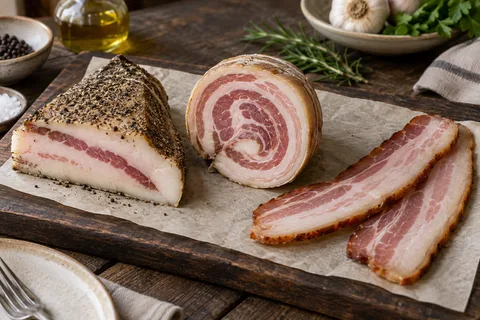
Pork (rendering the fat) 40g bacon (cut into strips) + garlic and dried chili45g guanciale, large cubes, cooked until crispGuanciale, thin-sliced, laid out and seared30g pancetta + 20g olive oil, started cold, then low heat60g thin-sliced bacon, cooked crisp with no oil80g bacon, cooked slowly until crisp, then deglaze the fond with water200g thin-sliced guanciale, medium-low heat125g guanciale, 1.3cm cubes, medium heat 4–6 min85g diced guanciale + olive oil, medium heat 7 min
Egg composition 1 whole egg (L-size)3 egg yolks1 egg yolk2–3 egg yolks2 whole eggs (whipped)2 whole eggs + 2 yolks (2 servings)3 yolks + 1 whole egg4 egg yolks (add 1 egg white for a lighter version)2 whole eggs + 6 yolks (4 servings)
Cheese 30g grated cheese10g Grana Padano + 5g Pecorino (plus finishing)Parmigiano (equal weight to the yolk)30g Parmigiano (grated cheese OK)2–3 tbsp Parmesan25g grated cheese / 30g Parmigiano90g Pecorino (at least 30g per 100g pasta)55g Pecorino plus finishing25g Pecorino + 25g Parmigiano (50:50)
Emulsification method Direct heat, low, constant stirringBowl bain-marie + hand mixerTossed in the pan off the heatPasta moved into a bowl of egg mixture and tossedDirect heat, lowDirect heat, medium, with a rubber spatulaSteam heat, holding the pan over the potIn a bowl using only the pasta's own heatDouble boiler (metal bowl set over the boiling water)
Heat and temperature Cool the pan after sautéing the base, then fixed low heatBain-marie to about 65°CEgg mixture never touches direct heatEgg mixture kept off the heat, uses residual heatRepeatedly lift off and return to the heatRepeatedly on and off the heat, taken off just before it turns silkyIndirect heat, never over direct heatNo stovetop heat used (bain-marie if worried)Indirect heat, bain-marie
Finishing 2 tsp olive oil, black pepperPecorino, black pepperBlack pepper (with fava beans)Cheese, black pepperBlack pepperFinished with residual heat, bacon placed on topPecorino, guanciale, black pepperBlack pepper, PecorinoCheese, black pepper, olive oil
Total time about 15 minabout 20 minabout 20 minabout 20 minabout 10 minabout 20 minabout 25 minabout 20 minabout 30 min
Source check Source verifiedPartly unverifiedPartly unverifiedSource verifiedPartly unverifiedPartly unverifiedSource verifiedPartly unverifiedPartly unverified
Ryuji 1 whole egg + 30g grated cheese, stirred on low direct heat
Pasta, portion, and boiling
1.7–2mm, 100g, 1 min under package time
Salt in the pasta water
1% of the water
Water volume
not stated
Pork (rendering the fat)
40g bacon (cut into strips) + garlic and dried chili
Egg composition
1 whole egg (L-size)
Cheese
30g grated cheese
Emulsification method
Direct heat, low, constant stirring
Heat and temperature
Cool the pan after sautéing the base, then fixed low heat
Finishing
2 tsp olive oil, black pepper
Total time
about 15 min
Source
Source verified
Fabio 3 egg yolks, bowl bain-marie + hand mixer up to 65°C
Pasta, portion, and boiling
2.2mm, 70g
Salt in the pasta water
1.5% of the water
Water volume
not stated
Pork (rendering the fat)
45g guanciale, large cubes, cooked until crisp
Egg composition
3 egg yolks
Cheese
10g Grana Padano + 5g Pecorino (plus finishing)
Emulsification method
Bowl bain-marie + hand mixer
Heat and temperature
Bain-marie to about 65°C
Finishing
Pecorino, black pepper
Total time
about 20 min
Source
Partly unverified
Tomomi Ogura 1 yolk + an equal weight of Parmigiano, tossed off the heat
Pasta, portion, and boiling
1.9mm, 60g, 10 min
Salt in the pasta water
1.5% of the water
Water volume
not stated
Pork (rendering the fat)
Guanciale, thin-sliced, laid out and seared
Egg composition
1 egg yolk
Cheese
Parmigiano (equal weight to the yolk)
Emulsification method
Tossed in the pan off the heat
Heat and temperature
Egg mixture never touches direct heat
Finishing
Black pepper (with fava beans)
Total time
about 20 min
Source
Partly unverified
Chef Ropia (Akifumi Kobayashi) 2–3 yolks; pasta tossed into the egg bowl, residual heat
Pasta, portion, and boiling
100g, 30 sec under package time (restaurant uses 1.6mm bronze-die)
Salt in the pasta water
about 2% of the water
Water volume
not stated
Pork (rendering the fat)
30g pancetta + 20g olive oil, started cold, then low heat
Egg composition
2–3 egg yolks
Cheese
30g Parmigiano (grated cheese OK)
Emulsification method
Pasta moved into a bowl of egg mixture and tossed
Heat and temperature
Egg mixture kept off the heat, uses residual heat
Finishing
Cheese, black pepper
Total time
about 20 min
Source
Source verified
Yoshimi Hidaka 2 whole eggs whipped for air, heat toggled on and off
Pasta, portion, and boiling
1.6mm, 160g for 2, 1–2 min under package time
Salt in the pasta water
1% of the water
Water volume
10x the noodle weight or more
Pork (rendering the fat)
60g thin-sliced bacon, cooked crisp with no oil
Egg composition
2 whole eggs (whipped)
Cheese
2–3 tbsp Parmesan
Emulsification method
Direct heat, low
Heat and temperature
Repeatedly lift off and return to the heat
Finishing
Black pepper
Total time
about 10 min
Source
Partly unverified
TO Tsutomu Ochiai 2 whole eggs + 2 yolks, off the heat 'just before silky'
Pasta, portion, and boiling
1.4mm, 140g for 2, 1 min under package time
Salt in the pasta water
1.5% (2.5 tbsp in 3L water)
Water volume
3L for 2 servings
Pork (rendering the fat)
80g bacon, cooked slowly until crisp, then deglaze the fond with water
Egg composition
2 whole eggs + 2 yolks (2 servings)
Cheese
25g grated cheese / 30g Parmigiano
Emulsification method
Direct heat, medium, with a rubber spatula
Heat and temperature
Repeatedly on and off the heat, taken off just before it turns silky
Finishing
Finished with residual heat, bacon placed on top
Total time
about 20 min
Source
Partly unverified
Vincenzo's Plate 3 yolks + 1 whole egg, combined over the pot in the steam
Pasta, portion, and boiling
300g thick spaghetti, 13 min
Salt in the pasta water
1/2 tbsp rock salt (% unknown)
Water volume
a large pot (amount unspecified)
Pork (rendering the fat)
200g thin-sliced guanciale, medium-low heat
Egg composition
3 yolks + 1 whole egg
Cheese
90g Pecorino (at least 30g per 100g pasta)
Emulsification method
Steam heat, holding the pan over the pot
Heat and temperature
Indirect heat, never over direct heat
Finishing
Pecorino, guanciale, black pepper
Total time
about 25 min
Source
Source verified
Pasta Grammar 4 egg yolks, tossed in a bowl by the hot pasta's heat alone
Pasta, portion, and boiling
340g rigatoni or spaghetti
Salt in the pasta water
about half the usual amount
Water volume
a large pot (amount unspecified)
Pork (rendering the fat)
125g guanciale, 1.3cm cubes, medium heat 4–6 min
Egg composition
4 egg yolks (add 1 egg white for a lighter version)
Cheese
55g Pecorino plus finishing
Emulsification method
In a bowl using only the pasta's own heat
Heat and temperature
No stovetop heat used (bain-marie if worried)
Finishing
Black pepper, Pecorino
Total time
about 20 min
Source
Partly unverified
Serious Eats (Daniel Gritzer) 2 whole eggs + 6 yolks, foolproof double boiler over the pot
Pasta, portion, and boiling
450g spaghetti for 4
Salt in the pasta water
kept light (no % given)
Water volume
a pot a bowl can rest on
Pork (rendering the fat)
85g diced guanciale + olive oil, medium heat 7 min
Egg composition
2 whole eggs + 6 yolks (4 servings)
Cheese
25g Pecorino + 25g Parmigiano (50:50)
Emulsification method
Double boiler (metal bowl set over the boiling water)
Heat and temperature
Indirect heat, bain-marie
Finishing
Cheese, black pepper, olive oil
Total time
about 30 min
Source
Partly unverified

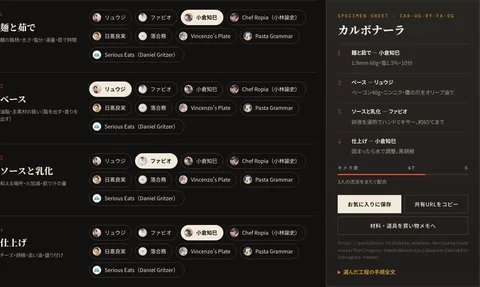
Remix the steps (optional)

Your picks stay in the URL, so you can share it as is

1 Pasta & boiling Brand, thickness, salt, water volume, cooking time
2 Base Fat and the main ingredient: rendering, infusing
3 Sauce & emulsion Where you toss, heat level, how much pasta water
4 Finish Cheese, pepper, finishing oil, plating

The map of schools: where the heat is managed

For Carbonara, the fork in the road is how you emulsify and heat

Toss over direct heat

The pan stays on the flame and your hands manage the temperature. Fast, but it takes feel.

Indirect heat

Bain-marie, steam, double boiler or a hand blender. Repeatable, at the cost of one extra step.

Off the heat

Emulsify after killing the flame, or in a bowl with only the pasta’s residual heat. Hard to get wrong.

Salt in the pasta waterActual values from 6 styles. Equal values stack vertically
0.9%1.2%1.5%1.8%2.1%Ryuji: 1% of the waterRYoshimi Hidaka: 1% of the waterYHFabio: 1.5% of the waterFTomomi Ogura: 1.5% of the waterTOTsutomu Ochiai: 1.5% (2.5 tbsp in 3L water)TOChef Ropia (Akifumi Kobayashi): about 2% of the waterCR
Total timeActual values from 9 styles. Equal values stack vertically
7.6 min13.8 min20 min26.2 min32.4 minYoshimi Hidaka: about 10 minYHRyuji: about 15 minRFabio: about 20 minFTomomi Ogura: about 20 minTOChef Ropia (Akifumi Kobayashi): about 20 minCRTsutomu Ochiai: about 20 minTOPasta Grammar: about 20 minESVincenzo's Plate: about 25 minVPSerious Eats (Daniel Gritzer): about 30 minSE
Pasta thicknessActual values from 5 styles. Equal values stack vertically
1.3mm1.6mm1.8mm2.0mm2.3mmTsutomu Ochiai: 1.4mm, 140g for 2, 1 min under package timeTOChef Ropia (Akifumi Kobayashi): 100g, 30 sec under package time (restaurant uses 1.6mm bronze-die)CRYoshimi Hidaka: 1.6mm, 160g for 2, 1–2 min under package timeYHTomomi Ogura: 1.9mm, 60g, 10 minTOFabio: 2.2mm, 70gF

Gear and ingredients for this dish

Purchase suggestions for preparing this dish, including tools and ingredients.

Articles about Carbonara

Reads

A Chimera Score of 100 Isn't a Warning

In the Recipe Builder, a chimera score of 100 doesn't predict failure — it just means no reference video exists for that mix. What each step changes and how sharing and saving work.

Gear

Bring the Pasta Water Along, or Don't

Moving pasta from pot to pan comes down to two tools. That how much pasta water rides along changes the finish is the editors' read, not a relationship our sources tested.