Ingredients
If you’ve ever felt that the same amount of sauce clings differently depending on the noodle, that’s not just in your head. Dried pasta is extruded through a metal die, and the die’s material changes the surface texture — conventional wisdom says the rougher the noodle, the more sauce it holds onto. This article breaks down the difference between bronze dies and Teflon dies.
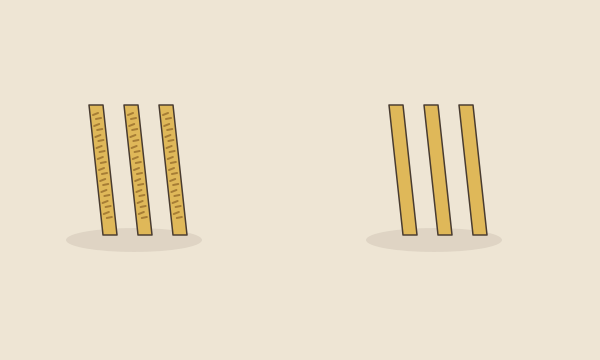
- Bronze dieRougher extrusion grips sauce but costs more and runs slower.
- Teflon dieSmoother extrusion supports faster, larger production.
Surface texture and production efficiency pull apart.
That rough texture comes at a cost
Dried pasta is made by pushing kneaded dough through a metal die. Dies are mainly made of one of two materials: bronze or Teflon (PTFE, a fluoropolymer coating). According to Epicurious, most manufacturers today use Teflon-coated dies, which extrude pasta with a smooth, glossy surface. Bronze, by contrast, creates more friction, leaving tiny irregularities on the dough’s surface as it’s pushed through — the result is a rougher, almost porous-feeling noodle.
The difference isn’t just cosmetic. Vincenzo’s Plate explains that the smooth surface Teflon produces is faster and cheaper to manufacture. In other words, bronze dies come with a real cost and speed disadvantage, in exchange for a rougher noodle surface (this site hasn’t been able to confirm primary sourcing on the difference in die wear).
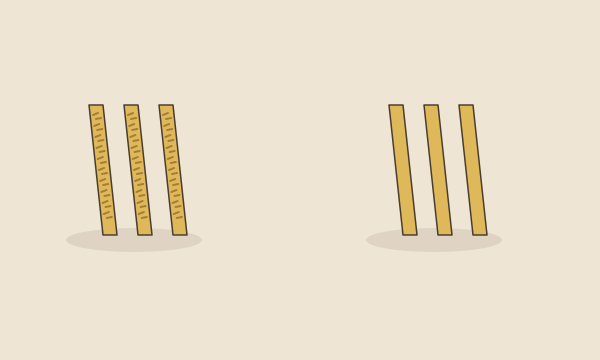
- Rough exteriorMicroscopic texture gives sauce more places to cling.
- Smooth exteriorLess surface friction leaves a cleaner noodle finish.
Die texture changes the contact between noodle and sauce.
Every groove physically holds the sauce in place
The editors’ read is that this difference mainly comes down to physical surface area and how easily sauce is retained. A Teflon-die noodle has a smooth surface with little for sauce to grip, so a thin, liquid sauce tends to slide right off. A bronze-die noodle, on the other hand, is covered in countless tiny grooves where sauce can physically settle in. The rougher surface may also let slightly more starch leach into the pasta water, though it’s not a difference you could measure at home.
How much you notice the benefit depends on the sauce. Thin sauces — oil-based or tomato-based — tend to show the effect of a rough surface more clearly, while thick, creamy sauces narrow the gap — that, at least, is the editors’ read (none of the sources cited here test how the effect varies with sauce viscosity). If you want to feel the difference for yourself, the clearest test is to keep the sauce the same and change only the pasta brand, boiling them side by side.
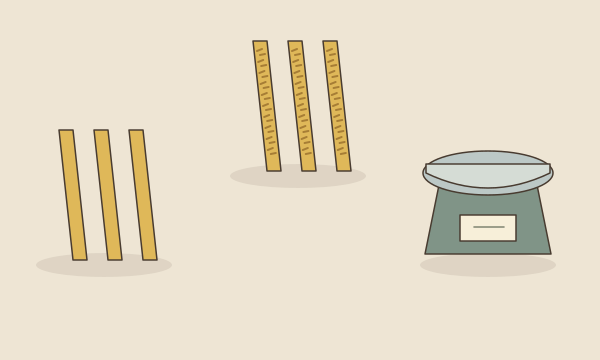
- Classic lineThe familiar range represents the smoother extrusion style.
- Al Bronzo lineA separate bronze-die range offers a rougher surface.
- One brand comparisonShared branding makes the die difference easier to isolate.
One maker lets shoppers compare both extrusion styles.
Barilla is the only one selling both
The dried-pasta brands widely available in Japan split fairly cleanly by die material. De Cecco states on its own site that it has kept using bronze draw-plates even though faster, cheaper options exist. Garofalo states on its own site that “most of Pasta Garofalo’s shapes are bronze-drawn,” while acknowledging that some shapes — capellini, for instance — are better suited to Teflon drawing (Garofalo is based in Gragnano, and it says the Pasta di Gragnano IGP seal appears not on every shape but on “many of the shapes”). Barilla’s standard line, on the other hand, is extruded through Teflon dies for a smooth, glossy surface — though its premium “Al Bronzo” line switches to bronze dies. Italian chef Tomomi Ogura lists De Cecco (Fedelini size 10, Lasagna size 1) and Garofalo in his note on tools and ingredients, though he doesn’t mention die material. Vincenzo’s Plate, a comparison-focused channel, covers several brands including Barilla in its brand-ranking piece. That piece calls Barilla’s classic blue box “Teflon-extruded” and Pastificio Liguori (Gragnano PGI) “bronze-die,” and in the comments Vincenzo himself confirms that the Al Bronzo line is bronze-cut; Di Martino and La Molisana are rated there on surface roughness. For a rundown of numbering, pricing, and where to buy each brand, see Dried Pasta Brands Compared.
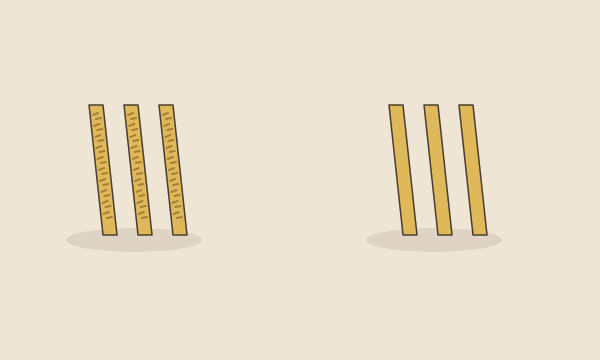
- Choose bronzePrioritize sauce grip and a visibly rough surface.
- Choose TeflonPrioritize a smooth bite and broad availability.
Choose the surface that fits the sauce and texture goal.
Summary
Bronze dies roughen the noodle surface to boost sauce cling, while Teflon dies prioritize a smooth surface and faster mass production. As a rule of thumb, De Cecco uses bronze dies, most Garofalo shapes are bronze-drawn, and Barilla’s standard line uses Teflon — but since some manufacturers switch by shape, as Garofalo does, and others sell a separate bronze-die premium line, as Barilla does, it’s worth checking the packaging to be sure. Start by rethinking which dried pasta you’re pairing with which sauce. You might also enjoy What Emulsification Means in Pasta and the carbonara comparison page.