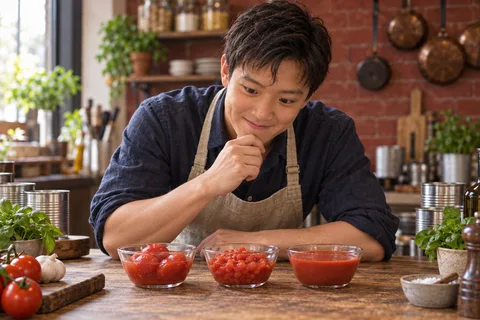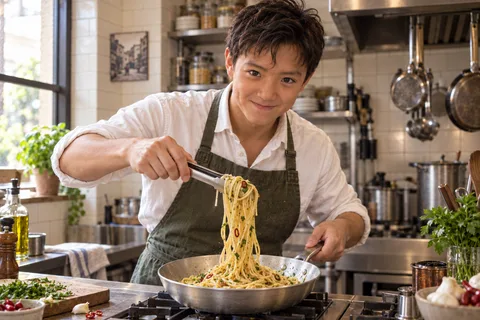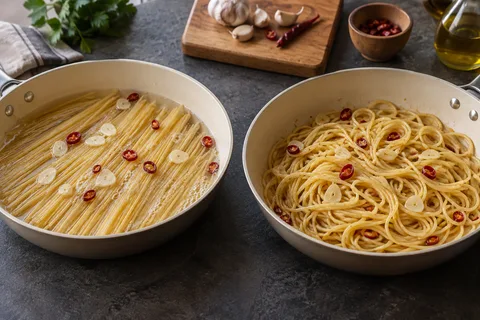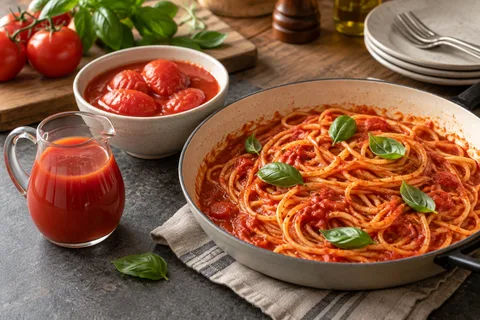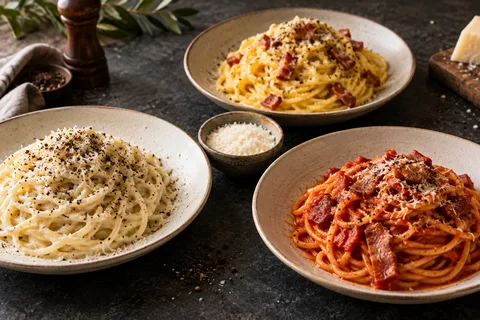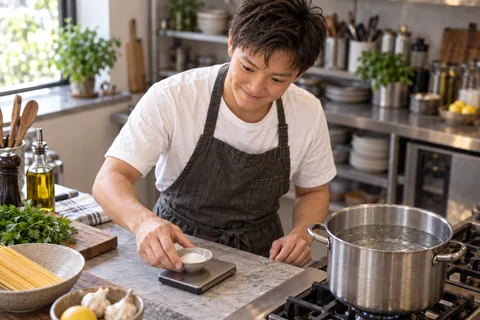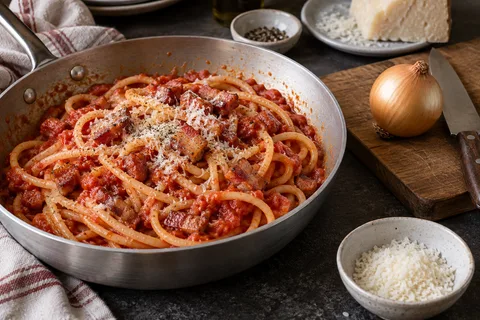
The traditional Roman and Amatrice schools skip onion and garlic. Of six chefs here, only Ryuji and Yoshimi Hidaka add them — the other four build on pork fat, tomato, and cheese, with wine or chili.
International chef
Vincenzo's Plate
Vincenzo Prosperi
Authentic Italian standard Explains dishes around "how a real Italian makes it." Covers details like cream-free carbonara and matching pasta thickness to the sauce.
Vincenzo's Plate · ~1.65M subscribers (as of 2026-09-05)
Watch
Plays through the official embed
Fettuccine AlfredoHow to Make FETTUCCINE ALFREDO Like an Italian
AmatricianaHow to Make PASTA AMATRICIANA like a Roman
Penne all'arrabbiataHow to Make PENNE all'ARRABBIATA Like an Italian (The Angry Spicy Pasta Recipe)
Spaghetti all'AssassinaHow to Make SPAGHETTI ALL' ASSASSINA Like an Italian
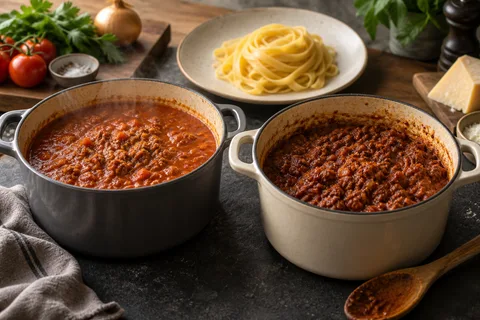
Ragù alla bologneseWhy Your Bolognese Never Tastes Right (This Is Why)
Cacio e pepeHow to Make Authentic Cacio e Pepe Pasta: No Cream, All Flavor
What defines this chef’s technique
- Frames cream-free carbonara as the authentic standard
- Uses thick spaghettoni for cacio e pepe (his official recipe explains this gives the sauce more to cling to)
- Publishes both an original and a 2026 version of cacio e pepe, the newer one using less pasta water, no salt, and a higher starch concentration
- Repeatedly shows that adding cheese at high heat all at once is the biggest failure point
Cook from this chef’s recipes
21 dishes


Gear and ingredients referenced by Vincenzo's Plate
Add them all to your shopping list
Each link is based on the source note on the card and on the chef’s own videos and posts. None of this is an endorsement or partnership.
Articles about Vincenzo's Plate
Seared or pale, red wine or white, milk or none — eight chefs disagree on nearly everything, and simmer time alone splits by a full order of magnitude, 30-60 minutes against 3-5 hours.
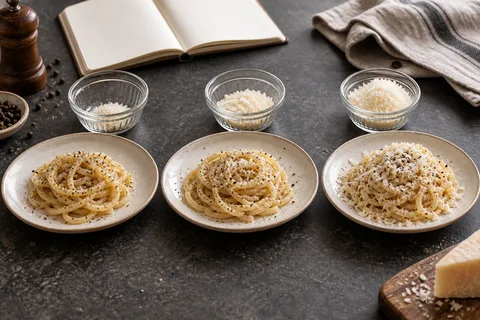
Cacio e pepe comes down to cheese and black pepper, yet almost every failure has one cause — a pan that's too hot when the cheese goes in. Eight chefs split into three schools for that moment.
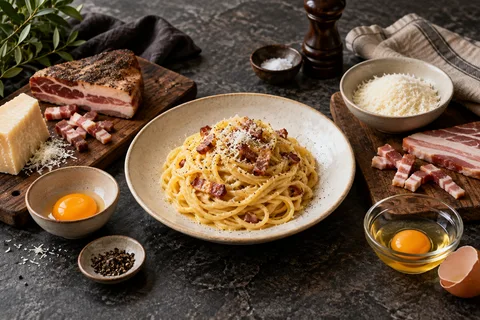
Carbonara splits over one question — where the egg comes up to temperature. Direct heat, bain-marie, or residual heat: five chefs, plus the tip line in Fabio's transcript about hot water and eggs.
San Marzano DOP only proves where and how a tomato was grown — not that it tastes better. What actually separates canned tomatoes is processing stage (whole, diced, passata) and moisture.
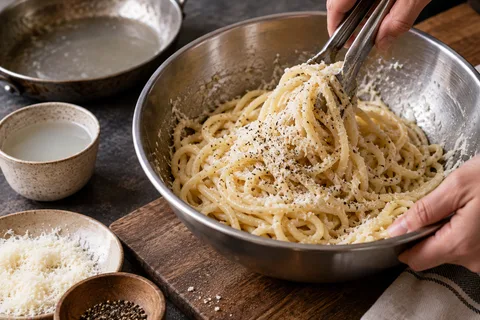
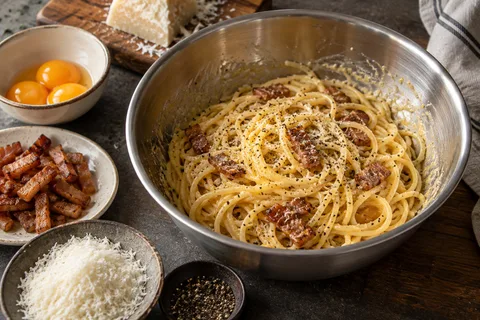
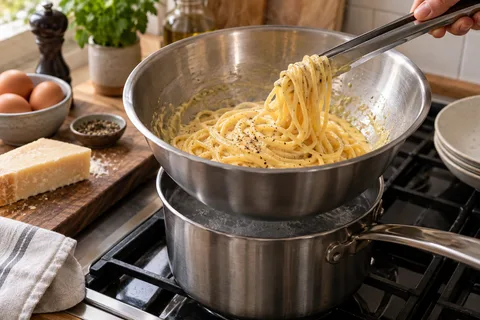
Vincenzo's Plate emulsifies both carbonara and cacio e pepe off direct heat, with the pan suspended over the pasta pot's steam. His 2026 cacio e pepe drops salt entirely.
Emulsifying pasta sauce isn't about mixing harder. It happens only when starch, a safe temperature, and nonstop agitation all line up. Four schools split the work differently.
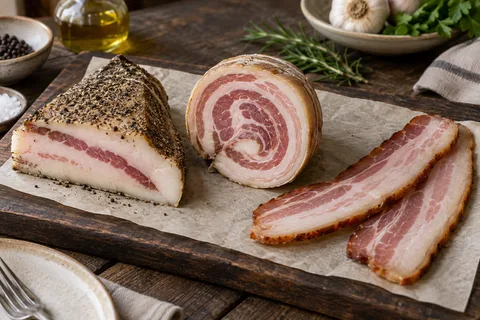
Vincenzo's Plate allows pancetta or salami as a substitute in amatriciana but names bacon specifically as the one to avoid. Here's how guanciale differs, how chefs treat it, and how to buy it online.
Guanciale, pancetta, and bacon are all cured pork, but fat ratio and smoking split them apart. Serious Eats ranks them bacon, pancetta, guanciale — and guanciale use ranges 19g to 67g per 100g pasta.
Ryuji's carbonara skips heavy cream, and so does Vincenzo's Plate — so "no cream" can't be the line between home cooks and tradition. The real split is ingredients, heat, and emulsion.
Ryuji's ultimate aglio e olio lists olive oil on two separate lines — one tablespoon each, the same oil. The split appears to come down to whether the oil hits heat.
Three channels all calling themselves traditionalist put 25g, 37.5g, and 50g of cheese per 100g of pasta into cacio e pepe — the middle one is half Pecorino, half Parmigiano.
J. Kenji López-Alt makes cacio e pepe without a big pot: noodles boil in a 12-inch frying pan with barely enough water to cover them, then go straight to the sauce with tongs, no draining.
A 2025 physics study found sauce stability turns on starch as a share of cheese mass: under 1% splits, 2-3% is ideal, over 4% stiffens. Kenji cuts the water; the paper's own fix is powdered starch.
Pecorino is salty sheep's-milk cheese; Parmigiano is milder cow's-milk. Some recipes leave the water unsalted so Pecorino carries the salt; others salt it heavily instead. Pick the cheese first.
One Roman amatriciana uses 20g of Pecorino Romano DOP per 100g of pasta — the highest ratio we could confirm for the dish. Buying it as a wedge, in our view, keeps more of the aroma.
Ryuji's peperoncino skips emulsification: he simmers dried pasta directly in water and bouillon. Tomomi Ogura adds pasta water with ten seconds left on the boil. Six chefs compared.
In this recipe Ochiai skips the can and reduces unsalted tomato juice instead, reasoning it's the same tomato at the source. Once pasta hits his sauce, he never turns the flame back on.
Cacio e pepe's grated cheese runs 17g to 50g per 100g of pasta, and Fabio adds 50g of cream cheese on top. Rome's three classics split along the same three axes: cheese, pork fat, emulsion.
The standard line is 10g salt per liter (1%), but real carbonara recipes split into 1%, 1.5%, and 2%. Cacio e pepe has a school that uses none at all — the number moves with the job salt is doing.
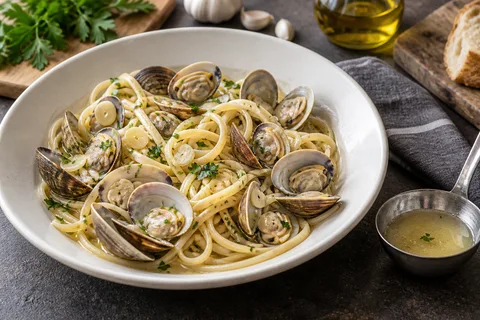
Ryuji's vongole bianco includes a half-teaspoon of kombu tea. Seven takes split on one real question — does the pasta drink clam liquor straight, or get tossed with a pasta-water emulsion?