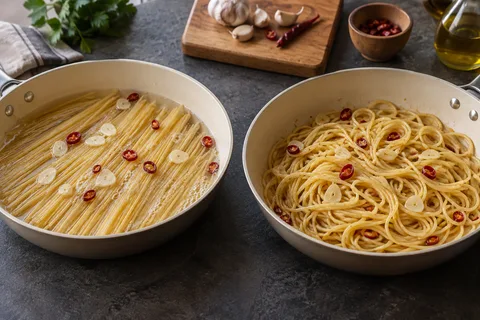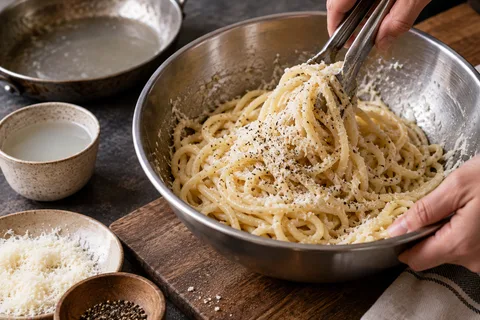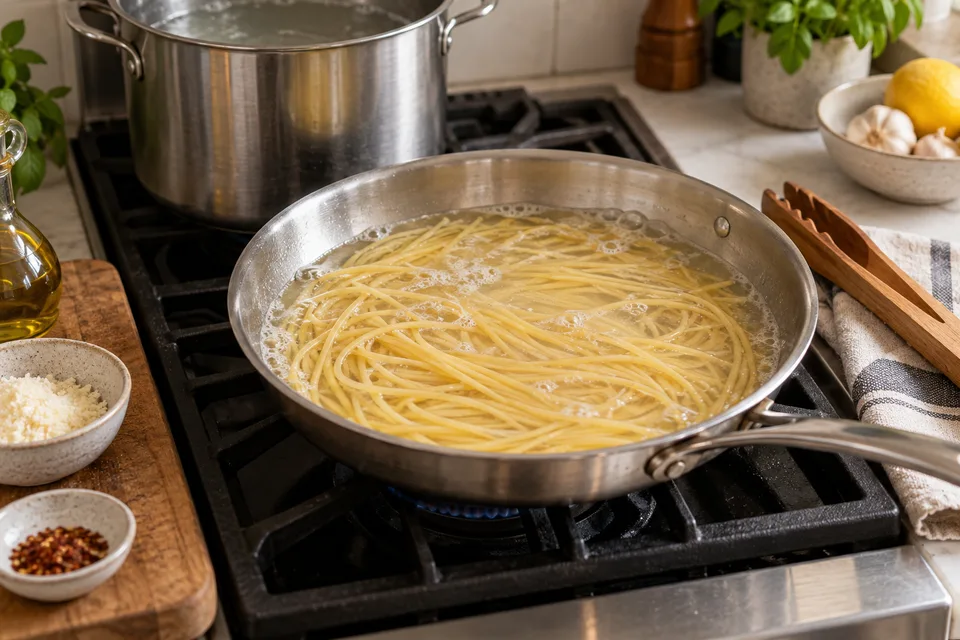
J. Kenji López-Alt makes cacio e pepe without touching a big pot. He boils the noodles in a 12-inch frying pan with just enough water to cover them, then lifts them straight into the sauce with tongs — no draining at all. Whether a dedicated pasta pot is worth owning splits on water volume: more water dilutes the starch in the pasta water, less water concentrates it.
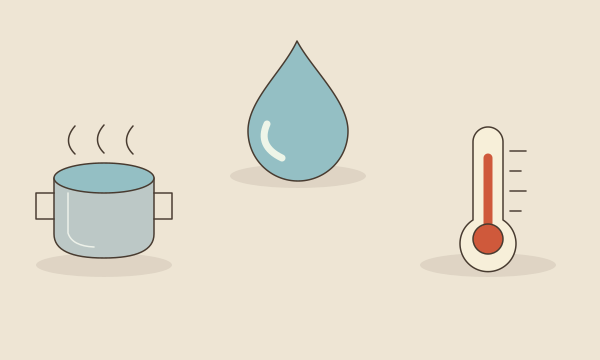
- Tall water columnEnough depth lets long pasta submerge and circulate.
- Narrow openingLess exposed surface can reduce heat loss to the room.
- Burner and baseReboil also depends on output and pot thickness.
Shape helps retain boiling conditions but does not act alone.
What a tall, narrow pot actually protects: volume and reboil speed
For cooks in the plenty-of-water school, a pasta pot mainly solves two problems: making sure there’s enough water for the noodles to convect freely without sticking together, and keeping the reboil fast once the pasta goes in. A tall, narrow shape has less surface area exposed to the air, which cuts down on heat loss. How much the temperature actually drops when you add the pasta also depends on your burner output and the pot’s wall thickness, so shape alone doesn’t decide it. The pots Tomomi Ogura of Regalo in Sangubashi lists in his note roundup of favorite gear are two 15cm saucepans he uses for risotto and soup — there’s no mention of a pasta pot itself (note). Fabio is also shown using a pasta pot in a third-party kitchenware feature, but since we couldn’t confirm this from Fabio’s own channel, we’re treating it as unverified information (delici.jp).
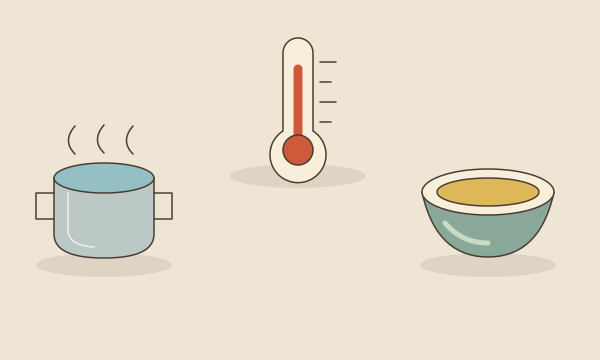
- CapacityEnough water keeps the intended pasta batch submerged.
- Base thicknessMore stored heat steadies reboil but slows initial heating.
- Drain setupAn insert improves handling but adds weight and cost.
A pasta pot balances volume, heat storage, and draining.
For the plenty-of-water school, it’s a three-way trade: capacity, thickness, draining
If you’re picking a pasta pot as a plenty-of-water cook, there are three things to weigh. As a rough guide from our editors, look for around 3 L for 1–2 servings, or 4–5 L if you want to cover up to 4 servings. A thicker pot bottom holds more heat, so the water temperature drops less when you add the pasta — but it also takes longer to come to a boil in the first place, so thickness is a trade-off between those two (our editors’ assessment). The other factor is how easy the pot is to drain: models with a built-in strainer insert let you drain without a separate colander (pasta strainer). Thicker, multi-layer construction generally means more heat retention but also a higher price, so the choice comes down to whether you’d rather boil faster or keep the water temperature more stable (check the gear cards below for specific price ranges).
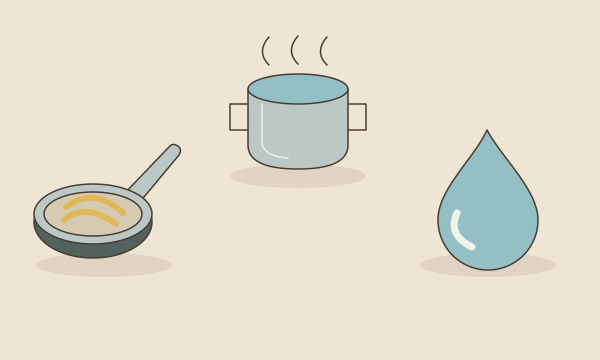
- Kenji skilletJust-covering water concentrates starch and avoids draining.
- Vincenzo pot stackReduced water remains, but the large pot supplies steam.
- Plenty-water potA deep boil favors circulation over starch concentration.
Less-water cooks can reduce or repurpose the big pot.
Kenji skips the pot and boils in a frying pan
On the other side, cooks who deliberately cut back on water to concentrate the starch have no real use for a dedicated pasta pot. In the Serious Eats recipe, J. Kenji López-Alt skips the big pot entirely for cacio e pepe: he boils the pasta in a 12-inch frying pan with just enough water to cover the noodles, then transfers it straight to the sauce with tongs, no draining involved (we couldn’t confirm this from a video by Kenji himself — it’s based on the written recipe. recipe). Vincenzo’s Plate’s 2026 revised recipe also cuts back on water, but the approach is different: the pasta is finished in a saucepan together with its cooking water, with that saucepan set on top of the boiling pot so steam keeps it warm — the boiling pot itself stays in play throughout (recipe). It’s Kenji’s recipe where the frying pan doubles as the boiling vessel (the article specifies only “a 12-inch frying pan,” with no material called out). Vincenzo’s Plate also cuts water volume, but applies heat differently from Kenji. Kenji builds a pepper oil in a separate skillet, takes it off the heat to cool, then moves the pasta into it to melt the cheese (the recipe says to reheat as necessary; two pieces of equipment in play), while Vincenzo’s Plate sets a saucepan over the boiling pot and warms it with steam. Kenji is the only one who skips the large pot entirely: Vincenzo’s Plate cuts the water volume but keeps the large pot in play and uses it as a steam source. What both share is that neither assumes you need a dedicated pasta pot for draining. We cover the relationship between water volume and starch concentration in more depth in our article on pasta water starch.
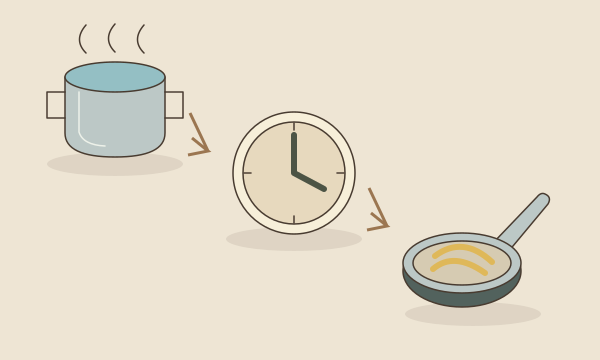
- Test submersionConfirm the current vessel holds the pasta comfortably.
- Watch the reboilNotice whether adding noodles stalls the boil too long.
- Change only if neededA deep skillet may add more options than another pot.
Let the current pot reveal the actual equipment gap.
Check your stockpot before you buy anything
If you already own a large stockpot or a curry pot, you can use it in place of a dedicated pasta pot before buying one. A regular colander (pasta strainer) is enough for draining, and if you’re cooking with a small amount of water, tongs alone are enough to lift the noodles out. The two questions worth asking before you upgrade are: does all the pasta actually stay fully submerged in your current pot, and how long do you have to wait for the water to reboil? If neither bothers you, buying a dedicated pot isn’t a high priority. On the other hand, if the wait for a boil drags on, or you want to try the less-water method, adding one deep frying pan to your kitchen opens up more options than buying another pot. Since changing your water volume changes how concentrated the same amount of salt tastes, it’s worth also checking why there’s no single correct salt concentration when you switch methods, so the seasoning doesn’t drift.
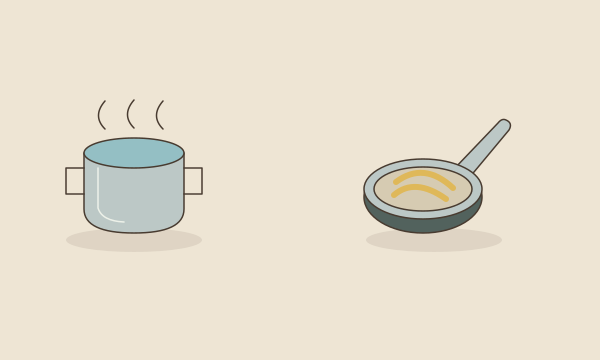
- Plenty of waterA dedicated pot supports circulation and easy draining.
- Concentrated waterA skillet builds starch and may remove draining entirely.
Your water-volume method decides whether the pot earns space.
Whether you need one comes down to your boiling philosophy
Whether you need a pasta pot comes down to your philosophy on boiling. For cooks who let the noodles convect in plenty of water, a dedicated pot that balances fast reboiling with easy draining earns its keep. For cooks who cut back on water to concentrate the starch, the case for buying one gets a lot weaker. Some, like Kenji, skip the large pot entirely and get by with two skillets; others, like Vincenzo’s Plate, combine an existing pot with a saucepan — neither approach requires dedicated equipment. The reliable way to decide is to first check which school your go-to dishes lean toward on the cacio e pepe comparison page, and let that guide whether a new pot is worth adding.