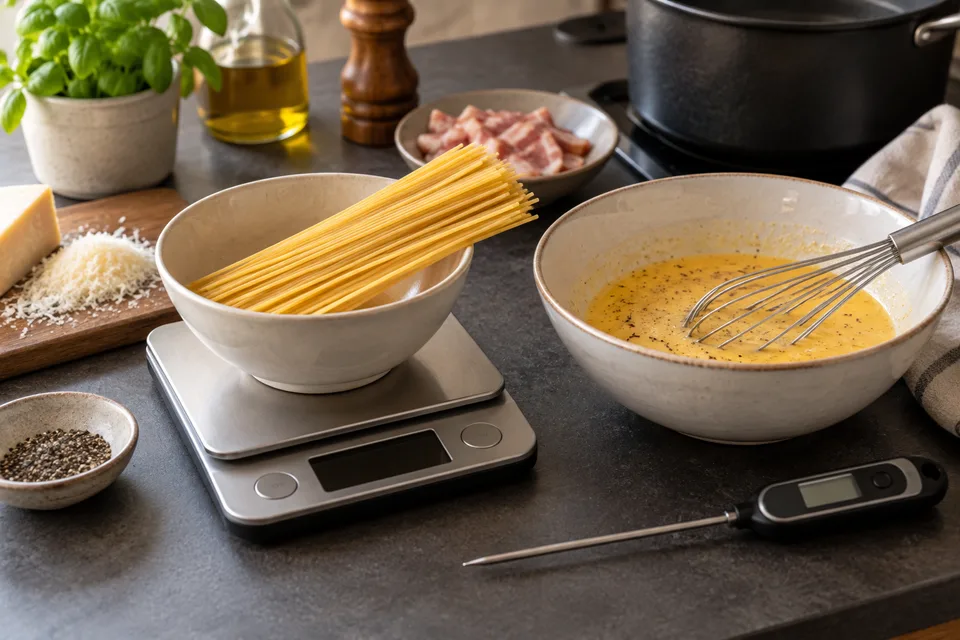
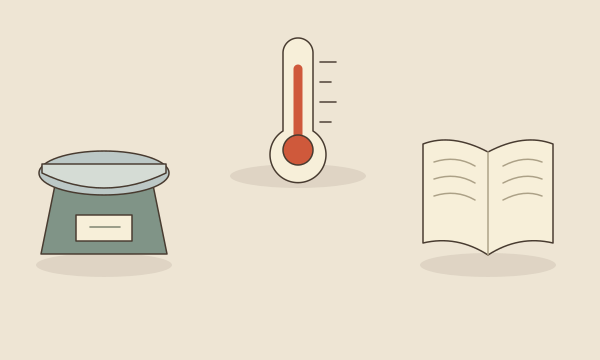
- Ingredient weightA scale makes pasta, cheese, and salt repeatable.
- Mixture temperatureA probe shows proximity to setting or seizing.
- Same next attemptRecorded numbers turn a result into a usable baseline.
Weight and temperature isolate two major sources of drift.
Two numbers eyeballing can’t reproduce
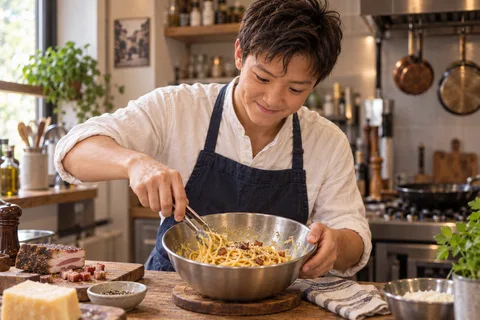
Two numbers mostly decide how a pasta dish turns out. The weight of the noodles and salt, and the temperature of the egg mixture or sauce. Both drift every time you eyeball them, but with a kitchen scale and a cooking thermometer you can reproduce the exact quantities and temperatures a video shows, at home. When the schools on this site talk in numbers — “100g,” “1.5%,” “around 65°C” — it’s because they’re chasing repeatability, not intuition. The starting point for choosing gear is separating what a scale does from what a thermometer does.
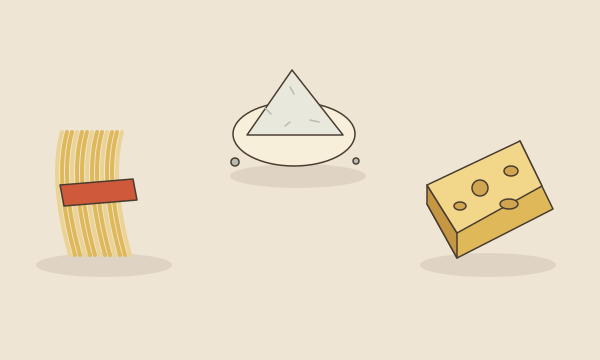
- Pasta portionFix serving size before ratios are calculated.
- Salt percentageConvert water volume into a repeatable salt weight.
- Cheese ratioKeep sauce richness consistent across attempts.
A scale controls ratios that spoons and handfuls blur.
What a kitchen scale controls
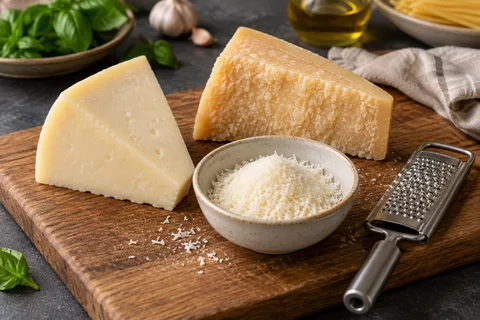
A kitchen scale is the tool for managing a single serving of noodles and the amount of salt, in numbers. Dried pasta portions range from around 60g per serving on the lighter end up past 110g per serving among some Western schools (Serious Eats uses 450g for 4 servings, or about 112g per serving), and eyeballing it swings by several grams to a dozen-plus per serving (the editors’ rough figure, not a sourced number). Change the noodle quantity and the water volume has to change with it, so even at the same salt concentration the absolute amount of salt you add shifts, throwing off the ratio to the egg mixture or sauce as well. A third-party site (howtocook.jp) lists a cooking scale among the tools Ryuji uses. His use of it hasn’t been confirmed in his own videos or other statements.
Read the full explanation
Three things matter when choosing one:
- Minimum increment: pick one that reads in 1g steps. For small quantities like salt or pepper, 0.1g increments are ideal, but 1g increments are practical enough for home use
- Maximum capacity: a serving or two of pasta plus the weight of a pot usually comes in under 2kg, so 2kg of capacity is enough
- Tare function: this lets you zero out the display with a bowl or pot already on the scale. Without it, you have to mentally subtract the container’s weight every time
The salt for the pasta water follows from the water volume and the target concentration: 10 g per liter is 1%. You can substitute teaspoons, but because the weight of a teaspoon varies by salt type, a scale that measures in grams makes it easier to match a school’s stated concentration exactly.
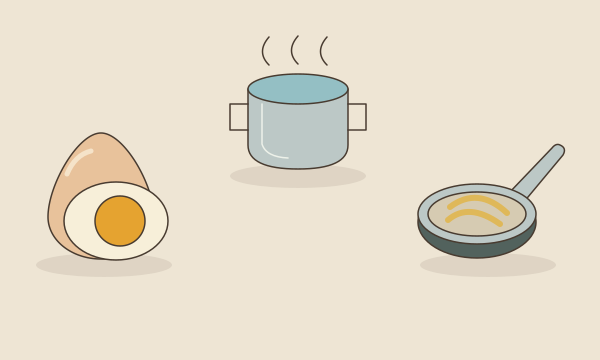
- Egg thickeningTrack the narrow zone before carbonara curdles.
- Water-bath heatVerify what a bain-marie is actually delivering.
- Pan cooldownSee whether stored heat has fallen enough for cheese or egg.
A thermometer makes invisible heat stages comparable.
What a thermometer controls
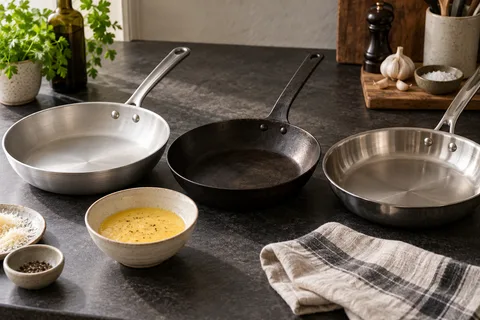
A cooking thermometer is the tool for tracking, in numbers, the temperature band where an egg mixture starts to set. Egg white is generally said to begin setting around 58°C and egg yolk around 65°C (we have not been able to confirm a primary source for these figures). For a yolk-heavy egg mixture, the only figure our sources confirm is Fabio’s around 65°C. If any one spot significantly overshoots that temperature, a carbonara sauce breaks and starts turning into scrambled eggs. According to a third-party article (written by the HowToCook.JP editorial team based on the video’s content), Fabio sets the whole bowl of egg mixture over a bain-marie and slowly raises the temperature to around 65°C while whisking with a hand mixer (it hasn’t yet been cross-checked against the full video).
Read the full explanation
Pressing play loads YouTube’s embedded player.Open on YouTube
The write-up doesn’t mention a thermometer either. The idea is that a thermometer is what lets you reproduce that 65°C figure at home. (Fabio’s name has been taken off the gear card at the end of this article: the third-party gear-roundup page it rested on lists no thermometer at all.) Fabio’s bain-marie method makes the temperature easier to control numerically than a method that heats the pan directly over the flame. In the editors’ view, the direct-heat method is a “feel-based” approach that adjusts the effective temperature through flame level and stirring speed, while the bain-marie-plus-thermometer method is a “numbers-based” approach. Neither is inherently better — the difference is that a thermometer makes the numbers-based method dramatically more repeatable.
Things to look for when choosing one:
- Response speed: pick a digital model that settles within a few seconds. Dial thermometers respond too slowly for something like an egg mixture, where the temperature changes fast
- Measurement range: a range of roughly 0–200°C covers everything from egg mixture to deep-frying oil in one device
- Water resistance and heat tolerance: since it will pick up steam from a bain-marie or oil splatter, a model with basic water resistance is easier to work with
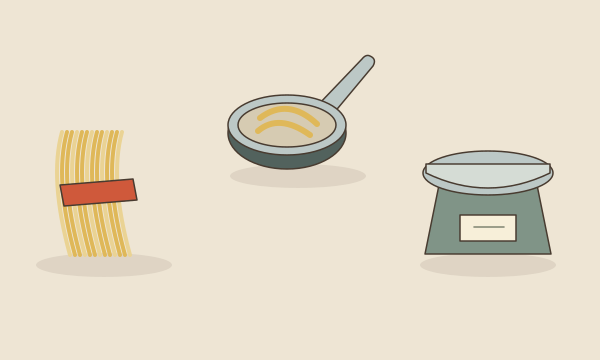
- Visual portion aidsBundle guides estimate pasta when a scale is absent.
- Flame and motion cuesLow heat and stirring substitute for a temperature reading.
- Both tools togetherUse weight and temperature to diagnose failures faster.
Cues can cook the dish; tools make the diagnosis cleaner.
Substitutes and how to combine them
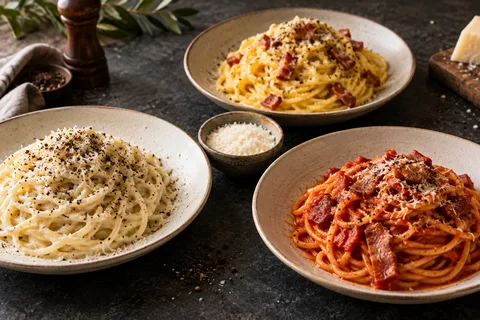
Neither a scale nor a thermometer is strictly required. You can estimate noodle quantity from the diameter of a bundle of store-bought pasta or the measuring hole printed on the package, and some schools skip stating an exact temperature for the egg mixture, adjusting by flame level and stirring instead. (Per transcripts, Ryuji works over low direct heat with constant stirring, and Tomomi Ogura removes the pan from the heat before tossing — both are based on third-party transcripts, and Ogura’s isn’t confirmed against the full video.) But if you want to reproduce a video’s stated numbers exactly, or isolate whether a failure comes down to quantity or temperature, having both tools speeds up the diagnosis. Working Backward From Egg Coagulation in Carbonara goes further into the temperature bands for direct heat, bain-marie, and residual heat.
If you’re prioritizing, start with the scale. Quantity drift tends to affect flavor more than temperature does, and the barrier to adopting a scale is lower. A thermometer is fine to add later, once you’ve hit repeated emulsion failures with the egg mixture.
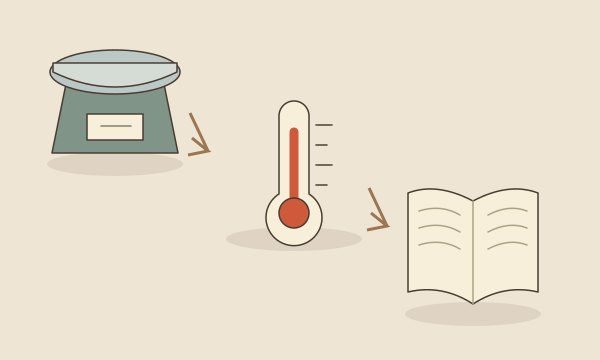
- Weigh ingredientsLock pasta, salt, and cheese before cooking.
- Track critical heatMeasure egg or sauce near its failure boundary.
- Record the resultChange one number on the next attempt.
Two simple measurements create a repeatable feedback loop.
Summary
A kitchen scale manages the weight of noodles and salt; a thermometer manages the temperature of the egg mixture or sauce — together they’re the minimum numbers-driven setup. Compare quantities and temperatures across schools on the carbonara comparison page, and start by weighing your noodles and salt with a scale — from there it gets much easier to narrow down what’s causing any inconsistency in flavor.