 Ingredients
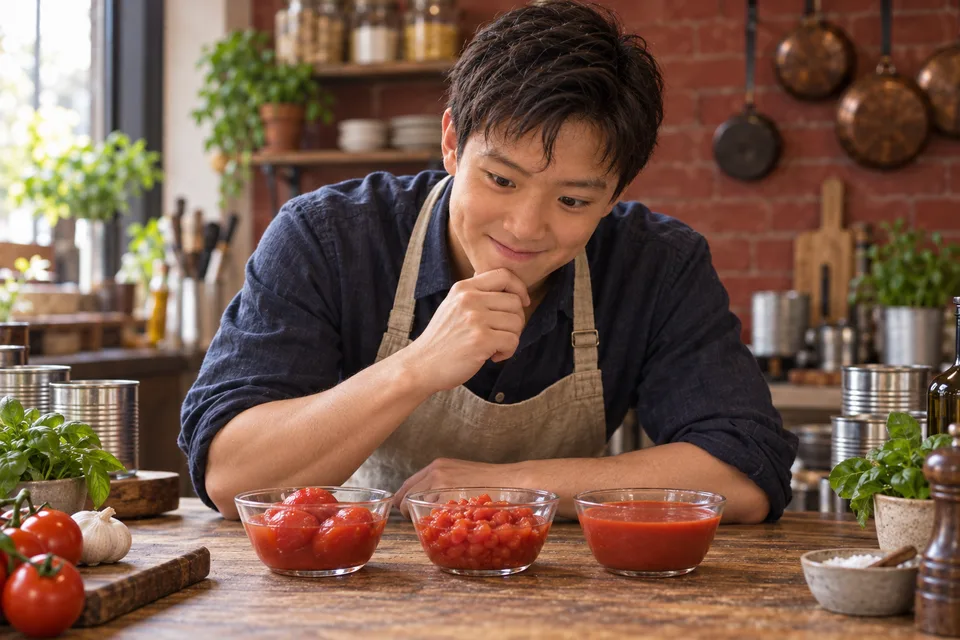
- Whole peeledLeaves crushing and final texture to the cook.
- Crushed or choppedStarts partway toward a textured sauce.
- PassataBegins smooth and strained, with no large pieces.
Processing level determines how much texture work remains.
What separates cans isn’t the region — it’s how far the tomato’s already been processed
The first thing that determines which can you reach for isn’t the region or the brand — it’s how far the tomato has already been processed. Canned whole peeled tomatoes hold the peeled fruit intact, so you decide yourself how much to crush them; they break down more slowly and keep more texture. Canned diced tomatoes are already cut into cubes, which cuts down on simmer time and works well when you want a uniform texture. Passata (strained tomato purée) goes a step further still: it comes in the jar or can already crushed and strained, so you skip that step entirely.
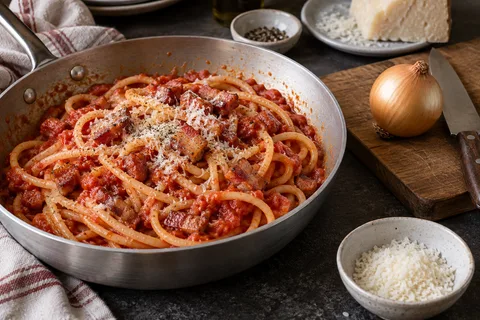
Fabio’s amatriciana uses 160 g of passata di pomodoro, skipping the step of crushing whole tomatoes by hand. Ryuji’s tomato sauce pasta (the relevant video), on the other hand, uses half a can of whole tomatoes and keeps the step of simmering them over low heat with onion and grated garlic. Even under the same label, “tomato sauce,” the weight of the process changes with how far along the can already is.
Pressing play loads YouTube’s embedded player.Open on YouTube

- Certified originThe mark verifies a named place and production rules.
- Taste on the plateFlavor still depends on fruit, processing, and the cook.
A DOP seal is traceability evidence, not a taste score.
DOP proves origin and method, not flavor
Canned San Marzano DOP tomatoes carry a Protected Designation of Origin (DOP) — the name is reserved for peeled tomatoes of the S. Marzano 2 and/or KIROS varieties (and lines bred as genetic improvements on them), grown and processed within the designated Agro Sarnese-Nocerino area of Campania, Italy (production specification, articles 1–3). The specification also sets floors for the processed product (article 6): drained weight of at least 60% of net weight (a fill standard), at least 60% of that drained weight being fruit with no shape-altering damage (a standard for the fruit’s shape), and a refractometric residue of 5.0% or more (a floor on soluble solids). They sit at the high end of the price range among canned whole tomatoes, though that is only what the editors have observed on store shelves. It’s the name that comes up whenever someone invokes “authentic pomodoro,” but the DOP certification only attests to origin, cultivation, and processing method — it isn’t a guarantee of superior flavor.
Read the full explanation
Mutti is an Italian canned-tomato brand whose Japanese-language official site lists whole peeled tomatoes (pelati), fresh chopped tomatoes (polpa), and tomato purée (passata). How easy it is to find in Japanese supermarkets, its slightly lower price than San Marzano DOP, and the fact that La Preziosa is a lower-priced entry brand sold at import grocers are all only what the editors have observed on store shelves, with no published sourcing behind them. As one example of a brand a professional uses, Tomomi Ogura has stated he uses Campo Grande Pomodorini Pelati.
In the editors’ assessment, the price gap mostly shows up in how firm the fruit stays and how much moisture it holds. If your recipe simmers for a long time, even a cheaper can can be cooked down and adjusted; the shorter your simmer, the more you benefit from a can that started with less moisture to begin with.

- Pomodoro leadTomato quality and texture stand exposed in the sauce.
- Amatriciana supportGuanciale and Pecorino share the flavor load.
Spend attention on the can when tomato carries the dish.
Pomodoro rides on the can alone; amatriciana lets the tomato play a supporting role
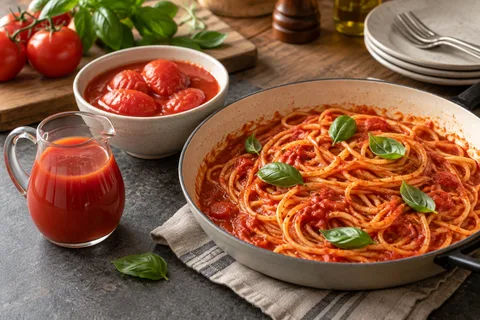
In pomodoro — a dish where tomato sauce alone carries the plate — how the can tastes on its own shapes the whole impression. Vincenzo’s Plate uses 400 g of cherry tomatoes cut in half (canned whole tomatoes, 400 g, also work as a substitute), gently pressing them with a spoon so the skins stay intact while they cook (“the skin is the secret to creaminess”). Since canned whole tomatoes have already had their skins removed, that skin-derived creaminess applies specifically to using fresh cherry tomatoes. Pasta Grammar goes even further in the direction of subtraction, publishing a recipe built from nothing but tomato, oil, salt, basil, and a single clove of garlic — no aromatics — and urging readers to check the ingredient label and pick a can with nothing added besides the tomato. In fact, that same recipe says “while San Marzano tomatoes are fantastic, you don’t need to splurge on them in order to make a great sauce. What’s important is to look for pure tomatoes.”
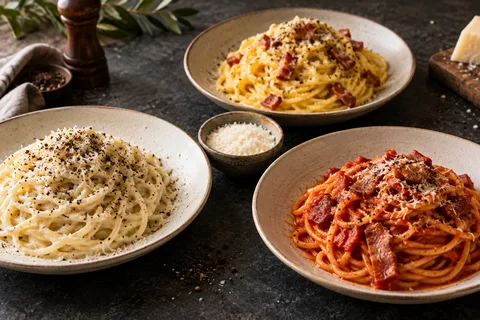
Amatriciana is a dish where the fat from guanciale and the salt from Pecorino both push hard, so in the editors’ view, how assertive the tomato is tends to shape the impression of the whole plate. Vincenzo’s Plate uses a 400 g can of skinless tomatoes plus a glass of white wine, while Pasta Grammar uses 400 g of whole tomatoes crushed by fork plus 60 ml of white wine — both recipes sauté the guanciale first, add the white wine, and only then bring in the tomato.
If you’re trying different cans at home, the editors’ suggestion is to start with Mutti’s canned whole tomatoes to establish a baseline flavor, then, if you want more, try San Marzano DOP to see the difference firmness makes. Reserving diced cans for when saving time is genuinely the goal is an easy rule of thumb for balancing the processing stage against the effort involved.

- Choose the dishDecide whether tomato leads or supports.
- Choose processingMatch whole, chopped, or strained to desired texture.
- Check provenanceUse DOP when verified origin matters to you.
Select canned tomatoes by role, texture, then provenance.
Summary
The axis that matters most when choosing canned tomatoes isn’t the prestige of the region — it’s the processing stage and the moisture content. Whether you pick whole, diced, or passata changes how heavy the process is; whether you pick San Marzano DOP, Mutti, or an entry-level can changes both firmness and price. Start by checking the pomodoro comparison page or the amatriciana comparison page to see which part of the process the dish you want to make actually cares about, then pick the can that matches — that’s the shortest path. The finer differences by chef are collected in the tomato sauce pasta compared by chef article and the amatriciana compared by chef article.