Ingredients
Pressing play loads YouTube’s embedded player.Open on YouTube
Ryuji’s “Ultimate Aglio e Olio” lists olive oil twice in its ingredients: 1 tbsp in the first of its two olive oil lines, and a separate “1 tbsp olive oil, added at the finish.” It’s the same bottle, but the split appears to come down to whether the oil hits direct heat (Ryuji himself never gives a reason) — finishing oil never touches heat, so its aroma lands on the plate exactly as it was in the bottle. Here’s why the oil shows up twice in so many videos, and how to pick a bottle for that second pour.

- Cooking oilHeat extracts aromatics and can soften fresh volatile notes.
- Finishing oilAdded after cooking, aroma stays closer to the foreground.
Timing changes the function of the same bottle.
Whether it hits heat changes what the same oil does
The olive oil used to sauté garlic or onion gets hit with heat. Some of its aroma compounds burn off in the process, and the oil itself mostly ends up doing the job of conducting heat. The olive oil added at the end, by contrast, never goes over direct heat, so its aroma, sharpness, and bitterness all reach the plate intact.
Read the full explanation
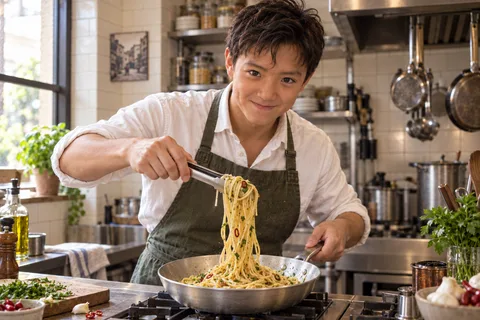
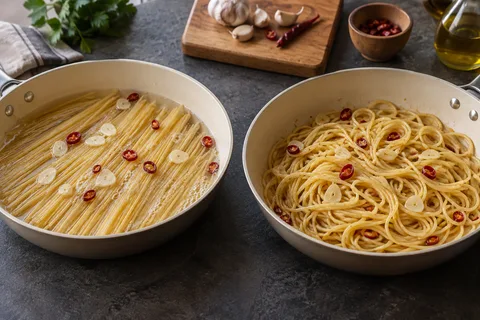
Ryuji’s “The Ultimate Aglio e Olio” lists a separate line in the ingredients: alongside the first of the two olive oil lines, 1 tbsp (no use is stated for it; the third-party method summary has it going into the garlic sauté), there’s “1 tbsp olive oil, added at the finish” (source). A third-party method summary records this as a step where, off the heat, that tablespoon and a pinch of salt go in while the pan is tossed to combine (source). The same pattern shows up in his tomato sauce pasta: separate from the oil used to simmer the sauce, Ryuji’s version adds 1 tbsp of olive oil in the tossing step (source). In the tomato sauce, though, the oil goes in with the pan still over low heat, unlike the aglio e olio, where the heat is off first. Adding it once the cooking is done appears aimed at coating the whole dish in aroma without burning it away.
Tomomi Ogura’s aglio e olio follows the same two-step pattern. His transcript notes a step where, after the pasta is drained and tossed with the sauce, Italian parsley and a final drizzle of olive oil go in (source). His ingredient list bundles the olive oil into a single line, but splitting it between the sautéing step and the finish matches what Ryuji does.

- Olive-oil finishKeeps fruit and herb aromas at the front.
- Butter finishAdds dairy roundness and softens tomato acidity.
Pomodoro schools divide on fresh oil versus dairy richness.
Tomato sauce is the one dish that splits back to dairy
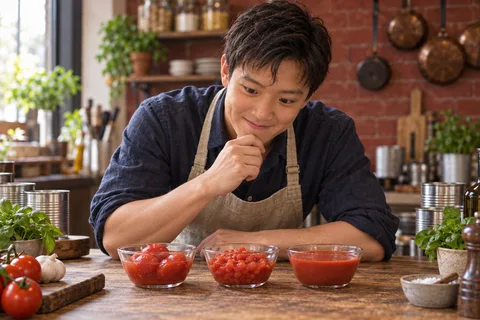
Tomato sauce carries a lot of water, so it separates from oil easily. Fabio’s basic tomato sauce finishes differently depending on the outlet (the j7p and howtocook versions also differ in some of their ingredients). The j7p version tosses the pasta with 10g of butter and torn basil, then dusts on grated cheese (source); the howtocook version moves the pasta into the sauce 30 seconds before it finishes boiling, then takes the pan off the heat and stirs in 15g of Parmesan (source). Both secondary sources record a dairy-based finish, and neither mentions adding olive oil at the end.
Ryuji’s “The Ultimate Tomato Sauce Pasta,” on the other hand, adds 1 tbsp of extra virgin olive oil during the tossing step and adjusts the consistency with pasta water (source). Whether the base of the emulsion sits on dairy or comes back around to olive oil is where the schools diverge. For tomato sauce specifically, the finishing oil seems to do double duty: it adds aroma, but it’s also emulsified with pasta water to smooth out the whole sauce.

- Extra virginUnrefined EVOO carries its aroma directly into the finish.
- Aroma styleChoose peppery oil for a lead role or mild oil to blend.
- Finishable bottle sizeBuy an amount you can finish while aroma remains lively.
A finishing oil purchase is mainly an aroma-preservation choice.
What to Look for When Buying
Three things matter when picking an olive oil for finishing:
- Whether it’s extra virgin: since it’s never heated, an unrefined extra virgin olive oil (EVOO) carries its aroma straight through
- Pungency by origin and cultivar: a sharper, more peppery oil suits dishes like aglio e olio where the oil itself is the star; a milder oil suits dishes like tomato sauce where it needs to blend with other aromas
- How long it keeps once opened: aroma is the whole point, so one line of thinking is to buy a size you’ll finish before the aroma fades
You don’t need entirely separate brands for cooking and finishing. Even from the same bottle, just being deliberate about which step gets direct heat and which doesn’t changes how much aroma survives. Some cooks keep a cheaper olive oil for the pan and reserve a more fragrant bottle strictly for finishing.

- Ochiai dairy finishParmigiano and butter finish the pasta together off heat.
- Fabio dairy finishButter, basil, and grated cheese replace finishing oil.
- Vincenzo oil finishEVOO and basil finish the sauce; Pecorino stays optional.
Dairy-only finishes contrast with oil plus optional cheese.
Alternatives to a Finishing Oil
Some chefs skip the finishing olive oil altogether. Tsutomu Ochiai’s “Tomato Butter Parmigiano” tosses the drained pasta off the heat, then finishes by adding Parmigiano and butter and mixing everything in at once (from “La Bettola”: Tsutomu Ochiai’s Perfect Recipes by Tsutomu Ochiai, Kodansha, source). Fabio’s j7p version of the tomato sauce pasta also finished with 10g of butter, torn basil, and a dusting of grated cheese (source). Swapping in milk fat or cheese for richness tends to land the dish heavier than an olive oil finish would. Vincenzo’s Plate’s “Spaghetti al Pomodoro,” by contrast, finishes with a drizzle of EVOO and fresh basil, with Pecorino Romano listed as optional — added if you want it (source). Compared with the dairy-only finishes from Ochiai and Fabio, adding that cheese keeps both the oil’s aroma and the cheese’s richness in the dish.
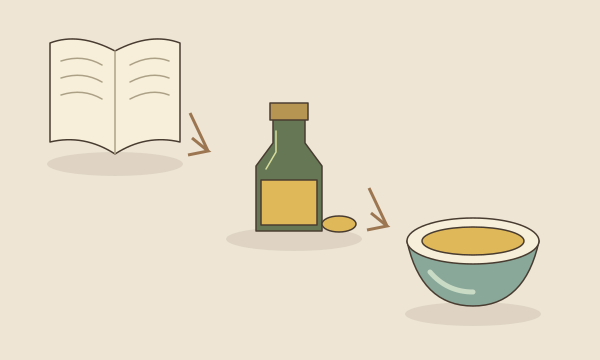
- Choose the roleDecide whether oil cooks or finishes.
- Protect the aromaStore and size the bottle for quick use.
- Add after heatFinish late when fresh olive aroma is the goal.
Finishing oil earns its name through timing.
Summary
Finishing olive oil plays a different role from the oil used to cook. Since it skips direct heat entirely, its aroma reaches the plate intact — sharpening the edges of aglio e olio, or smoothing the emulsion in tomato sauce, as a step added right at the end. Try splitting a single bottle between the sauté and the finish and taste the difference for yourself. For more on handling garlic, see the garlic-cutting article; for how tomato sauce schools differ, see the tomato sauce comparison article. The aglio e olio comparison page and tomato sauce comparison page also let you compare how each chef handles oil, side by side.