
Rome & Lazio
Amatriciana
Amatriciana, 6 ways
Tomato simmered in guanciale fat. The order in which you render the fat, and when you add the Pecorino, change the flavor.
Official videos by Tomomi Ogura
A representative video and official arrangements with different ingredients or pasta. Check the original videos for the method.
Italian chef teaches "New Onion Spaghetti Amatriciana 2026" [Italian Professional Training Course
Watch the official video on YouTube ↗Choose from the cooks’ recipes
Each card leads to its source video or recipe page. You can also load a style straight into the builder
Source is a recipe page (no video)
RyujiRecipe developer Partly unverified
Bacon, onion, browned garlic, bouillon — a home version
- Uses bacon block instead of guanciale, plus onion and garlic — an accessibility-first home version
- Builds aroma around browned garlic, then sets the sauce aside and washes the pan before cooking the meat — a two-step process
- Boosts umami with bouillon — a different philosophy from the traditionalist camp
View the original recipe Load this style
In the chef’s words
- Using more olive oil brings it noticeably closer to the real Italian thing source
References: [1]
FabioItalian cook (freelance chef; YouTube channel) Partly unverified
No onion, no olive oil: guanciale, passata, pecorino
- The video title itself, "Don't add onion!", stakes out the traditionalist Roman camp
- Uses 160g of passata rather than crushing whole canned tomatoes
- Articulates not discarding the guanciale's rendered fat as the secret to authenticity
View the original recipe Load this style
In the chef’s words
- The classic version from Lazio, Rome, uses neither onion nor olive oil. All you need is guanciale, Pecorino Romano, tomato, and pasta. source
- Not discarding the rendered fat from guanciale or pancetta and combining it with the tomato sauce is the secret to making an authentically rich, local-style pasta source
Yoshimi HidakaOwner-chef of Ristorante ACQUA PAZZA in Minami-Aoyama Partly unverified
Pancetta from cold, garlic and onion, white wine deglaze
- Cooks the pancetta "from cold" to avoid a rapid sear
- Uses both garlic and onion — the position furthest from the traditionalist Roman camp among the Japanese-side chefs
- A two-stage moisture control: white wine, then pasta water
View the original recipe Load this style
In the chef’s words
- Don't burn the garlic; once it's colored and fragrant, combine it with the pancetta source
Vincenzo's PlateItalian-born, Sydney-based YouTube channel Source verified
150g guanciale, a glass of white wine, 5 tbsp pasta water
- "This amatriciana recipe starts with the guanciale!" — positions guanciale as the starting point
- Explicitly rules out bacon as a substitute
- Times the white wine addition to when the guanciale "starts to change color"
References: [1]
Pasta GrammarA husband-and-wife channel: Eva, from Calabria, Italy, and Harper, from the US Source verified
Chunked guanciale, chili flakes, 60ml wine, cheese off heat
- Cuts the guanciale into large chunks to preserve texture
- Explicitly incorporates chili flakes
- Takes an open stance that acknowledges the existence of a red-wine camp
View the original recipe Load this style
In the chef’s words
- White wine is traditional, but feel free to experiment! source
Italia SquisitaItalian food media channel featuring Michelin-starred and well-known chefs Source verified
Perilli original: high heat, no oil, 100g pecorino off heat
- A representative example of the original from Amatrice, where the dish was born: no onion, no garlic at all
- Only 1 tbsp of white wine — an order of magnitude less than the international camp's full glass / 60ml
- Presented in contrast with Angelo Troiani's "gourmet version"
View the original recipe Load this style
In the chef’s words
- Un minuto prima del tempo di cottura indicato, scolare gli spaghetti e versarli nella salsa, direttamente in padella. Mantecare per qualche minuto insieme al pecorino a fuoco spento source
Compared on 11 axes
Figures are transcribed as written in each video or recipe page
| AXIS | Ryuji | Fabio | Yoshimi Hidaka | Vincenzo's Plate | Pasta Grammar | Italia Squisita |
|---|---|---|---|---|---|---|
| Pasta, portion, and boiling | 100g+ (no type specified) | bucatini, 70g | bucatini, 160g / 2 servings | bucatini, 250g / 2 servings | bucatini or spaghetti, 160g | spaghetti, 500g, 1 min under package time |
| Salt in the pasta water | "like a light soup broth" | to taste (no %) | to taste | a handful of rock salt | generous (no %) | to taste |
| Pork (rendering the fat) | 40g bacon block, low heat in olive oil | 45g guanciale, fat only | 70-80g pancetta, cooked from cold | 150g guanciale, low-medium heat | 100g guanciale, chunked, medium heat for 5-6 min | 150g guanciale, strips, no oil, high heat |
| Tomato | 1/3 can of tomato | 160g passata | 400g canned chopped tomato | 400g peeled canned tomato | 400g whole tomato (hand-crushed) | 400g whole tomato |
| Wine and acidity | none (1/2 tsp+ bouillon instead) | not in the ingredient list | white wine (to taste) | a glass of white wine | 60ml white wine | 1 tbsp white wine |
| Cheese | freshly grated, to taste | about 10g pecorino | 1 tbsp pecorino (off the heat) | a generous amount of pecorino | a generous amount of pecorino (off the heat) | 100g pecorino (off the heat) |
| Onion and garlic | 1/2 small onion + 2 cloves garlic (browned) | none (no onion, no olive oil) | 1/3 onion + 1 clove garlic | none | none (chili flakes instead) | none (1 whole chili instead) |
| Tossing method | a little pasta water + toss with olive oil | unverified (not stated in the description) | adjust consistency with pasta water | 5 tbsp pasta water | off the heat with cheese | off the heat, mantecare |
| Heat level | low and slow | unverified | slow, starting from cold | low-medium heat → 10-15 min | medium heat | high heat → slow simmer |
| Finishing | cheese optional | pecorino | olive oil, pecorino, black pepper | pecorino | extra pecorino on top | extra pecorino on top |
| Total time | not stated | not stated | not stated | about 30 min | about 30 min | not stated |
| Source check | Partly unverified | Partly unverified | Partly unverified | Source verified | Source verified | Source verified |
Ryuji Bacon, onion, browned garlic, bouillon — a home version
- Pasta, portion, and boiling
- 100g+ (no type specified)
- Salt in the pasta water
- "like a light soup broth"
- Pork (rendering the fat)
- 40g bacon block, low heat in olive oil
- Tomato
- 1/3 can of tomato
- Wine and acidity
- none (1/2 tsp+ bouillon instead)
- Cheese
- freshly grated, to taste
- Onion and garlic
- 1/2 small onion + 2 cloves garlic (browned)
- Tossing method
- a little pasta water + toss with olive oil
- Heat level
- low and slow
- Finishing
- cheese optional
- Total time
- not stated
- Source
- Partly unverified
Fabio No onion, no olive oil: guanciale, passata, pecorino
- Pasta, portion, and boiling
- bucatini, 70g
- Salt in the pasta water
- to taste (no %)
- Pork (rendering the fat)
- 45g guanciale, fat only
- Tomato
- 160g passata
- Wine and acidity
- not in the ingredient list
- Cheese
- about 10g pecorino
- Onion and garlic
- none (no onion, no olive oil)
- Tossing method
- unverified (not stated in the description)
- Heat level
- unverified
- Finishing
- pecorino
- Total time
- not stated
- Source
- Partly unverified
Yoshimi Hidaka Pancetta from cold, garlic and onion, white wine deglaze
- Pasta, portion, and boiling
- bucatini, 160g / 2 servings
- Salt in the pasta water
- to taste
- Pork (rendering the fat)
- 70-80g pancetta, cooked from cold
- Tomato
- 400g canned chopped tomato
- Wine and acidity
- white wine (to taste)
- Cheese
- 1 tbsp pecorino (off the heat)
- Onion and garlic
- 1/3 onion + 1 clove garlic
- Tossing method
- adjust consistency with pasta water
- Heat level
- slow, starting from cold
- Finishing
- olive oil, pecorino, black pepper
- Total time
- not stated
- Source
- Partly unverified
Vincenzo's Plate 150g guanciale, a glass of white wine, 5 tbsp pasta water
- Pasta, portion, and boiling
- bucatini, 250g / 2 servings
- Salt in the pasta water
- a handful of rock salt
- Pork (rendering the fat)
- 150g guanciale, low-medium heat
- Tomato
- 400g peeled canned tomato
- Wine and acidity
- a glass of white wine
- Cheese
- a generous amount of pecorino
- Onion and garlic
- none
- Tossing method
- 5 tbsp pasta water
- Heat level
- low-medium heat → 10-15 min
- Finishing
- pecorino
- Total time
- about 30 min
- Source
- Source verified
Pasta Grammar Chunked guanciale, chili flakes, 60ml wine, cheese off heat
- Pasta, portion, and boiling
- bucatini or spaghetti, 160g
- Salt in the pasta water
- generous (no %)
- Pork (rendering the fat)
- 100g guanciale, chunked, medium heat for 5-6 min
- Tomato
- 400g whole tomato (hand-crushed)
- Wine and acidity
- 60ml white wine
- Cheese
- a generous amount of pecorino (off the heat)
- Onion and garlic
- none (chili flakes instead)
- Tossing method
- off the heat with cheese
- Heat level
- medium heat
- Finishing
- extra pecorino on top
- Total time
- about 30 min
- Source
- Source verified
Italia Squisita Perilli original: high heat, no oil, 100g pecorino off heat
- Pasta, portion, and boiling
- spaghetti, 500g, 1 min under package time
- Salt in the pasta water
- to taste
- Pork (rendering the fat)
- 150g guanciale, strips, no oil, high heat
- Tomato
- 400g whole tomato
- Wine and acidity
- 1 tbsp white wine
- Cheese
- 100g pecorino (off the heat)
- Onion and garlic
- none (1 whole chili instead)
- Tossing method
- off the heat, mantecare
- Heat level
- high heat → slow simmer
- Finishing
- extra pecorino on top
- Total time
- not stated
- Source
- Source verified
Remix the steps (optional)
Your picks stay in the URL, so you can share it as is
1  Pasta & boiling Brand, thickness, salt, water volume, cooking time
 2 Base Fat and the main ingredient: rendering, infusing
3  Sauce & emulsion Where you toss, heat level, how much pasta water
 4  Finish Cheese, pepper, finishing oil, plating
 The map of schools: where the heat is managed
For Amatriciana, the fork in the road is how you emulsify and heat

Toss over direct heat
The pan stays on the flame and your hands manage the temperature. Fast, but it takes feel.

Indirect heat
Bain-marie, steam, double boiler or a hand blender. Repeatable, at the cost of one extra step.
- No styles here
Off the heat
Emulsify after killing the flame, or in a bowl with only the pasta’s residual heat. Hard to get wrong.
Gear and ingredients for this dish
Purchase suggestions for preparing this dish, including tools and ingredients.
Articles about Amatriciana
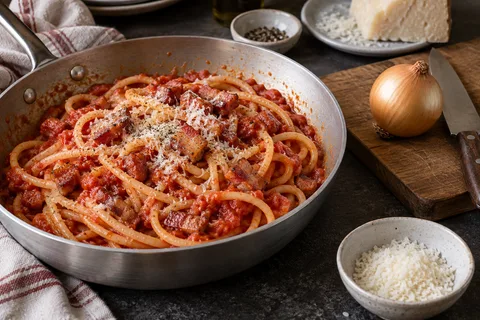
Only 2 of 6 Chefs Put Onion in Their Amatriciana
The traditional Roman and Amatrice schools skip onion and garlic. Of six chefs here, only Ryuji and Yoshimi Hidaka add them — the other four build on pork fat, tomato, and cheese, with wine or chili.
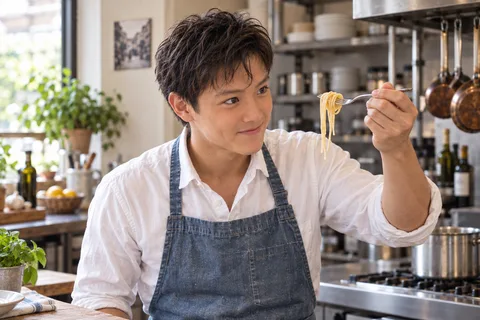
Some Chefs Pull It 30 Seconds Early. Others Pull It at Half.
The box time appears to assume pasta eaten straight from the pot, though we could not find a manufacturer stating that outright. Skip the subtraction before a pan toss, and it turns soft.
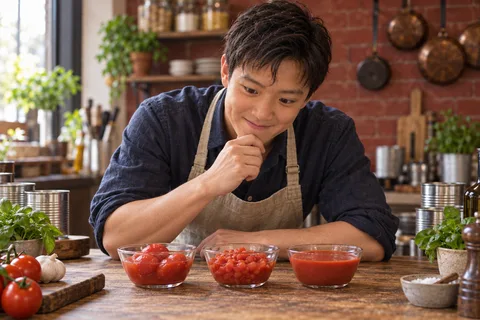
San Marzano Costs More — DOP Doesn't Promise Flavor
 Ingredients
San Marzano DOP only proves where and how a tomato was grown — not that it tastes better. What actually separates canned tomatoes is processing stage (whole, diced, passata) and moisture.
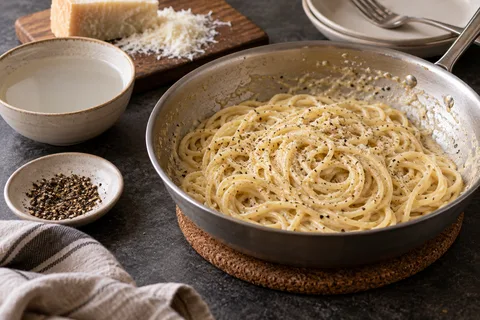
Salt "To Taste," Water "Sparing": the Two Amounts Left Unnumbered
 Chef profiles
Italia Squisita's original cacio e pepe gives no water volume or salt amount — just "enough salt" and water used "sparingly." Its amatriciana browns guanciale in a dry, blazing-hot pan instead.

Pancetta's Fine, Salami's Fine — Bacon Is Named and Banned
Vincenzo's Plate allows pancetta or salami as a substitute in amatriciana but names bacon specifically as the one to avoid. Here's how guanciale differs, how chefs treat it, and how to buy it online.
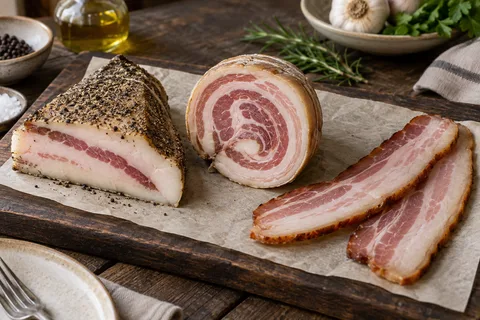
Same Guanciale, Yet Chefs Use 19g to 67g per 100g of Pasta
Guanciale, pancetta, and bacon are all cured pork, but fat ratio and smoking split them apart. Serious Eats ranks them bacon, pancetta, guanciale — and guanciale use ranges 19g to 67g per 100g pasta.
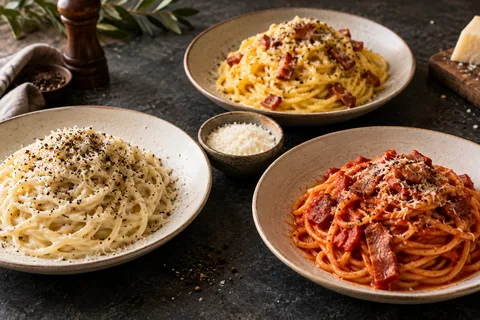
17g to 50g of Grated Cheese: The Three Axes Through Rome's Pastas
Cacio e pepe's grated cheese runs 17g to 50g per 100g of pasta, and Fabio adds 50g of cream cheese on top. Rome's three classics split along the same three axes: cheese, pork fat, emulsion.