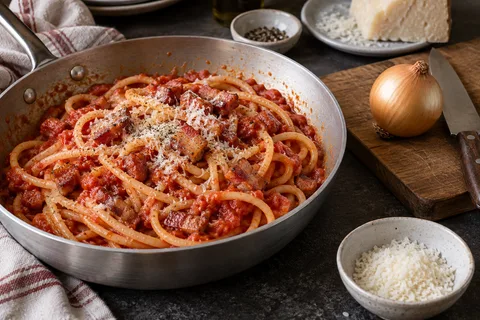
The traditional Roman and Amatrice schools skip onion and garlic. Of six chefs here, only Ryuji and Yoshimi Hidaka add them — the other four build on pork fat, tomato, and cheese, with wine or chili.
#amatriciana
Explore 6 articles tagged “amatriciana”.
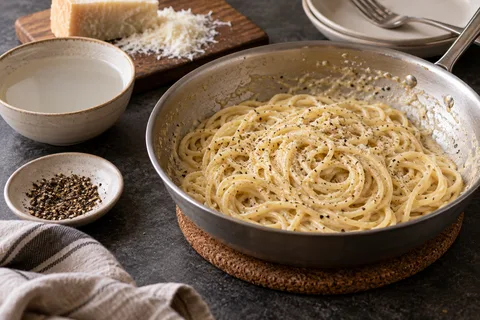
6 articlesItalia Squisita's original cacio e pepe gives no water volume or salt amount — just "enough salt" and water used "sparingly." Its amatriciana browns guanciale in a dry, blazing-hot pan instead.
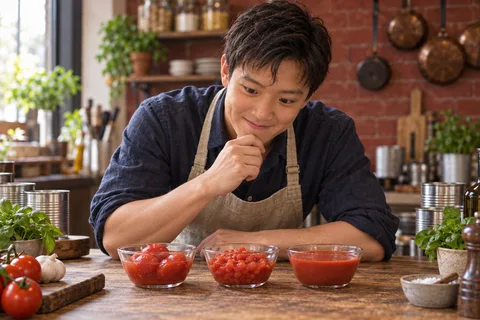
San Marzano DOP only proves where and how a tomato was grown — not that it tastes better. What actually separates canned tomatoes is processing stage (whole, diced, passata) and moisture.
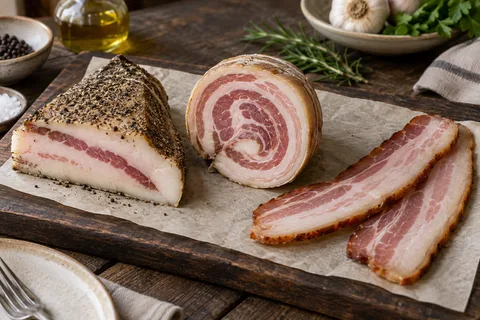
Vincenzo's Plate allows pancetta or salami as a substitute in amatriciana but names bacon specifically as the one to avoid. Here's how guanciale differs, how chefs treat it, and how to buy it online.
Guanciale, pancetta, and bacon are all cured pork, but fat ratio and smoking split them apart. Serious Eats ranks them bacon, pancetta, guanciale — and guanciale use ranges 19g to 67g per 100g pasta.
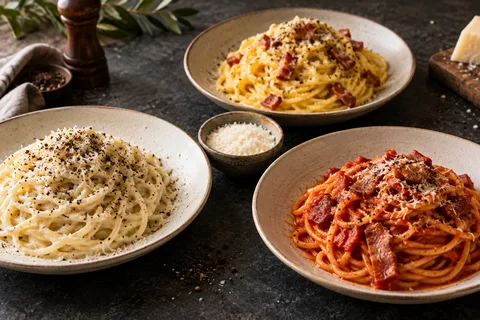
Cacio e pepe's grated cheese runs 17g to 50g per 100g of pasta, and Fabio adds 50g of cream cheese on top. Rome's three classics split along the same three axes: cheese, pork fat, emulsion.