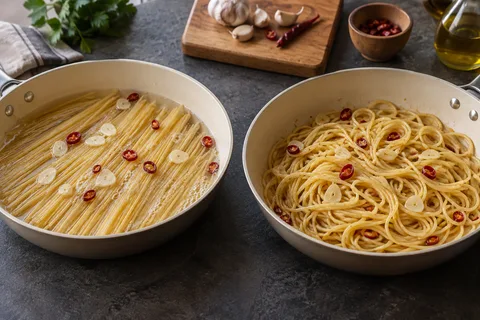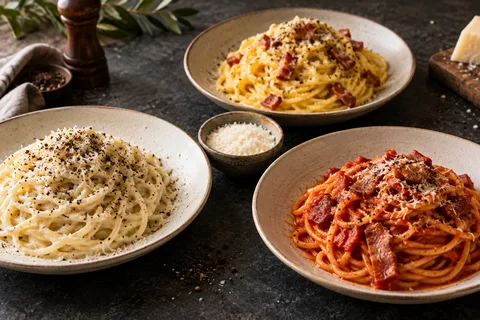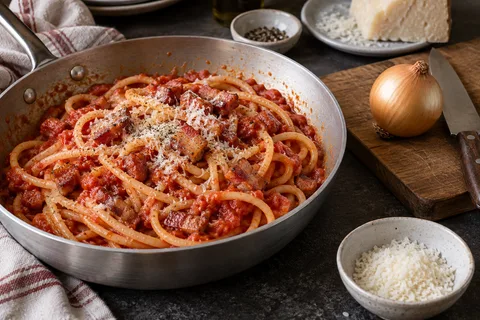
The traditional Roman and Amatrice schools skip onion and garlic. Of six chefs here, only Ryuji and Yoshimi Hidaka add them — the other four build on pork fat, tomato, and cheese, with wine or chili.
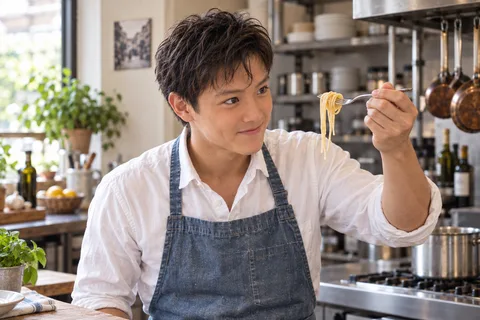
International chef
Pasta Grammar
Eva Santaguida & Harper Alexander
Regional and historical commentary Centers on the origin, history, and regional variation of pasta dishes. Avoids overstatement and compares variations across regions.
Pasta Grammar · ~503K subscribers (as of 2026-09-05)
Watch
Plays through the official embed
Fettuccine AlfredoThe Truth About "Alfredo" Sauce | The Real FETTUCCINI ALFREDO Recipe
AmatricianaHow to Make BUCATINI ALL'AMATRICIANA | Pasta All'Amatriciana Recipe
Penne all'arrabbiataHow to Make PENNE ALL'ARRABBIATA (and what you should try instead)
Spaghetti all'AssassinaSpaghetti all'Assassina: "ASSASSIN'S PASTA" | How to Make the Authentic Italian Recipe
Cacio e pepeStop Overthinking CACIO E PEPE | A Foolproof and Totally Traditional Recipe
Pasta alla NorcinaHow to Make PASTA ALLA NORCINA | Sausage Pasta Recipe
What defines this chef’s technique
- Approaches cacio e pepe with a "Stop Overthinking" mindset that keeps the steps minimal
- Treats Calabrian home cooking as primary-source material, distinguishing regional home recipes from the standard Roman versions (in their book The Italian Family Kitchen)
- Has an episode digging into the origins of carbonara through historical sources (the video's own content is unverified)
Cook from this chef’s recipes
18 dishes


Gear and ingredients referenced by Pasta Grammar
Add them all to your shopping list
No gear confirmed from sources yet. We add items as they show up in videos.
Articles about Pasta Grammar
The box time appears to assume pasta eaten straight from the pot, though we could not find a manufacturer stating that outright. Skip the subtraction before a pan toss, and it turns soft.
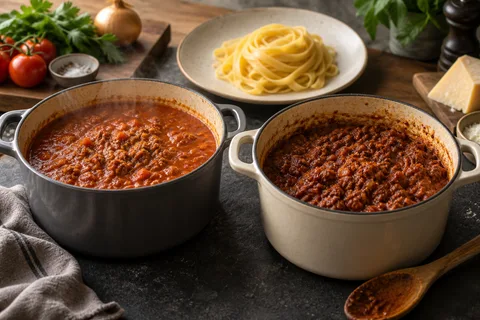
Seared or pale, red wine or white, milk or none — eight chefs disagree on nearly everything, and simmer time alone splits by a full order of magnitude, 30-60 minutes against 3-5 hours.
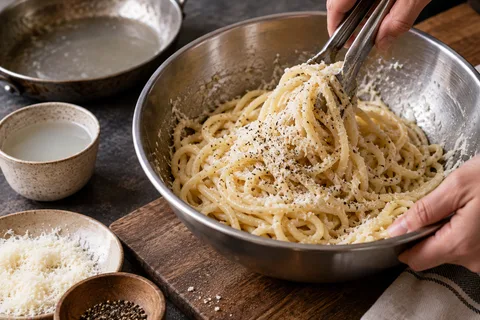
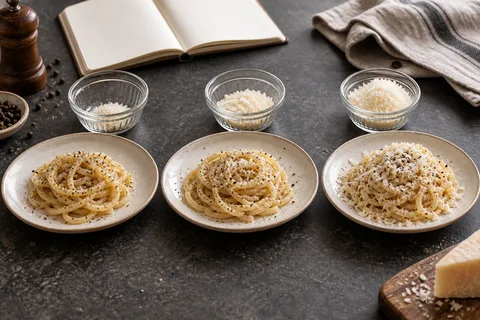
Cacio e pepe comes down to cheese and black pepper, yet almost every failure has one cause — a pan that's too hot when the cheese goes in. Eight chefs split into three schools for that moment.
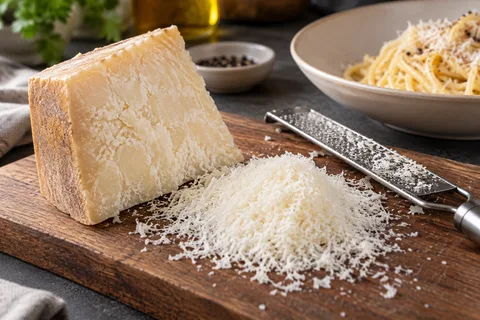
Ogura mixes Parmigiano into raw egg for carbonara, where shred size decides whether it melts evenly. In his cacio e pepe, cheese is just grated over the top — so fineness matters far less.
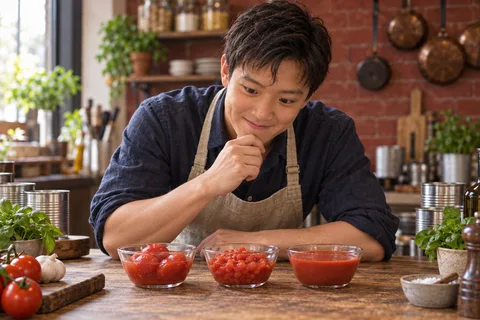
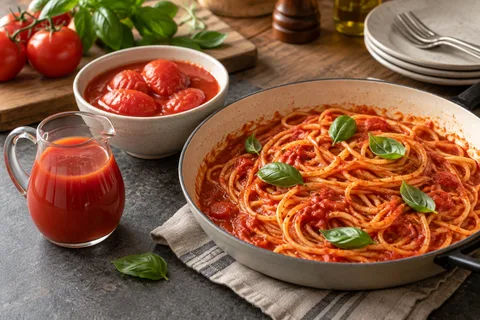
San Marzano DOP only proves where and how a tomato was grown — not that it tastes better. What actually separates canned tomatoes is processing stage (whole, diced, passata) and moisture.
Pasta Grammar's carbonara cuts pasta-water salt in half and emulsifies on residual pasta heat alone, no pan over the flame. Cacio e pepe rests off the heat three minutes before the cheese goes in.
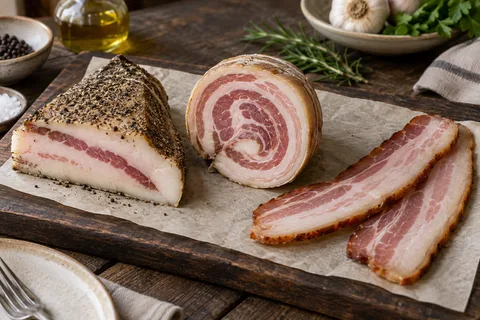
Vincenzo's Plate allows pancetta or salami as a substitute in amatriciana but names bacon specifically as the one to avoid. Here's how guanciale differs, how chefs treat it, and how to buy it online.
Guanciale, pancetta, and bacon are all cured pork, but fat ratio and smoking split them apart. Serious Eats ranks them bacon, pancetta, guanciale — and guanciale use ranges 19g to 67g per 100g pasta.
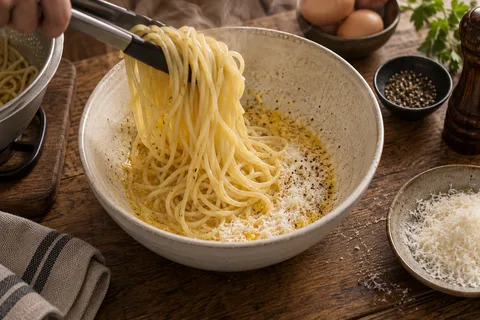
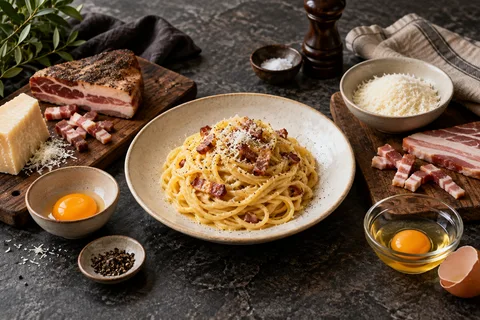
Ryuji's carbonara skips heavy cream, and so does Vincenzo's Plate — so "no cream" can't be the line between home cooks and tradition. The real split is ingredients, heat, and emulsion.
Three channels all calling themselves traditionalist put 25g, 37.5g, and 50g of cheese per 100g of pasta into cacio e pepe — the middle one is half Pecorino, half Parmigiano.
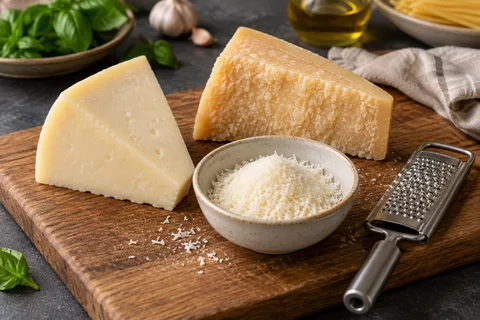
Pecorino is salty sheep's-milk cheese; Parmigiano is milder cow's-milk. Some recipes leave the water unsalted so Pecorino carries the salt; others salt it heavily instead. Pick the cheese first.
One Roman amatriciana uses 20g of Pecorino Romano DOP per 100g of pasta — the highest ratio we could confirm for the dish. Buying it as a wedge, in our view, keeps more of the aroma.
Ryuji's peperoncino skips emulsification: he simmers dried pasta directly in water and bouillon. Tomomi Ogura adds pasta water with ten seconds left on the boil. Six chefs compared.
Ryuji scatters raw cracked peppercorns at the finish; Pasta Grammar roasts them 4 minutes, then pounds them in a mortar. Grind and heat alone split cacio e pepe pepper into at least four schools.
In this recipe Ochiai skips the can and reduces unsalted tomato juice instead, reasoning it's the same tomato at the source. Once pasta hits his sauce, he never turns the flame back on.
Cacio e pepe's grated cheese runs 17g to 50g per 100g of pasta, and Fabio adds 50g of cream cheese on top. Rome's three classics split along the same three axes: cheese, pork fat, emulsion.