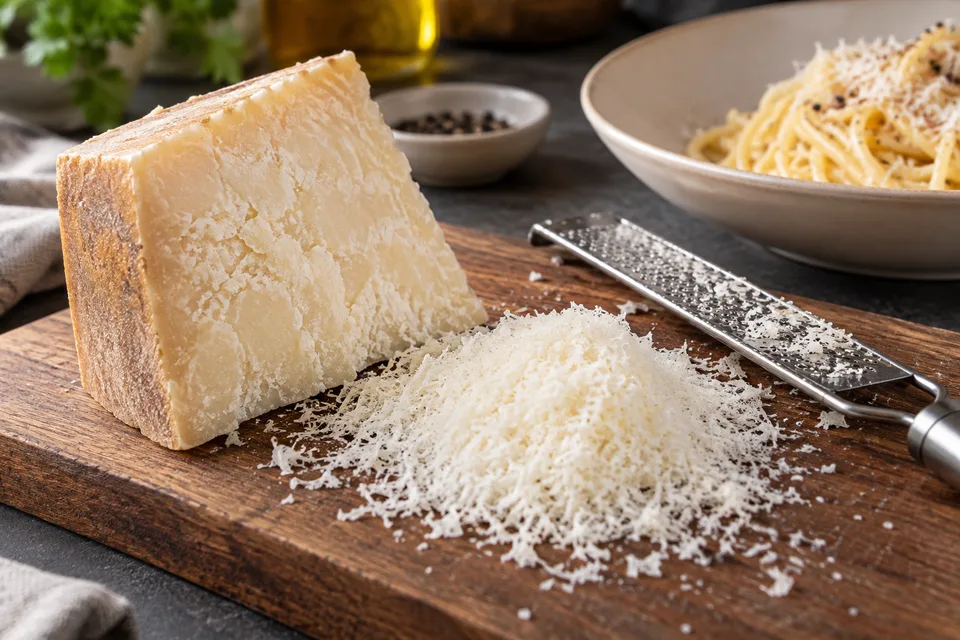
 Ingredients
- Whole wedgeLess exposed surface protects aroma until cooking.
- Pre-grated tubMore exposed particles lose fragrance while stored.
- Grate at the stoveFresh preparation keeps aroma closest to service.
Buy whole and expose the cheese as late as practical.
Aroma starts fading the moment it’s grated
Pecorino Romano DOP is a 100% sheep’s-milk cheese from Italy with a pronounced saltiness. Where Parmigiano Reggiano comes from cow’s milk and leans toward umami, Pecorino leads with salt and richness, which makes it essential to the Roman style of cacio e pepe and carbonara.
In the editors’ view, the whole wedge is the better default over pre-grated tubs, for two reasons. The first is aroma loss: grated cheese starts shedding its aroma the moment it’s grated, so a product that’s been sitting on a shelf already grated has lost some of its fragrance by the time you open it. The second is a possible effect on emulsification. Some commercial grated cheeses include an anti-caking agent. We haven’t verified how this affects melting behavior on this site, but in a dish like cacio e pepe, where the cheese alone builds the sauce’s body, differences in granule size and how it melts tend to show up directly in the final texture — worth keeping in mind.
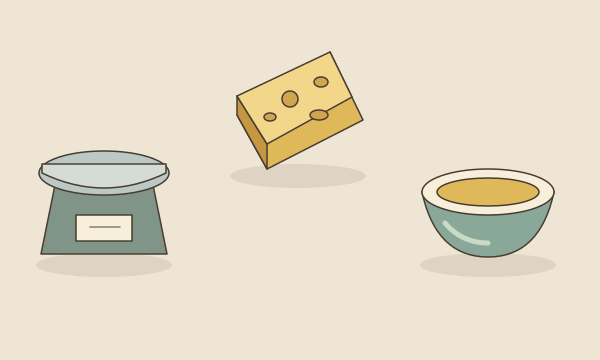
- Measured PerilliHis published amatriciana reaches 20g per 100g pasta.
- “Generous” schoolsVincenzo and Pasta Grammar do not provide comparable grams.
- Off-heat additionPerilli folds the measured Pecorino in away from flame.
The numeric high applies only among quantified recipes.
20g per 100g of pasta, the highest ratio in amatriciana
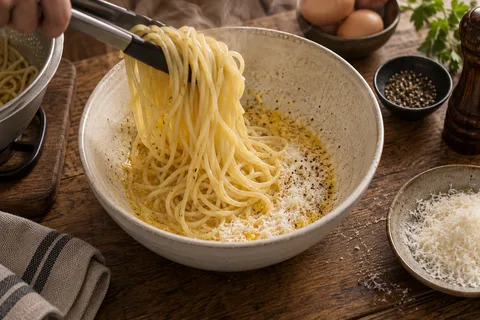
The amount varies by school of technique. According to the site’s write-up of the video (howtocook.jp), Fabio’s cacio e pepe reportedly builds the emulsion mainly around 50 g of cream cheese, folds in 15 g of Pecorino, and finishes with more grated on top (this hasn’t yet been cross-checked against the full video). Fabio’s carbonara, likewise, reportedly combines 10 g of Grana Padano and 5 g of Pecorino into an egg mixture made with 3 egg yolks, then finishes with more Pecorino on top — also not yet cross-checked against the full video. In both cases, the notable pattern is that Pecorino isn’t used alone; it’s paired with another cheese or fat (reading the intent as calibrating saltiness is the editors’ own view).
Read the full explanation
Videos from chefs abroad making amatriciana show noticeably larger amounts. Vincenzo’s Plate describes only “a generous amount” without giving a specific gram figure. Pasta Grammar likewise says only to grate in “a generous amount.” In a recipe article from Italia Squisita covering the technique of Rome chef Gabriele Perilli, 100 g of Pecorino goes with 500 g of spaghetti (20 g per 100 g of pasta), mantecato’d in off the heat — the most cheese of any amatriciana recipe that states a gram figure (the other two say only “a generous amount,” so they can’t be compared). Both Pasta Grammar and Italia Squisita fold in the Pecorino off the heat (Vincenzo’s Plate has no step for folding Pecorino in at all — it’s sprinkled on at plating). You can see the technique in Vincenzo’s Plate’s video.
Pressing play loads YouTube’s embedded player.Open on YouTube

- Read the nameLook for Pecorino Romano rather than a generic pecorino.
- Find the DOP markThe logo verifies designated origin and production rules.
- Taste your wedgeAging and product differences still affect seasoning.
Certification proves provenance; your wedge sets the salt.
How to spot and choose genuine DOP
Check the package for the “Pecorino Romano DOP” label and the Protected Designation of Origin (DOP) logo. DOP certifies that the cheese was produced in the designated region under the required method — 100% sheep’s milk, a minimum aging period, and other standards that a similar but non-certified product wouldn’t meet. Aging time varies by product (labels showing 12 months, 16 months, and so on are common). We haven’t verified on this site exactly how aging length affects saltiness or granule texture, so in a dish like cacio e pepe where a small amount of cheese carries the flavor, it’s safest to taste the wedge you have on hand first and adjust your pasta water salt from there.
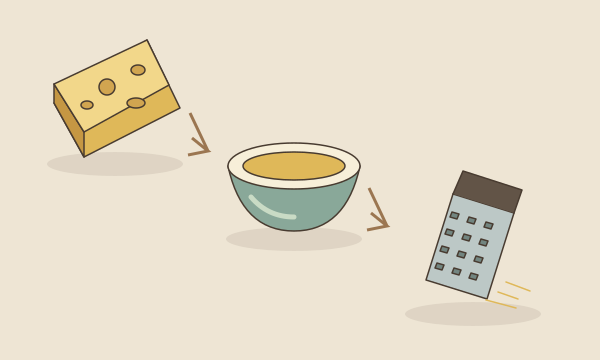
- Wrap the cut faceDirect contact limits drying on the exposed surface.
- Refrigerate sealedA container protects the wedge from moisture and odors.
- Grate only enoughPrepare the amount needed immediately before cooking.
Protect the wedge, then grate only for the current dish.
How to store it
What follows is the editors’ own practice. If you bought a whole wedge, press plastic wrap directly onto the cut face before placing it in a storage container in the chiller drawer of your refrigerator. A cut face that’s allowed to dry out not only loses flavor but also becomes harder to grate. Grating only as much as you need each time keeps aroma loss to a minimum. Leaving pre-grated cheese sitting for a long stretch tends to let it absorb moisture and clump, or lose its aroma, so the basic rule is to grate only what you’ll use. Freezing is also an option, but the texture tends to turn grainy after thawing — an effect that matters less if you’re grating it anyway.

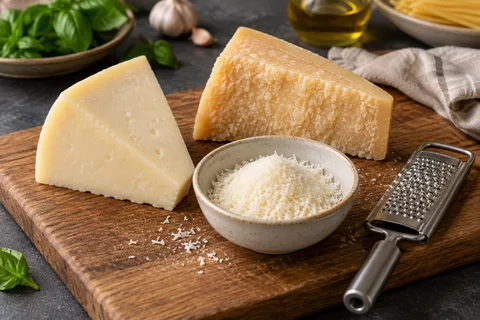
- Buy the wedgeWhole cheese preserves more aroma before use.
- Verify DOPUse the mark when certified origin matters.
- Grate freshFine fresh particles suit off-heat emulsification.
The practical chain is wedge, mark, fresh grate.
Summary
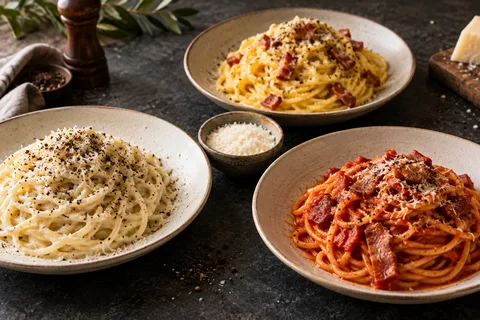
Pecorino Romano DOP is best bought as a whole wedge rather than pre-grated, and grated fresh right before you use it. How much chefs use, and what they pair it with, varies: Fabio’s cacio e pepe pairs it with cream cheese, his carbonara pairs it with egg yolk and Grana Padano, and amatriciana pairs it with the fat rendered from guanciale — in each case, Pecorino is paired with a different partner. Check the DOP label and aging period, then choose based on how salty your recipe calls for it to be. For more on how the pairings differ, see our cacio e pepe chef comparison and Pecorino vs. Parmigiano.


 Chef profiles