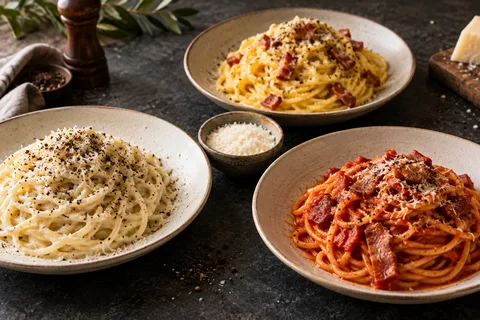
Ingredients
Pressing play loads YouTube’s embedded player.Open on YouTube
“Pancetta, Salami – not bacon!” Vincenzo’s Plate names bacon specifically as the one substitute to avoid in amatriciana. Guanciale itself is sold through specialty import shops and online butchers, and when it’s out of stock, pancetta is the closest stand-in. Here’s what actually separates them, and how to shop for it online.
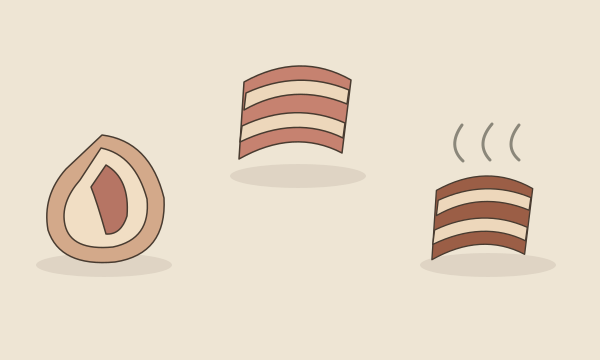
- Guanciale jowlHigh fat renders into the sauce while lean edges crisp.
- Pancetta bellyMore even lean-fat layers make the closest substitute.
- Bacon bellySmoke changes the flavor even when the cut feels similar.
Cut and smoking matter more than the phrase “cured pork.”
Same cured pork, wildly different fat
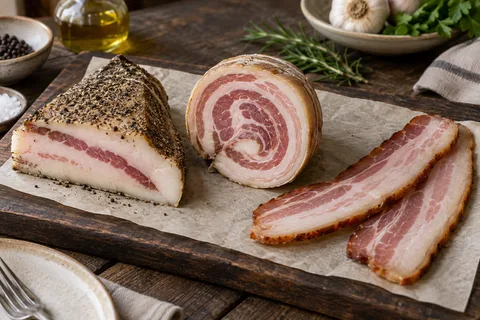
Guanciale is pork jowl that’s salt-cured, then dried and aged without smoking — a salume. Its fat ratio runs higher than bacon or pancetta, so as it cooks the fat renders out slowly while the meat itself crisps and shrinks. Both carbonara and amatriciana build their sauce on this rendered fat, so which cured pork you use changes how rich the whole dish tastes.
Read the full explanation
In its amatriciana recipe, Vincenzo’s Plate lists substitutes but singles out bacon by name: “Pancetta, Salami – not bacon!” The recipe article doesn’t explain why. The editors’ guess is that smokiness is one factor, but that’s our inference, not the chef’s own explanation. Pasta Grammar’s carbonara recipe article states that the only possibly acceptable substitution is replacing the guanciale with pancetta or bacon, while warning that the result “would never be considered a real carbonara in Italy.” The phrasing differs between the two: Vincenzo’s Plate names “Pancetta, Salami” as substitutes and rules out only bacon, while Serious Eats lays out a scale running from smoked bacon to pancetta to guanciale. Pasta Grammar pairs pancetta and bacon together as acceptable substitutes, and doesn’t specifically call pancetta the closest one.
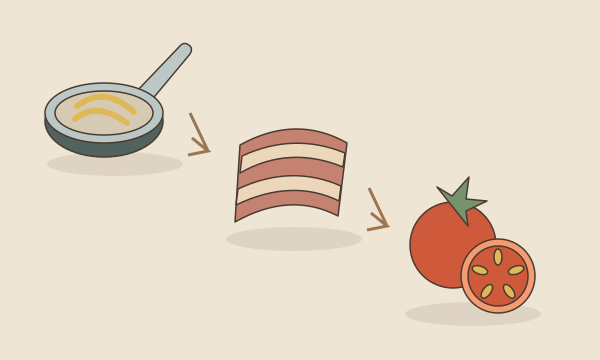
- Dry panNo added oil is needed before the pork renders.
- High-heat stripsLong guanciale pieces brown in their own fat.
- Tomato followsThe rendered base carries into the amatriciana sauce.
Perilli makes guanciale itself the cooking fat.
One chef sears it hot with no oil at all
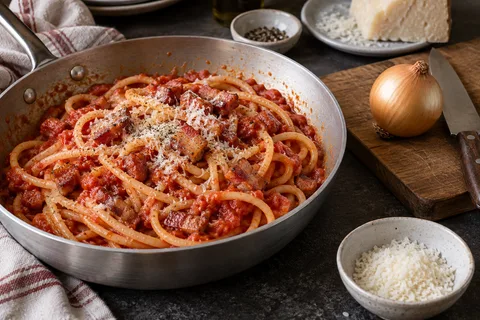
Gabriele Perilli’s amatriciana, as featured on the Italian food media outlet Italia Squisita, skips both onion and garlic and cuts the guanciale into long strips, browning it over high heat with no added oil. That’s the opposite of a low-and-slow render, but the ingredient itself — guanciale — is the same; what differs, usefully, is the heat.
Serious Eats’ carbonara article (author: Daniel Gritzer) lays out a scale where “authenticity” rises from smoked bacon, to pancetta, to guanciale — with the type of pork itself as the axis of authenticity.

- Whole blockControl thickness and expose less surface before use.
- Pre-sliced packGain convenience but accept the seller’s chosen cut.
Format determines both slicing control and storage handling.
Buying online: check block vs. pre-sliced first
Both domestic (Japan) and Italian guanciale are sold through specialty import shops and online butchers, offered either as a whole piece (block) or pre-sliced. Since it’s an aged whole cut, check the listing for whether it’s sold as a block or pre-sliced. Because most recipes — carbonara included — call for diced or thin-sliced guanciale that’s then rendered in the pan, buying a block and slicing it yourself gives you more control over thickness and keeps better once opened.
Once it arrives, plan to use it up refrigerated. Because it’s a high-fat ingredient, slice off only what you need and press plastic wrap directly against the cut surface of what’s left to keep it from drying out.

- PancettaUsually unsmoked belly preserves a closer cured-pork profile.
- BaconAvailability improves, but smoke becomes part of the sauce.
Choose the substitute with its flavor consequence in mind.
The substitute is pancetta; bacon comes with a trade-off
If you can’t find it nearby, or want to keep costs down, pancetta is the closest substitute. It’s also cured pork belly and, as a rule, unsmoked, so it renders closer to guanciale’s fat than bacon does (smoked versions do exist, so check the listing when buying online).
If you do use bacon, plan for its smoky flavor to come through more than it would with guanciale — that assumption will save you some disappointment. Some Japanese home-cooking recipes call for a block of bacon, but that’s a design choice made for availability; if you’re aiming for something closer to the original, guanciale or pancetta is the more direct route. A companion article compares how guanciale, pancetta, and bacon render fat differently in more detail.

- For closest methodBuy guanciale or use unsmoked pancetta.
- For easy sourcingUse bacon only if its smoke suits the intended plate.
Bacon is excluded by name, though the source gives no reason.
Summary: bacon is the one name singled out
Guanciale can be found through specialty import shops and online butchers, sold either as a whole block or pre-sliced. Vincenzo’s Plate singles out bacon by name as the one to avoid, and Pasta Grammar allows pancetta or bacon as the one possible substitute while stating the result would never be considered a real carbonara in Italy. When guanciale isn’t available, pancetta is the practical substitute, and if you reach for bacon, read the recipe assuming its smoky flavor will show through. You can see how each cured pork is actually used, step by step, on the carbonara comparison page and the amatriciana comparison page.