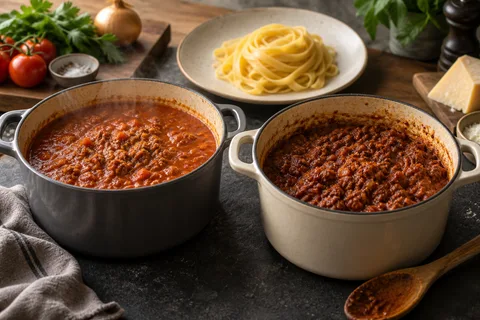
30 Minutes vs. 3 Hours: Same Name, Different Dish
Seared or pale, red wine or white, milk or none — eight chefs disagree on nearly everything, and simmer time alone splits by a full order of magnitude, 30-60 minutes against 3-5 hours.
International chef
J. Kenji Lopez-Alt
Food-science testing Known for first-person POV filming and a drive to explain why things work the way they do. Shows failed steps on camera and prioritizes repeatability.
J. Kenji López-Alt · ~1.76M subscribers (as of 2026-09-05)
Plays through the official embed
Ragù alla bologneseRagù Bolognese is Easy, Actually | Kenji's Cooking Show
Pasta alla griciaThe Grandfather of Roman Pasta Dishes: Pasta alla Gricia
Pesto alla GenovesePesto Alla Genovese | Kenji's Cooking
Cacio e pepeFood Lab Basics: POV Cacio e Pepe (Roman mac and cheese), in about 12 minutes.
Pasta alla griciaFood Lab Basics: POV Pasta Alla Gricia
Pasta carbonaraHow to Make Classic Pasta Carbonara | Kenji's Cooking Show
5 dishes


Add them all to your shopping list
No gear confirmed from sources yet. We add items as they show up in videos.
Seared or pale, red wine or white, milk or none — eight chefs disagree on nearly everything, and simmer time alone splits by a full order of magnitude, 30-60 minutes against 3-5 hours.
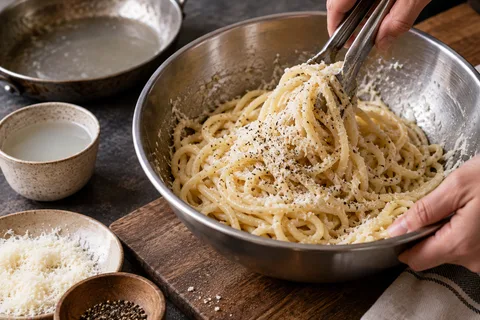
Cacio e pepe comes down to cheese and black pepper, yet almost every failure has one cause — a pan that's too hot when the cheese goes in. Eight chefs split into three schools for that moment.
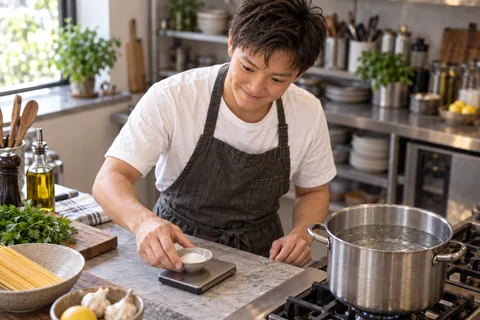
On camera, Kenji López-Alt says measurements don't need to be precise. In print, Serious Eats gives grams and milliliters, and a bowl set clear of the water — same school, two levels of precision.
Three channels all calling themselves traditionalist put 25g, 37.5g, and 50g of cheese per 100g of pasta into cacio e pepe — the middle one is half Pecorino, half Parmigiano.
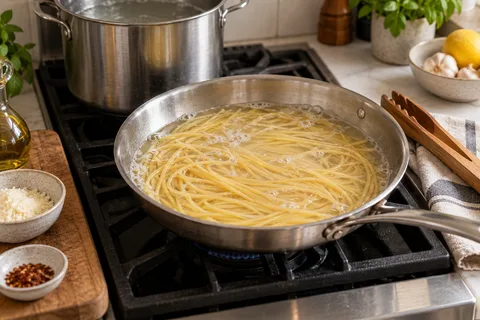
J. Kenji López-Alt makes cacio e pepe without a big pot: noodles boil in a 12-inch frying pan with barely enough water to cover them, then go straight to the sauce with tongs, no draining.
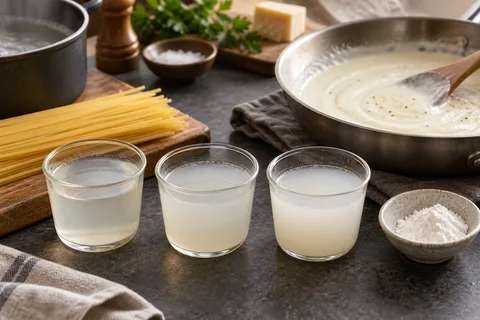
A 2025 physics study found sauce stability turns on starch as a share of cheese mass: under 1% splits, 2-3% is ideal, over 4% stiffens. Kenji cuts the water; the paper's own fix is powdered starch.
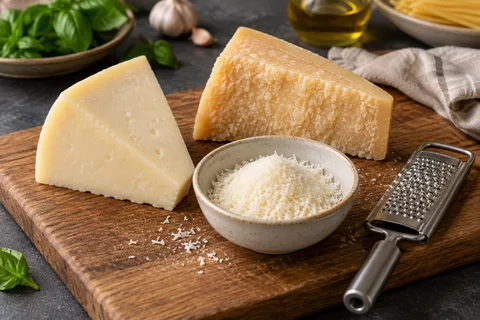
Pecorino is salty sheep's-milk cheese; Parmigiano is milder cow's-milk. Some recipes leave the water unsalted so Pecorino carries the salt; others salt it heavily instead. Pick the cheese first.
Ryuji scatters raw cracked peppercorns at the finish; Pasta Grammar roasts them 4 minutes, then pounds them in a mortar. Grind and heat alone split cacio e pepe pepper into at least four schools.
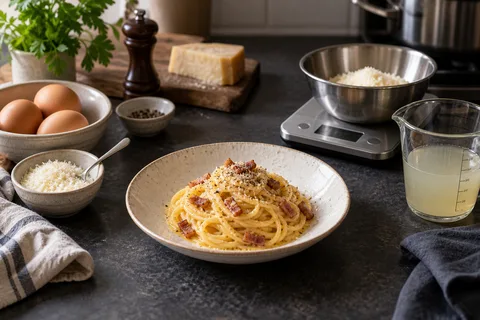
The standard line is 10g salt per liter (1%), but real carbonara recipes split into 1%, 1.5%, and 2%. Cacio e pepe has a school that uses none at all — the number moves with the job salt is doing.
 Chef profiles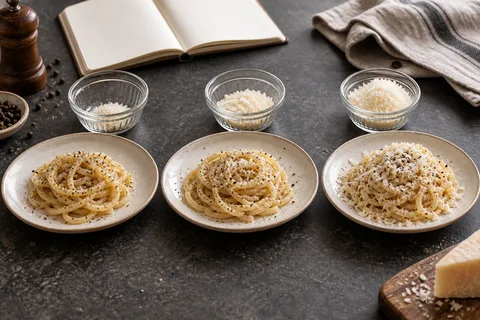
 Reads
Reads