Pressing play loads YouTube’s embedded player.Open on YouTube
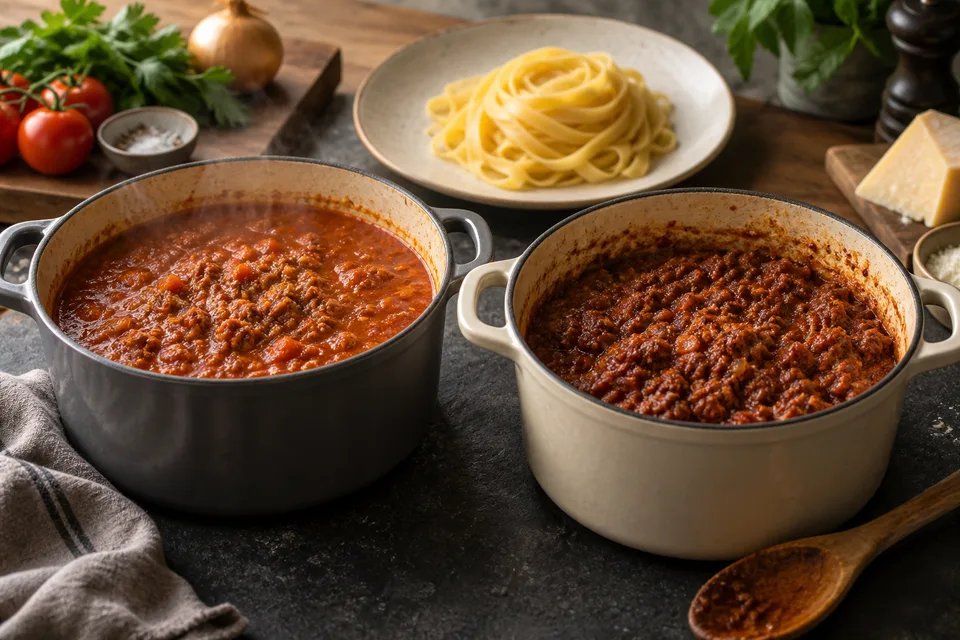
The Japanese-school cooks here run 30 to 60 minutes. The Western authorities run 3 to 5 hours. Same dish, same name — and the simmer time is a whole order of magnitude apart. The other dividing line is whether the meat gets color at all. This article lines up eight schools across three axes: how the meat is browned, wine and milk, and simmer time.

- Hard browningA hot sear adds roasted flavor before the long simmer.
- Gentle cookingPaler meat keeps the base softer and less roast-driven.
The first heat decision changes the sauce before tomato.
Sear the meat, or keep it pale
The sear-it school is Ryuji, Chef Ropia, and Yoshimi Hidaka. Ryuji cooks 250 g of ground beef-pork blend and explains that “turning the pack of meat out into the pan and cooking it like a steak gives it a browned crust and makes it fragrant” (transcript). Chef Ropia sears 300 g of ground beef “as a single mass to build fragrance — it’s fine if it stays in clumps.” Hidaka splits the roles: “sear the meat; take the vegetables slow, to bring out their sweetness.”
Read the full explanation
Fabio marinates 300 g of ground meat in 300 cc red wine, 3 g salt, and 5 g garlic for 30 minutes, then browns it, cuts it into large pieces, and returns them to the sauce later — another texture-forward, big-clump approach.
By contrast, J. Kenji López-Alt’s recipe has 450 g each of beef, pork, and lamb cooked over high heat “until no longer pink, about 10 minutes,” while the butter, pancetta, and vegetables are cooked only until they “have not yet started to brown” (this hasn’t yet been cross-checked against the video itself). Vincenzo’s Plate pours in the remaining wine “once the meat turns grey” — no deep sear there either.

- Red wineAdds a darker fruit and tannin direction.
- White wineKeeps the wine contribution lighter and sharper.
- MilkSoftens the meat-and-wine base in schools that use it.
Wine color and milk are separate flavor switches.
Red wine or white, and does milk go in
Red wine appears in Ryuji (200 cc, reduced “until the sharpness cooks off”), Fabio (300 cc, doing double duty as the marinade), Chef Ropia (90 cc, to deglaze the pan), Hidaka (a third of a cup, also a deglaze), and Vincenzo’s Plate (a glass of wine, with the remainder going in once the meat turns grey and then simmering 10 minutes). Tomomi Ogura’s “Ragù Bianco” uses white wine instead, and Pasta Grammar’s own site states that “the idea that it has to be red wine is a myth — many traditional recipes call for white.”
Read the full explanation
Milk splits the schools in opposite directions. Vincenzo’s Plate’s site lists a mug of whole milk (about 250 ml, optional) and has you add a splash at the finish and cook it for 5 more minutes, calling it “traditional — it softens the tomato’s acidity and gives a smoother mouthfeel,” while also noting it’s “optional.” Pasta Grammar argues the opposite: “milk was originally added to tenderize tougher cuts of meat. With modern meat it’s entirely unnecessary, and it actually dulls the flavor.” Kenji goes further still, adding a cup of heavy cream on top of a cup of whole milk.
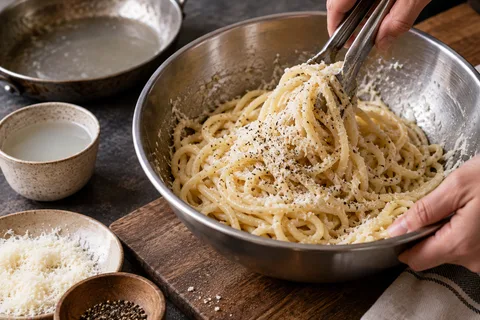
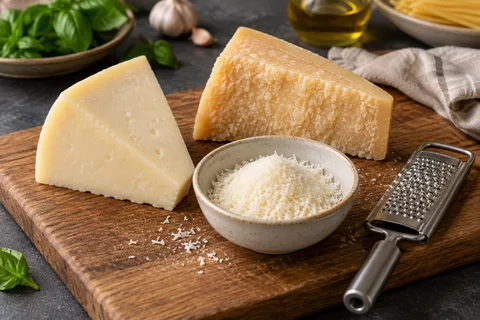
Neither Ryuji’s nor Chef Ropia’s recipe mentions milk at all. Ryuji finishes by loosening 5 g of butter and a tablespoon of grated cheese with pasta water and tossing it through; Chef Ropia skips a separate emulsion step and finishes with Parmigiano alone.

- Short simmerKeeps the sauce closer to its separate fresh components.
- Long simmerConcentrates liquid and integrates meat into the base.
Simmer time is one of the widest differences between schools.
An order of magnitude apart on simmer time
The domestic schools run short, the international ones run long. Ryuji: 45 minutes. Hidaka: 30 minutes total (20–30 of it simmering). Ogura: 50 minutes (20–30 on low heat). Chef Ropia: 60 minutes. Vincenzo’s Plate, meanwhile, simmers covered on low for 3 hours, then uncovered for another hour. Pasta Grammar calls for “a minimum of two and a half to three hours — longer is better,” and describes the finished texture as “like a thick chili.” Kenji skips the stovetop entirely, cooking uncovered in a 150°C (300°F) oven for 3 to 4 hours.
Some schools skip tomato altogether. Ogura’s “White Bolognese” coats ground beef in flour and simmers it in white wine and water, treating prosciutto or pancetta as a stand-in for dashi. Kenji uses 30–45 g of powdered gelatin (4 to 6 packets) to supply the silky body veal would otherwise provide, then builds savoriness with a chicken-liver purée and fish sauce — an entirely different design.
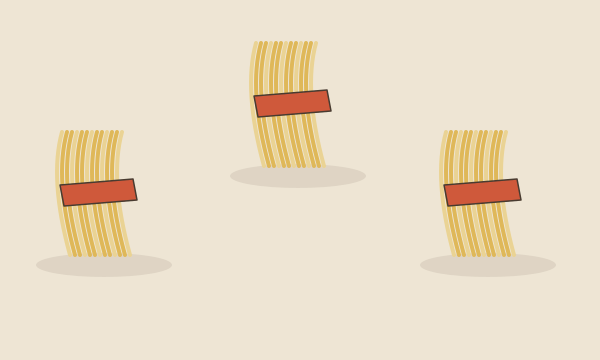
- Broad ribbonsA wide surface carries a heavy meat sauce well.
- Short ridged pastaCavities and ridges catch minced meat throughout.
- SpaghettiA familiar home pairing, though less traditional here.
Match noodle geometry to a dense, particulate sauce.
What noodle goes with it
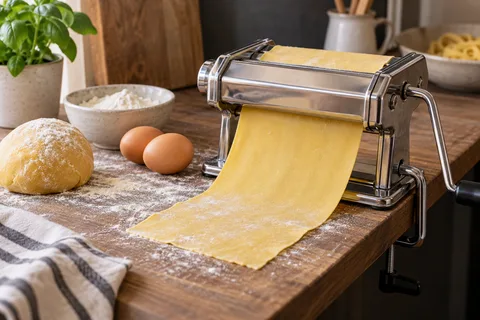
Pasta Grammar’s site puts fresh egg pasta — “specifically tagliatelle” — ahead of every other shape, while Vincenzo’s Plate lists tagliatelle, fettuccine, and pappardelle, plus penne rigate if you want a shorter shape. “No one in Bologna would ever think to serve ragù with spaghetti,” as Pasta Grammar puts it. Fabio hand-cuts tagliatelle from 00 flour and egg yolks; Chef Ropia makes his own fresh pasta from a 50/50 blend of bread flour and cake flour, explaining the ratio itself: “more cake flour makes it softer, more bread flour gives it more bite.”
Ryuji uses 1.8 mm spaghetti, Hidaka 1.6 mm, Ogura 1.9 mm — long dried noodles dominate the domestic schools.
Of these eight schools, only Fabio (1%), Hidaka (1%), and Ogura (1.5%) state a salt percentage for the pasta water; the rest either don’t say or just call for “a suitable amount.” When you actually cook this, calculating from your own pot’s water volume makes the result easier to reproduce.

- Tough meatToo much early heat can tighten the meat before simmering.
- Sharp wineWine needs enough cooking to lose its raw edge.
- Watery sauceThe simmer must reduce free liquid without scorching.
Three texture problems point back to heat management.
Tough, sharp, or watery — the heat is the reason
Meat turns tough and tight when the heat runs too high. Hidaka keeps it at “a bare simmer”; Kenji relies on a low, even oven; Vincenzo’s Plate’s site says that if the sauce starts looking too dry you should lower the heat or turn it off and let it rest (its site says nothing about the meat drying out).
Leftover sharpness from the wine means it wasn’t reduced enough. Ryuji’s cue is to cook “until the sharpness cooks off”; Vincenzo’s Plate pours in the remaining wine once the meat turns grey and simmers it for 10 minutes.
A watery sauce means it hasn’t simmered long enough. Vincenzo’s Plate treats the uncovered hour as its own separate reduction step; Pasta Grammar adds just half a cup of water alongside the tomatoes, thinning with warm water only if the sauce gets too thick.
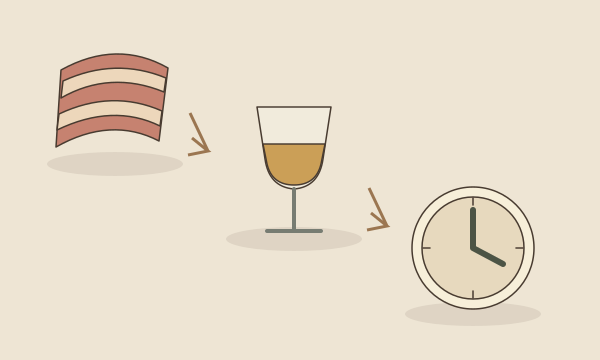
- Choose browningDecide how roasted the meat base should taste.
- Choose wine and milkSet acidity, fruit, and dairy softness.
- Choose the simmerCook only as long as the desired concentration needs.
Bolognese style emerges from three linked decisions.
Summary
Browned or pale, red or white, milk or none, thirty minutes or three hours — bolognese splits into schools different enough that they arguably aren’t quite the same dish under one name. Compare the axes side by side in the bolognese comparison table, then try combining them yourself in the builder.