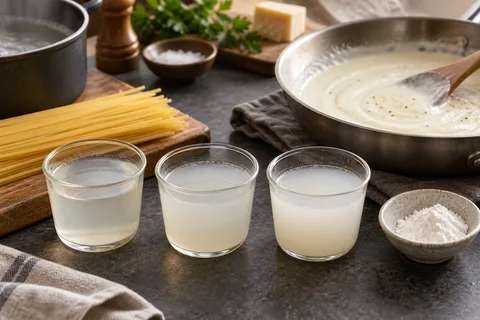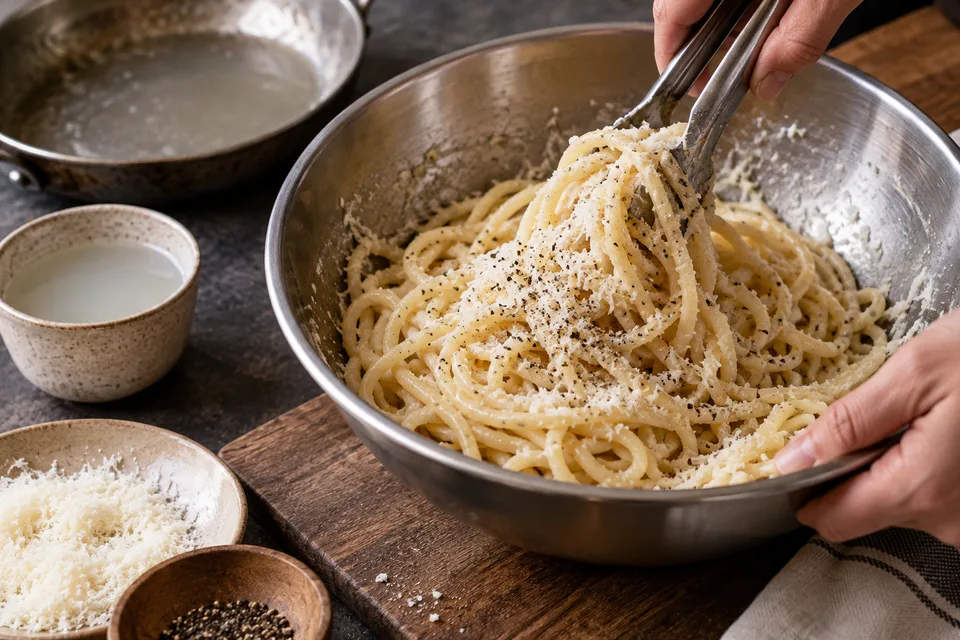
Cacio e pepe has four ingredients, and only two that assert themselves — cheese and black pepper — and yet there’s basically one way to ruin it: the cheese seizing into clumps because the pan is too hot. Lay the eight chefs in this article side by side and their fixes split into three schools — keep the heat on, take the pan off the heat, or add a layer of indirect heat in between. (The comparison table also includes a ninth approach, Max Mariola’s, who skips the pan entirely and tosses everything in a bowl.)
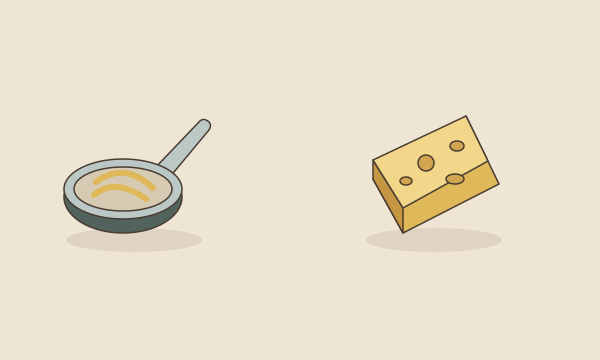
- Continuous heatSome cooks keep tossing as cheese meets the hot pan.
- No melted sauceOne version treats grated cheese as a dry finish.
These schools either manage active heat or avoid melting.
The ones who never turn off the heat, and one who skips melting altogether
Ryuji combines the cheese without ever taking the pan off the heat. His one-pan version boils the pasta in 340 cc of water with 1/3 tsp salt and four shakes of MSG, and once the cooking liquid has reduced, he stirs in 10 g of butter and 2 tbsp of grated cheese over low heat (the TubeRecipe transcript also says “mix over low heat,” with no mention of taking the pan off the heat — the garlic and butter are also his own addition, absent from the Roman original). Tomomi Ogura, by contrast, never melts the cheese into a sauce at all. He sautés garlic in olive oil, takes the pan off the heat, returns the pasta and pasta water, puts it back over the flame, and tosses — all of that happens over direct heat, but the 15 g of Parmigiano Reggiano is only sprinkled on top of the finished plate, with no step where cheese melts into the pan. The direct-heat school lets you finish without swapping pans, but its weakness is that the pan’s temperature is hard to read (TubeRecipe lists 20 minutes for both Ryuji and Ogura, so direct heat does not automatically mean faster).
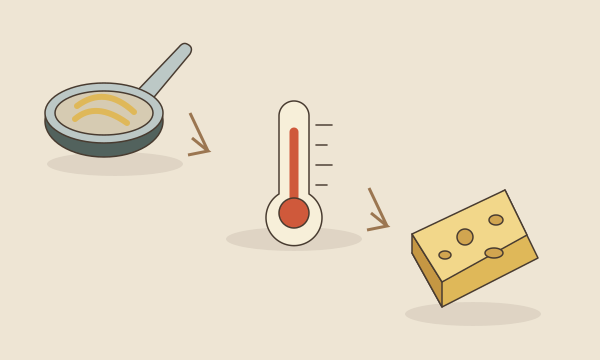
- Build pan heatCook pasta and pepper before cheese enters.
- Remove the flameLet the pan lose its most aggressive heat.
- Fold in cheeseUse water and motion to form the sauce off heat.
Most schools create a safer window before adding cheese.
The biggest group: take the pan off the heat first
This is the largest group in this lineup. Chef Ropia toasts black pepper in a dry pan, tosses the pasta in it while it finishes cooking, then always takes the pan off the heat before quickly folding in a “cheese slurry” of grated cheese and pasta water that he prepared in a separate bowl beforehand. Fabio combines water and pasta water to 100 cc, takes the pan off the heat, melts 50 g of cream cheese with residual heat, mixes in 15 g of Pecorino Romano (for 90 g of pasta), then adds the pasta back and emulsifies over low heat for only about a minute (his stated claim that this method is less prone to splitting is unverified against the original post). Pasta Grammar goes further still, explaining that after taking the pan off the heat, he lets it cool for three minutes before sprinkling in 60 g of combined Pecorino and Parmigiano (for 160 g of pasta, two servings) a little at a time — and states outright that “a large amount of cheese dropped into a pan that’s too hot will always clump.” Claudio Gargioli of the storied Roman restaurant Armando al Pantheon, shown on Italia Squisita in what the article frames as a “definitive” version, toasts the peppercorns whole in a small pan and then keeps the heat off from the moment the cheese starts melting all the way through the mantecatura, describing the hardest part in craftsman’s terms as “keeping everything liquid, yet never wet.”
Pressing play loads YouTube’s embedded player.Open on YouTube
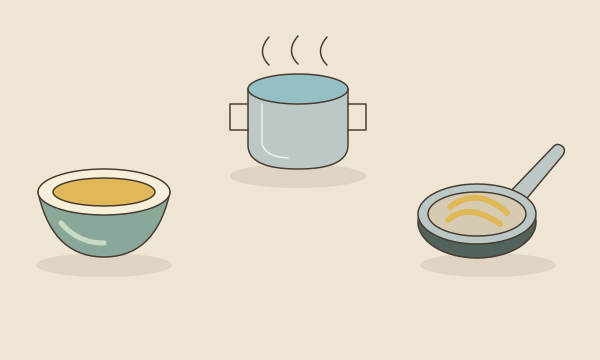
- Bowl finishMove the sauce away from the pan’s stored heat.
- Pan over steamWarm gently above water instead of a direct flame.
- Rested saucepanLet cookware cool before the cheese paste returns.
Different equipment creates the same low-heat objective.
Splitting the pan work to get the sauce off the heat source
In its 2026 revision, Vincenzo’s Plate roasts black pepper in a saucepan for about two minutes, takes it off the heat, and works 125 g of Pecorino (for 250 g of pasta — the 150 g figure elsewhere on that page is the ratio from the older original version, which the page’s FAQ states was updated to 125 g in the 2026 method) and the pepper into a paste with pasta water. After heating the pasta in the saucepan for two minutes, the pan comes off direct heat only for the moment the cheese goes in, switching to steam as an indirect heat source instead. J. Kenji López-Alt (Serious Eats) does the reverse: he blooms pepper in oil in a separate skillet from the pasta pot and sets the skillet aside to cool at that point, with the butter not yet added (the recipe gives no reason for the order; keeping the butter out of the hot oil is the editors’ read), then, once the pasta is done, pours in 2 to 3 tablespoons of pasta water, melts 30 g of butter into it, moves the pasta over with tongs, and adds 55 g of Pecorino (for 225 g of pasta). Where Vincenzo’s Plate uses steam as an indirect heat source, Kenji uses no steam at all — he simply moves the pan off the flame to let it drop in temperature. The Serious Eats recipe finishes the dish in a skillet separate from the pasta pot, and he explains that the lower heat of that second pan makes it easy to build a creamy sauce that neither clumps nor breaks. The idea of “using less water to concentrate the starch” appears in the Serious Eats piece too, landing on the same conclusion as the Vincenzo’s Plate 2026 revision.
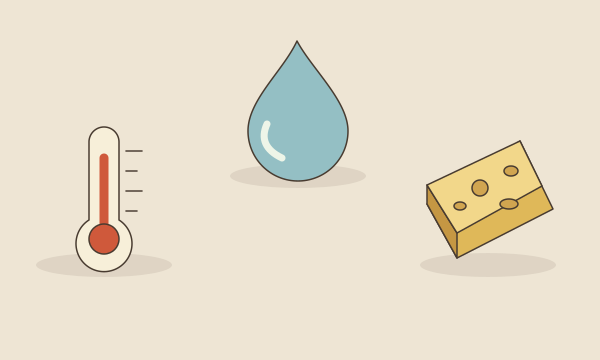
- Excess heatRemove aggressive heat before adding the cheese.
- Water and textureLoosen gradually rather than leaving a dense dry mass.
- Amount at onceAdd in smaller portions while mixing and watching the sauce.
Check heat, moisture, and addition pace rather than treating every lump as the same failure.
Why cheese clumps: heat, moisture, and addition pace
Most clumping comes down to one thing: the pan is too hot the moment the cheese goes in. The anti-clumping steps each chef states in his own words are Ryuji warming the plate in the microwave for 30 seconds beforehand, and Kenji López-Alt using a separate skillet from the pasta pot and setting it aside to cool. Kenji also lists butter among the things that help, writing that it “can also help the cheese melt smoothly, but, if you use too much, it can have the same dulling effect as heavy cream.” Ryuji does not explain his fat as an anti-clumping measure. The off-the-heat school, as with Pasta Grammar, manages it with three moves: waiting a few minutes, adding cheese a little at a time, and topping up pasta water as needed. The indirect-heat school sidesteps the failure temperature range entirely by choosing steam or residual heat — heat sources that are never too hot to begin with. Both Pasta Grammar and Kenji López-Alt grate their cheese extra-fine with a microplane, a step that assumes reducing unmelted residue. Kenji skips draining the pasta altogether and moves it straight from the pot to the sauce with tongs. Pepper divides them too: crushed in a mortar (Pasta Grammar, Italia Squisita) versus freshly ground (Vincenzo’s Plate, Kenji). Because quantities shift with the number of servings, converting the amounts to a per-100 g ratio before you scale up makes it easier to fine-tune how much cheese you add.
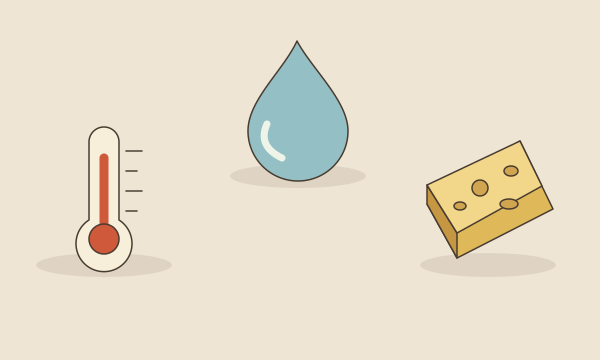
- Control heat firstCreate a gentler environment before cheese arrives.
- Use starchy waterLoosen the cheese while helping fat and water combine.
- Add graduallyBuild the emulsion in small increments.
Smooth cacio e pepe depends on heat, water, and pace.
Summary
The schools of cacio e pepe come down to where you choose to emulsify: over direct heat, off the heat, or with indirect heat in between. If this is your first attempt, taking the pan off the heat before folding in a cheese slurry, the way Chef Ropia does, should be the most reliable to reproduce rather than diving straight into mixing over direct heat. The full quantities and steps for every chef are on the cacio e pepe comparison page, where a builder also lets you pick a school for each step and assemble your own version. Reading how to use the recipe builder first will save you guesswork the first time you use it.

 Reads
Reads