Pressing play loads YouTube’s embedded player.Open on YouTube
Ryuji’s aglio e olio has no separate emulsion step. He simmers dried pasta directly in water and bouillon granules and calls the method itself a complete departure from tradition. Tomomi Ogura goes the opposite way, timing pasta water to the exact second — ten seconds before the noodles finish. This article lines up six schools on three points: when the emulsion happens, how the garlic is cooked, and how far each strays from purism.
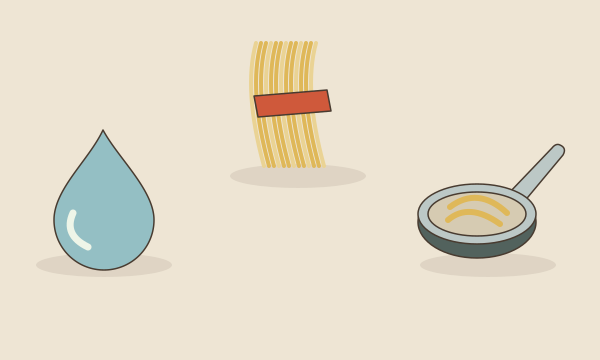
- Early in the panLiquid joins the aromatic oil before pasta arrives.
- With the pastaNoodles and water enter together to start the emulsion.
- No separate additionA one-pan method retains all cooking liquid from the start.
Water timing reveals how each school builds the sauce.
When does the pasta water go in?
Tomomi Ogura adds pasta water to the sauce pan with ten seconds left on the noodles, timing the start of emulsification by the clock — a mechanized, professional-kitchen touch (per the transcript). He boils 70 g of 1.5mm pasta for 5 minutes.
Read the full explanation
Fabio runs the sequence in reverse: his transcript shows him taking the pan off the heat, adding pasta water to emulsify the sauce first, and only then tossing in the noodles (transcript-derived, so some of this is unverified). He states the boiling salt explicitly as “30 g for 2 L,” or 1.5%.
Tsutomu Ochiai adds 3-4 tablespoons of pasta water and swirls the pan to bring it together, giving an explicit test for doneness: “once you can no longer see sauce on the bottom of the pan, it’s coated.” Pasta Grammar adds one ladle of pasta water and returns the pan to the heat, finishing noodles pulled 2-3 minutes ahead of package time in the sauce over medium-high heat. Vincenzo’s Plate adds drained pasta water to the noodles a little at a time, tossing with tongs to coat.
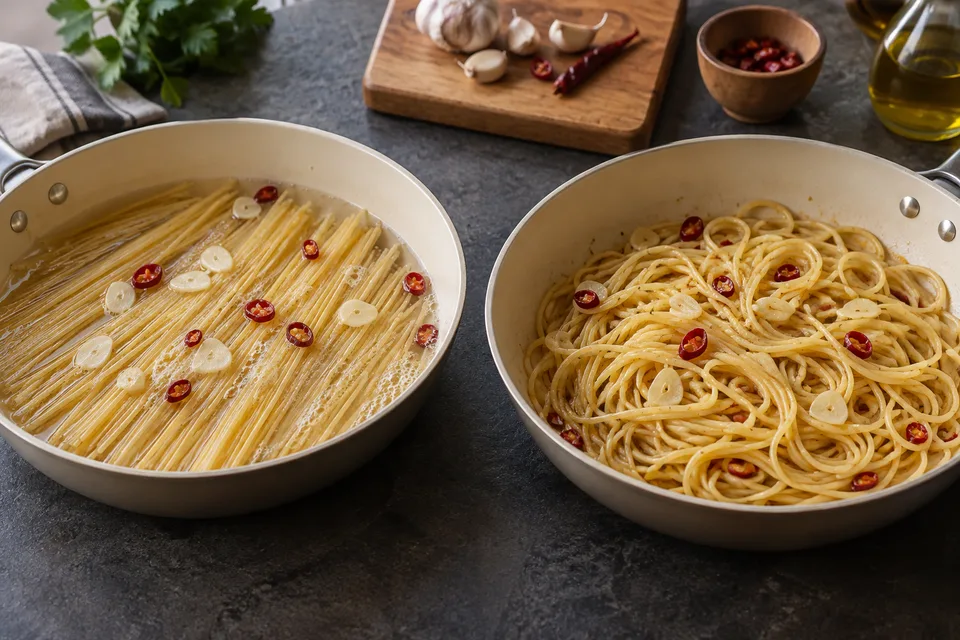
Ryuji doesn’t boil the noodles separately at all — he simmers dried pasta directly in 350 ml of water with a teaspoon of bouillon granules, an all-in-one method. There’s no dedicated emulsion step; the small amount of water naturally builds body as it simmers, and he describes the method itself as “a complete departure from the authentic method” and “heretical, yet supreme” (per the official recipe).
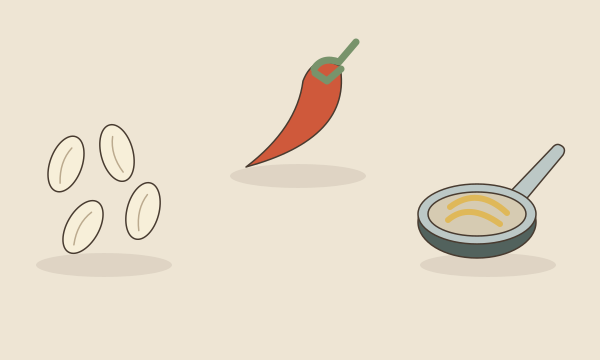
- Ogura: togetherGarlic and chili share the pan from the start.
- Fabio: chili firstHigh heat blackens chili; garlic is cooked golden.
- Ochiai: chili lastChili enters briefly after the heat is off.
The schools deliberately choose different aromatic timing and color.
Garlic and chili go in opposite directions too
Tomomi Ogura cooks one clove of thinly sliced garlic over medium-to-low heat for about 7 minutes, adding two dried chilies to the same pan from the start so the aroma migrates slowly into the oil — a clear-oil school (“heating the garlic over medium-to-low heat for about 7 minutes is good” is the Point note in the transcript).
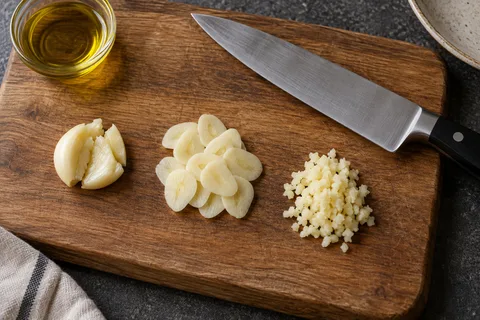
Fabio goes the opposite direction: he sets 2 tablespoons of oil and chili over high heat, scorches the chili “until it’s black,” and swirls the pan to turn the garlic into golden-brown chips — a school that prizes browned aroma over clarity. Tsutomu Ochiai starts 3 crushed garlic cloves in room-temperature oil, brings it to high heat, then drops to low once the oil bubbles, cooking “until a skewer slides through easily”; the chili goes in for just 20 seconds after the heat is off. Pasta Grammar cores and minces the garlic, cooking it over medium heat for “just 1-2 minutes.” Vincenzo’s Plate cooks over low heat for about 5 minutes, adding “1-2 drops of water once it starts to color” to stop it from browning further.
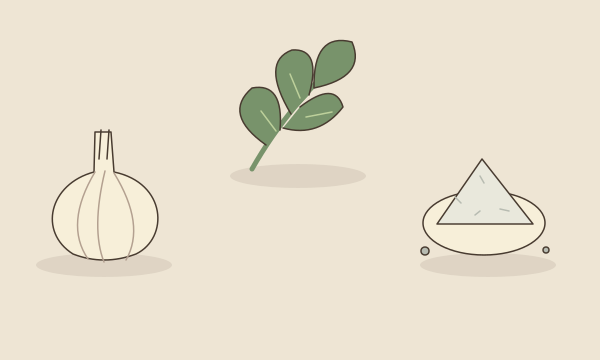
- Minimal Italian coreOil, garlic, chili, pasta, and water carry the dish.
- Small garnishesParsley, pepper, or optional Parmigiano stay near the core.
- Explicit departuresTomato, bouillon, or soy sauce move furthest from purism.
The schools range from process fidelity to home optimization.
How far from purism does each school stray?
Staying within the frame of “garlic, oil, chili, pasta water” are four chefs: Tomomi Ogura, Tsutomu Ochiai, Pasta Grammar, and Vincenzo’s Plate (all but Pasta Grammar also add Italian parsley, and Vincenzo’s Plate adds cracked black pepper plus optional Parmigiano Reggiano). Pasta Grammar frames this as a definition, not a preference: “the moment you add one more ingredient, it stops being this dish,” and it declines to give any measurements at all. Tsutomu Ochiai puts the role of garlic into words: “Italians use a lot of garlic, but it’s not that they love eating it — in fact, they barely eat it. It’s there for richness and aroma, not for flavor on its own.”
Read the full explanation
Fabio adds a concentrated tomato sauce on the side so the plate carries two flavors, and Ryuji uses bouillon and, optionally, soy sauce.
On pans: Tomomi Ogura lists an aluminum pan among his own gear (per his note), while for Ryuji this site’s gear data tags a nonstick pan, though we haven’t been able to identify a source for it (Ogura’s aluminum pan use hasn’t been confirmed in the specific recipe video in question either). The editors’ read is that an aluminum pan’s fast heat conduction makes it easier to hit the emulsion temperature by feel.
- Bitter garlicAvoid leaving garlic against strong heat for too long.
- Excess liquidStart with less pasta water and watch the sauce.
- Over-reductionOne-pan pasta can run short of water before it is cooked.
Garlic bitterness, too much liquid, and too little liquid need different corrections.
Common failure points and how each school avoids them
Adding too much pasta water breaks the emulsion, because it’s a one-shot operation with little room for error. If you’re aiming for Tomomi Ogura’s “ten seconds left” window, start with a small amount; if you’re following Tsutomu Ochiai’s 3-4 tablespoons, swirl the pan until you can no longer see sauce on the bottom.
Garlic turning bitter comes from leaving it over high heat too long. Fabio’s school puts the chili over high heat first and pulls the garlic once it’s golden. Vincenzo’s Plate adds 1-2 drops of water, and Tsutomu Ochiai tilts the pan to pool the oil and float the garlic in it.
Noodles turning too firm from over-reduced liquid is a sign of running short on water in the all-in-one method. Ryuji’s school uses 350 ml (for one serving) as the baseline (he answers 600 ml for two servings). Topping up with hot water when the noodles are still firm is an addition from the editors, not part of his recipe.
Our thinking on salt concentration is laid out in There Is No Single Right Salt Concentration for Pasta.
- Water timingClassic schools add pasta water; one-pan cooking retains it.
- Aromatic endpointsClear infusion and deliberate browning are different aims.
- Recipe additionsTomato or bouillon marks another intentional departure.
Choose one school’s complete method before changing its timing or ingredients.
Summary
Emulsify a separately boiled noodle, or simmer it in a small amount of water and skip emulsification altogether — that’s the first fork in the road, and the second is whether the garlic is coaxed slowly or seared hard. The full step-by-step breakdown of all six schools, plus the rest, is on the aglio e olio comparison page. For a walkthrough on mixing and matching a step from each school into one plate, see how to use the recipe builder.


 Ingredients