 Reads
Reads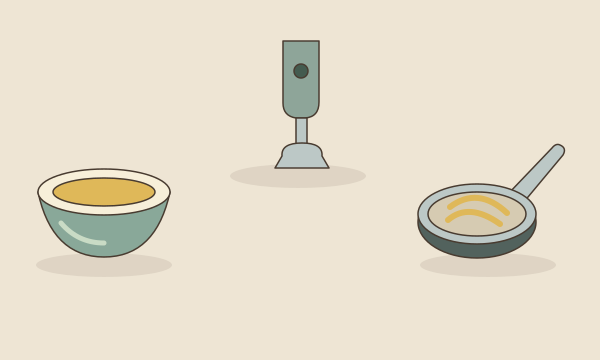
- Ogura residual heatEqual yolk and Parmigiano finish off the burner.
- Fabio bain-marieThree yolks warm with machine agitation over water.
- Ryuji direct heatOne whole egg thickens over low heat with constant stirring.
The Builder makes three valid heat paths comparable.
Ogura’s egg, Fabio’s egg, Ryuji’s egg — all three are “correct”
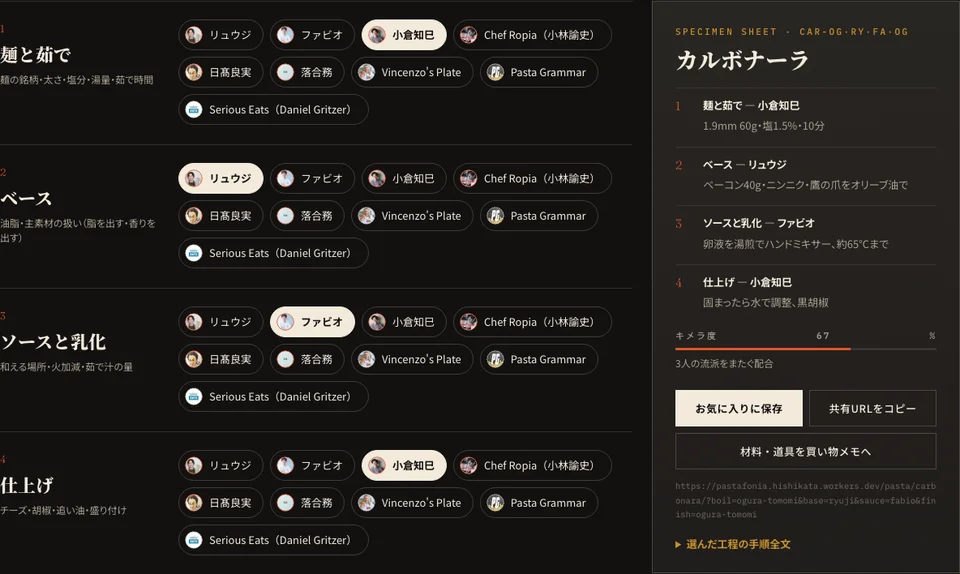
At the center of this site is the Recipe Builder, a tool that splits a pasta into four steps — pasta and boiling, base, sauce and emulsification, and finishing — and lets you pick your favorite chef’s school for each one to assemble a single plate. Even for the same carbonara, the schools diverge: Tomomi Ogura takes the pan off the heat and folds in egg yolk with an equal weight of Parmigiano Reggiano; Fabio brings three egg yolks to about 65°C over a bain-marie with a hand blender; Ryuji stirs one whole egg constantly over low direct heat. Every approach is a valid answer — the difference is where in the process the temperature gets built.
The Builder lets you recombine that difference step by step. A plate made of “pasta and boiling from Ogura (1.9mm, 1.5% salt), sauce from Fabio (bain-marie), finishing from Ryuji (a drizzle of olive oil and freshly ground black pepper)” becomes a full set of instructions in four taps.
Pressing play loads YouTube’s embedded player.Open on YouTube
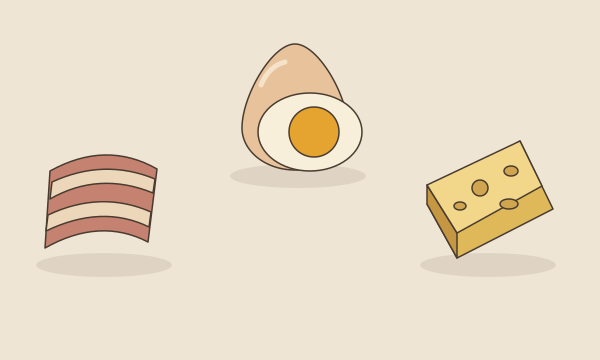
- Base choiceChanges cured pork and how its fat is rendered.
- Sauce choiceChanges egg composition and the entire heating method.
- Finishing choiceChanges the final cheese, pepper, and oil treatment.
Sauce and emulsification usually create the largest shift.
One choice shapes the plate’s character more than the rest
Each step’s card shows a one-line summary of that school. Selecting a card adds the step to the panel on the right side (below, on mobile), under the dish name, and opening “Full steps for your picks” shows you the method drawn from the source video or article.
- Changing base changes the type of pork (guanciale, pancetta, or bacon) and how its fat is rendered
- Changing sauce and emulsification changes the egg composition and the heating method (direct heat, bain-marie, or residual heat). This is the choice that shapes the plate’s character the most
- Changing finishing changes how the cheese, pepper, and finishing oil are handled

- Single-chef plateA score of zero follows one documented method end to end.
- Four-chef plateA score of 100 has no single source recipe precedent.
- Caution notesWarnings flag heat or seasoning interactions without blocking.
The score measures mixing, not likelihood of success.
A score of 100 isn’t predicting failure
Crossing schools can create combinations that never occur within a single chef’s method. The Builder watches for those combinations and prints a caution note in the margin. Choosing “whole egg stirred over direct heat,” for example, triggers a note explaining that because egg white starts to set at a lower temperature, you should reduce the heat to its lowest setting or take the pan off the heat before folding the egg in. Stacking Pecorino Romano and guanciale on top of heavily salted pasta water triggers a note about salt levels compounding.
Read the full explanation
The notes don’t block your choice. This site is built for enthusiasts, so experimentation is welcome. That said, for any combination that triggers a note, it’s safer to make it exactly as shown in the source video the first time, then start varying it.
The “chimera score” is a rough measure of how many chefs’ schools you’ve crossed. 0 means a faithful reproduction of one chef’s method; 100 means all four steps come from different chefs. When all four steps come from different chefs (a score of 100), the Builder labels the combination “no precedent” — that’s not a prediction of failure, just a note that there’s no reference video for that exact mix.

- Selections enter URLThe address carries the chosen steps for sharing.
- Favorite stays localBrowser storage keeps the plate on this device.
- Save the linkA note with the URL is the durable cross-device record.
The share link travels; the anonymous favorite does not.
A saved plate is tied to this device, with no login
Your selections live in the URL. Send the address as-is and the same combination opens in the other person’s browser. Pressing “Copy share link” issues a short URL (in environments where that can’t be issued, the long URL is copied instead).
Read the full explanation
Pressing “Save to favorites” stores the plate in this device’s browser and adds it to “Recipes you built” on the saved page. There’s no login. A copy is also kept on the server under an anonymous ID, still without a login (it doesn’t carry over to another device). If you want to keep a combination for good, pasting the URL into a note is the reliable way to do it.
“Add ingredients & gear to list” gathers the tools and ingredients associated with your selected schools into the shopping list in the bottom right (a mix of what appears in the videos and what appears in each chef’s own gear roundup articles). Choose Fabio’s bain-marie method and a hand blender and thermometer get added (the thermometer comes from a gear roundup article; its use in this particular recipe is unverified); choose Ogura’s method and an aluminum pan and Parmigiano Reggiano get added instead.

- Build one chefCook a documented school straight through first.
- Swap one stepChange only one decision in the next version.
- Compare the resultIdentify which fork actually changed the plate.
Use the Builder as a controlled cooking comparison.
Summary
The Builder isn’t a tool for deciding whose recipe is “correct” — it’s a tool for making visible what’s happening at each step. Start by assembling one chef’s school straight through and cooking it exactly as shown, then try swapping just one step. Whichever step changes the outcome is the fork in the road for that plate. We think starting from the carbonara comparison page makes the differences easiest to see.