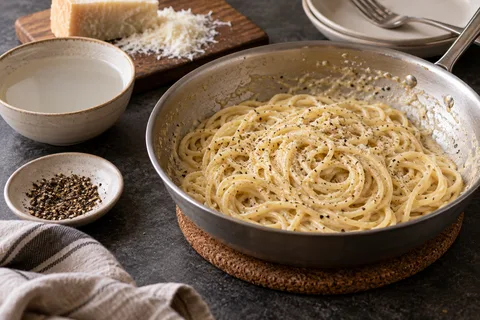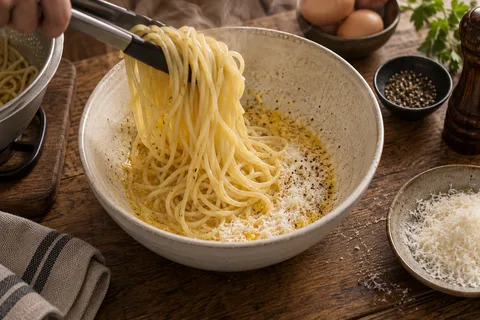
Cacio e pepe comes down to cheese and black pepper, yet almost every failure has one cause — a pan that's too hot when the cheese goes in. Eight chefs split into three schools for that moment.
#cacio e pepe
Explore 8 articles tagged “cacio e pepe”.
8 articlesOgura mixes Parmigiano into raw egg for carbonara, where shred size decides whether it melts evenly. In his cacio e pepe, cheese is just grated over the top — so fineness matters far less.
Italia Squisita's original cacio e pepe gives no water volume or salt amount — just "enough salt" and water used "sparingly." Its amatriciana browns guanciale in a dry, blazing-hot pan instead.
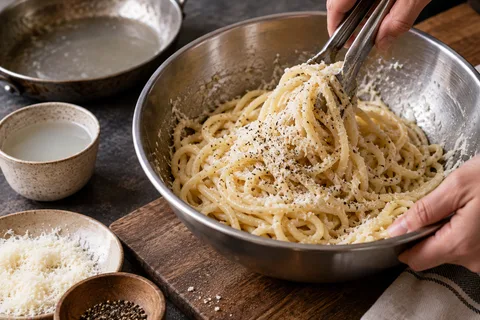
Pasta Grammar's carbonara cuts pasta-water salt in half and emulsifies on residual pasta heat alone, no pan over the flame. Cacio e pepe rests off the heat three minutes before the cheese goes in.
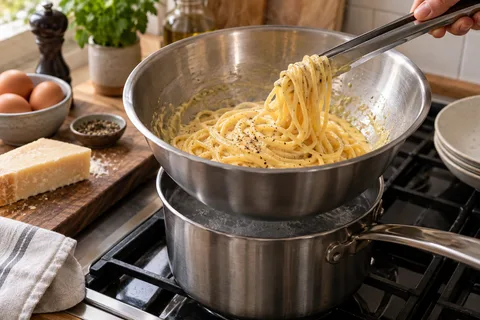
Vincenzo's Plate emulsifies both carbonara and cacio e pepe off direct heat, with the pan suspended over the pasta pot's steam. His 2026 cacio e pepe drops salt entirely.
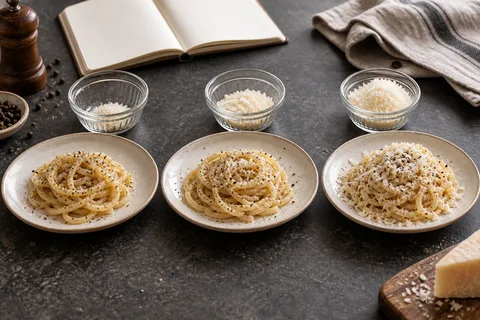
Three channels all calling themselves traditionalist put 25g, 37.5g, and 50g of cheese per 100g of pasta into cacio e pepe — the middle one is half Pecorino, half Parmigiano.
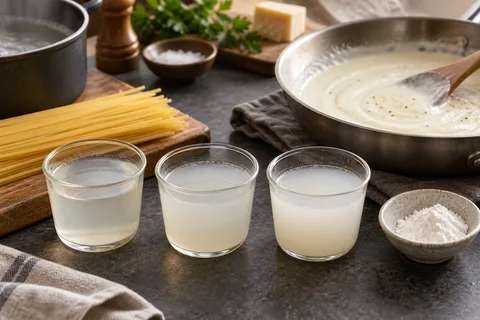
A 2025 physics study found sauce stability turns on starch as a share of cheese mass: under 1% splits, 2-3% is ideal, over 4% stiffens. Kenji cuts the water; the paper's own fix is powdered starch.
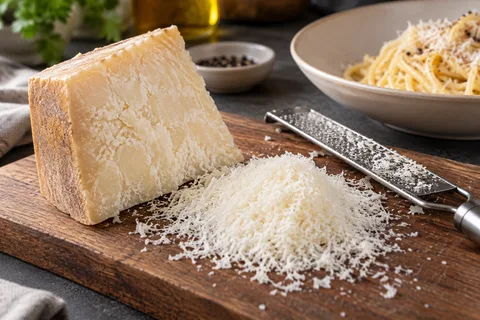
One Roman amatriciana uses 20g of Pecorino Romano DOP per 100g of pasta — the highest ratio we could confirm for the dish. Buying it as a wedge, in our view, keeps more of the aroma.